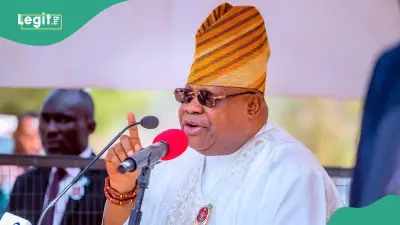
Governor Aliyu's Strategic Reforms Propel Sokoto's Economic Revival
Sokoto State is experiencing a significant economic transformation under the leadership of Governor Ahmad Aliyu, who is modernizing governance to unlock the region's vast potential. Historically renowned as a hub of culture, learning, and commerce in northern Nigeria, the state is now implementing concrete reforms to streamline business operations and foster a competitive, technology-driven economy.
A Comprehensive Roadmap for Business Enablement
At the core of this transformation is the Sokoto Business Enabling Reforms Action Plan for 2024–2025, a detailed strategy approved by the State Executive Council. This plan aligns with the Federal State Action on Business Enabling Reforms (SABER) programme, supported by the World Bank, and focuses on strengthening institutions, simplifying procedures, and enhancing transparency. Unlike many aspirational documents, this plan assigns clear responsibilities, timelines, and measurable targets across various ministries and agencies, ensuring accountability and trackable progress.
A state official emphasized, "This action plan is a game-changer for Sokoto, providing every agency with defined responsibilities and deadlines that were previously lacking. We now have a robust framework for monitoring and adjusting to achieve real impact."
Digital Innovations in Land Administration
One of the most impactful reforms is the introduction of the Sokoto Geographical Information System, which digitizes land administration processes. This system issues and recertifies Certificates of Occupancy and Rights of Occupancy electronically, incorporating GPS coordinates, owner photographs, and enhanced security features to prevent fraud. For businesses and individuals, this reform offers greater ownership certainty, easier verification, and improved access to finance by enabling land to be used as reliable collateral for loans.
In a state where agriculture and land-based businesses are crucial, this digital system reduces administrative bottlenecks that have historically hindered investment. It supports farmers, traders, and investors by providing clear titles for securing loans, attracting partnerships, and planning long-term projects without ownership disputes.
Strengthening ICT Infrastructure and Governance
To support this digital transition, Governor Aliyu signed the Sokoto State Information and Communication Technology Development Agency Bill into law. This agency is tasked with expanding digital infrastructure, coordinating e-government services, and collaborating with private technology partners. Despite challenges like limited broadband coverage, uneven ICT literacy, and irregular power supply, this initiative demonstrates a long-term commitment to building a foundation for modern, technology-driven service delivery.
Over time, this institutional structure is expected to facilitate innovations such as mobile-based government services, online licensing, and integrated payment systems, making Sokoto State more business-friendly and prepared for the future.
Empowering SMEs and Enhancing Judicial Reforms
The reforms are designed to benefit not only large-scale investors but also small and medium-sized enterprises (SMEs), which form the backbone of Sokoto's economy. Simplified tax administration, integrated payment platforms, and clearer regulatory requirements reduce compliance costs for traders, artisans, and family-owned businesses. Digital systems minimize repeated visits to government offices, saving time and money for entrepreneurs operating on tight margins.
Additionally, the reform plan emphasizes access to justice through the decentralization and strengthening of Small Claims Courts. These courts provide faster, cheaper, and more accessible resolution of commercial disputes, helping to preserve businesses, encourage entrepreneurship, and strengthen confidence in the rule of law.
Transparency, Accountability, and Broader Economic Impacts
Transparency and accountability are central to these reforms, with digital land certificates creating verifiable electronic trails to reduce corruption. Published procedures, processing times, and official fees allow businesses and civil society to hold government agencies accountable, while the Ministry of Finance focuses on improved financial reporting and oversight.
The broader economic implications are significant, as predictable rules, reliable land administration, and efficient public services signal confidence to domestic and external investors. This is expected to encourage investment in key sectors like agriculture, agro-processing, solid minerals, trade, logistics, and services, leading to job creation, higher incomes, and a broader tax base for reinvestment in infrastructure and human capital.
Social Benefits and Future Challenges
These reforms also have social benefits, such as reducing bureaucratic hurdles for citizens, formalizing small businesses, and improving access to finance to promote economic inclusion. Digital systems enable data-driven governance, helping policymakers identify bottlenecks and design evidence-based interventions.
However, challenges remain, including the need for sustained funding, continuous maintenance, protection against cyber threats, and addressing capacity gaps within the civil service. Public awareness campaigns are crucial to ensure trust in new systems, and resistance from entrenched interests must be overcome through persistent enforcement and political leadership.
A Model for Governance in Nigeria
Sokoto State's approach highlights a broader lesson for governance in Nigeria and similar economies: modernization requires a combination of technology, institutional reform, and accountability. Success depends on well-trained officials, consistent enforcement, citizen engagement, and political commitment. By investing in these complementary pillars, Sokoto is laying the foundation for sustainable, inclusive economic growth.
In conclusion, Governor Aliyu's reforms represent a serious and structured attempt to modernize governance and unlock Sokoto's economic potential. Through digital innovation, institutional reform, and accountability mechanisms, the state is moving beyond rhetoric towards tangible change. With sustained political will, adequate resources, and inclusive engagement, these reforms can reshape Sokoto's economic landscape, strengthen investor confidence, and improve everyday interactions between government and citizens, positioning the state as a forward-looking competitor in the modern economy.