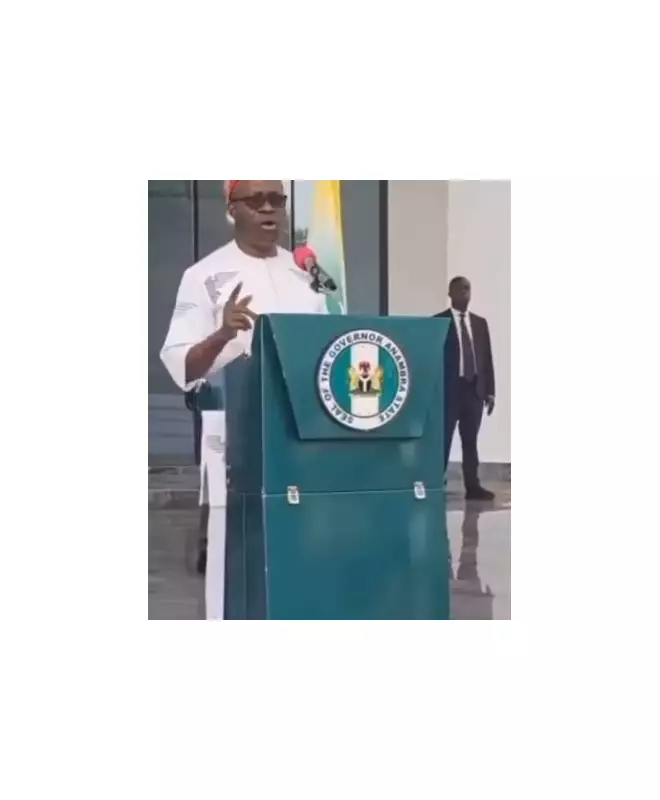
In a stern address to the people of Anambra State, Governor Professor Charles Soludo has issued a forceful warning to traders who comply with sit-at-home directives by closing their businesses. The governor declared that from now on, any shop owner who shuts down their premises will face severe consequences, including the potential loss of their shop to other willing traders.
Governor's Firm Stance on Market Operations
Governor Soludo made these remarks during a state broadcast on the afternoon of January 28, 2026. He emphasized that the state government will no longer tolerate the disruption of economic activities caused by the observance of sit-at-home orders, which are typically enforced every Monday in solidarity with the detained leader of the Indigenous People of Biafra (IPOB), Nnamdi Kanu.
Background of the Onitsha Market Closure
This announcement comes in the wake of the governor's decision to order the closure of the popular Onitsha Main Market on Monday, January 26. The market was shut down after some traders heeded the IPOB directive and closed their shops, leading to a paralysis of commercial activities in the area. In response, aggrieved traders staged a protest on January 27, demanding the immediate reopening of the market to resume their livelihoods.
Economic and Security Implications
In his broadcast, Governor Soludo framed the issue as a critical matter of security and economic prosperity. He argued that denying 20% of workdays in a year through sit-at-home observances severely dampens job creation, income generation, and overall state development. The governor stated, "This is about our security because if you deny 20% of the work days in a year, you are dampening our prosperity, jobs that need to be created, incomes that need to be earned."
He further outlined the government's escalating response, noting that while 2024 and 2025 were periods of patience, and 2022 and 2023 involved active combat against such disruptions, 2026 marks a shift to what he termed "gear 4"—a more aggressive enforcement phase.
Concrete Measures and Warnings
Governor Soludo detailed specific actions the state will take against non-compliant traders. He warned, "Anybody that closes their shop, we will help you close it for the next week. If you like holidays, we will help you." More drastically, he announced that going forward, the government will seize shops from those who close them and redistribute these spaces to individuals ready to use them for business.
The governor asserted the state's authority in this regard, mentioning that if a market cannot open due to private actions, he holds the power to revoke ownership of such places in the public interest. He made it clear that while the government remains open to dialogue, there is "no negotiations" about keeping shops open during business days.
Upcoming Enforcement and Meetings
Governor Soludo revealed plans to meet with market leaders on January 29 to discuss the situation. He issued an ultimatum, stating that if any market fails to open for business on the next Monday, February 2, it will be closed for a period of up to two weeks. This move underscores the administration's commitment to maintaining economic stability and countering the effects of the sit-at-home protests.
The governor's firm stance highlights the ongoing tension between state authorities and secessionist groups in the region, with economic activities caught in the crossfire. As Anambra State navigates these challenges, traders and market operators are left to weigh the risks of compliance with IPOB directives against the threat of government sanctions.