
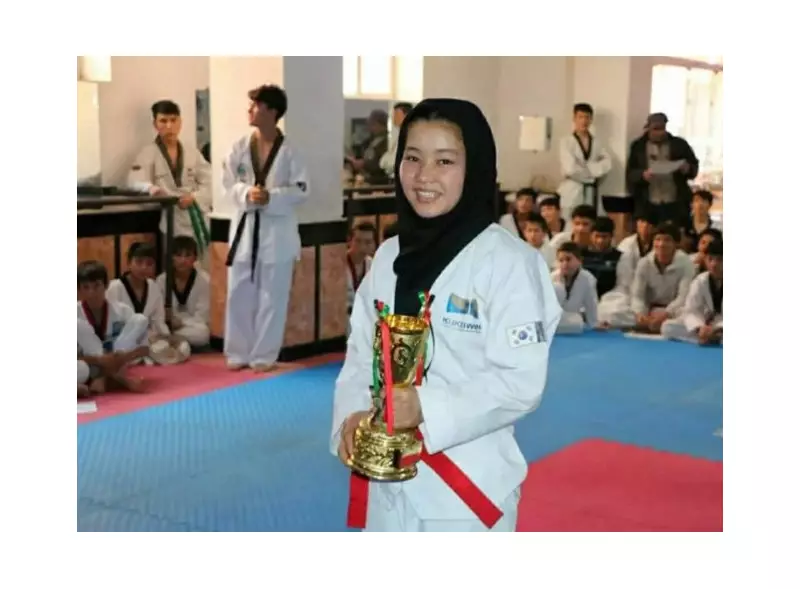
Afghan Woman Faces Stoning Death for Secretly Teaching Girls Taekwondo
A young Afghan woman who secretly trained girls in taekwondo now faces the terrifying prospect of being stoned to death by Taliban authorities. Khadija Ahmadzada, a 22-year-old from Herat, was arrested on January 10 for openly defying the fundamentalist regime's strict ban on women participating in sports.
Secret Training and Arrest
Authorities discovered that Ahmadzada had been teaching students the Korean martial art in a hidden courtyard at her family home. This quiet act of defiance against the Taliban's oppressive policies has placed her in grave danger, with activists fearing she has already received an extreme death sentence for her illicit activities.
British-Afghan activist Shabnam Nasimi revealed on Instagram that witnesses reported Taliban morality police raiding Ahmadzada's home and detaining both her and her father. According to Nasimi, the young woman and her father were dragged from their residence and have been held for more than a week without contact with their family.
Rumors of Extreme Punishment
Disturbing rumors circulating among those close to Ahmadzada suggest that a Taliban court has ruled for her execution by stoning specifically for the crime of practicing and teaching sports. Nasimi explained the brutal nature of this punishment, describing how stones are thrown at a living person until they bleed, collapse, and ultimately die.
"She refused to accept that being female is a crime," Nasimi stated about Ahmadzada's courageous stand. "That quiet act of defiance has come at a price."
International Campaign to Save Her Life
Activists are now desperately trying to raise global awareness about Ahmadzada's case in hopes that international pressure might prevent her execution. Nasimi has called on her followers to "draw attention" and "flood the internet" with the young woman's name in a coordinated effort to save her life.
"When the international spotlight lands on a regime like this, they hesitate," Nasimi explained. "Not because they grow a conscience, but because they fear consequences, pressure, exposure and intervention. If Khadija becomes famous enough, they may back off."
Broader Context of Taliban Oppression
Ahmadzada's case represents just one example of the systematic oppression Afghan women have faced since the Taliban regained control of the country in 2021. An entire generation of women and girls has lost fundamental freedoms under the regime's harsh interpretation of Islamic law.
The restrictions imposed on Afghan women include:
- Being turned away from schools and educational institutions
- Forced to veil their face and body completely in public spaces
- Prohibited from looking at men they aren't related or married to
- Not allowed to be seen from neighboring properties even within their own homes
As part of what the Taliban calls their "vice prevention strategy," even the sound of women singing or simply speaking to and hearing each other has been banned in many contexts. Ahmadzada's case highlights how the regime's restrictions extend to physical activities and sports, with potentially deadly consequences for those who dare to challenge these oppressive rules.
The international community continues to monitor this developing situation as activists work tirelessly to prevent what they fear could be a brutal public execution of a young woman whose only crime was teaching girls self-defense through martial arts.




