
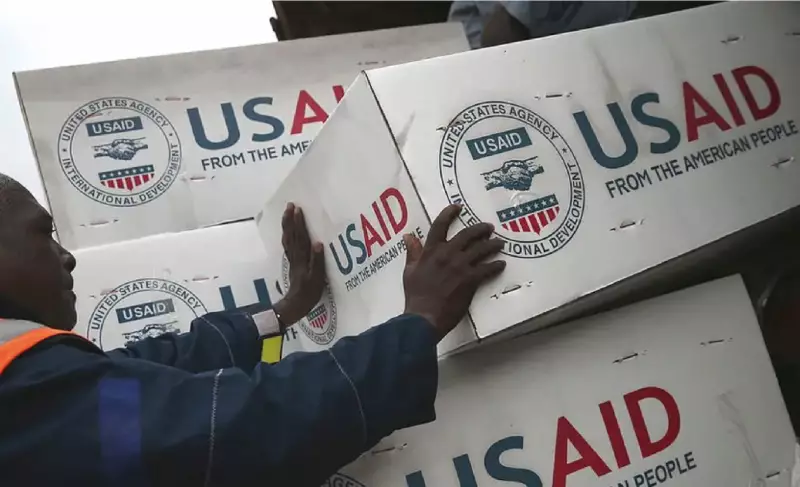
The sudden suspension of United States Agency for International Development (USAID) funding across Africa has triggered a seismic shift in development planning. Governments and civil society organisations are now urgently re-evaluating their reliance on external aid and reclaiming control over their national priorities.
The funding halt, announced in February 2025, led to the cancellation and suspension of numerous critical projects supporting health, gender equality, and social protection programmes. While the United States later signed a $1.6 billion, five-year health financing deal with Kenya, the broader impact has exposed the fragility of Africa's dependence on foreign aid.
A Watershed Moment for Sovereignty and Health Financing
According to Christabel Netondo, Senior Associate for Youth Engagement at Women Deliver, this crisis has created a rare alignment of political will. African governments, civil society, and youth movements are now united in efforts to assert national ownership over health systems and development agendas.
"What we are seeing is African governments and civil society, across political divides, beginning to take deliberate steps to reduce overreliance on aid and reassert leadership over their own health systems," Netondo stated. She described the freeze as disruptive but also a catalyst for long-overdue conversations about sustainability, sovereignty, and accountability.
In Kenya, this shift is visible through legislative reforms like the introduction of the Social Health Insurance Fund, designed to replace the National Health Insurance Fund and expand healthcare access. "It shows how governments are coming together to rethink domestic financing for healthcare," Netondo noted.
Nigeria faces a similar reckoning, especially in health and gender sectors historically propped up by donor money. The freeze on USAID programmes affecting maternal health, sexual and reproductive health services, and gender-based violence response has increased pressure on federal and state governments to boost domestic budgets and strengthen public health infrastructure.
African Feminists and Youth Step Into the Breach
Amid shrinking civic space and declining donor funds, African feminist movements and youth leaders are responding with renewed vigour. In November 2025, Sonke Gender Justice hosted the African Regional Convening in Nairobi, gathering over 200 youth advocates, policymakers, feminist leaders, and grassroots organisations.
This meeting, part of the lead-up to Women Deliver 2026, focused on advancing Africa-led solutions for gender equality and sexual and reproductive health rights. It also contributed to a global consultation shaping a Feminist Playbook—an accountability framework launched at the UN General Assembly in September 2025 to challenge systems failing women and girls.
Netondo highlighted the growing role of African philanthropy and innovative financing models. Platforms like the East Africa Philanthropy Network are convening trusts, foundations, and grantmakers to address systemic gaps. "The conversations are now geared towards restoring ownership of African institutions by African governments and people," she said, while also exploring blended financing options like multilateral grants and concessional loans.
An Inflection Point Demanding Courage and Discipline
The aftermath of the USAID freeze is increasingly viewed not just as a crisis, but as a critical inflection point for the continent. It demands political courage, fiscal discipline, and a decisive break from aid dependency.
Netondo pointed to institutions like the Africa Centres for Disease Control and Prevention being looked upon to redouble efforts in leading the continent's public health agenda. "There is real hope in the way African actors are responding. We are seeing committed players finding alternative solutions," she affirmed.
As Africa navigates this new reality, the path forward hinges on rebuilding sovereignty while diversifying funding sources. The moment underscores a pivotal transition from aid dependence to sustainable, self-determined development.
Registrations are now open for Women Deliver 2026. More information is available at womendeliver.org/wd2026.




