
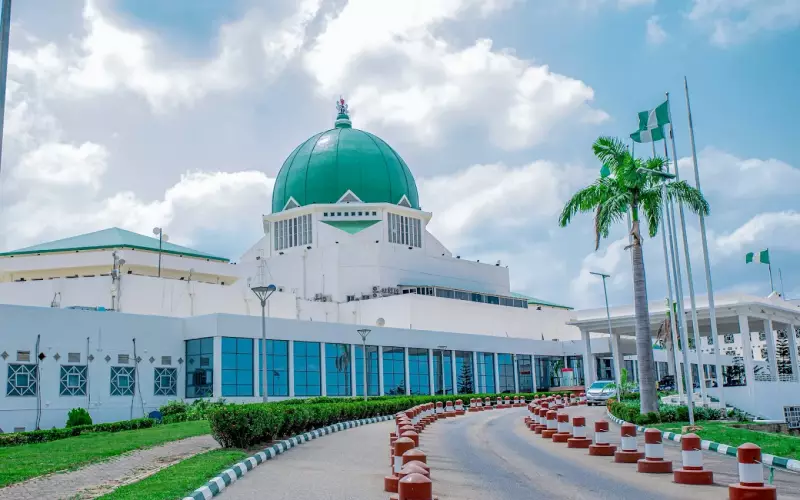
Nigeria stands at the brink of a transformative political shift as the National Assembly advances a groundbreaking constitutional amendment designed to dramatically increase women's representation in government. The proposed Reserved Seats for Women Bill seeks to alter the 1999 Constitution and create 182 new legislative seats exclusively for women across the federal and state parliaments.
The Core of the Proposed Legislation
Sponsored by Deputy Speaker Benjamin Kalu and twelve other lawmakers, including the late Oriyomi Onanuga, the bill is a direct response to what proponents call Nigeria's "abysmal" gender imbalance. Currently, women occupy less than five per cent of elected offices nationwide, placing Nigeria 184th in global rankings.
The legislation, titled “A bill for an act to alter the provisions of the Constitution of the Federal Republic of Nigeria, 1999, to provide for seat reservation for women in the National and State Houses of Assembly,” would modify seven constitutional sections. It mandates the Independent National Electoral Commission (INEC) to delineate special women-only constituencies for an initial period of four election cycles (16 years) before a review.
Breaking Down the 182 New Seats
The bill outlines a specific expansion plan. In the Senate, it proposes adding 37 new seats—one additional female senator for each of the 36 states and the Federal Capital Territory (FCT), raising the upper chamber's total to 146 members.
For the House of Representatives, the plan adds 37 female-only seats, one per state and the FCT. This would expand the lower house from 360 to 397 members. Furthermore, state assemblies would gain a total of 108 new seats, with each state required to create three additional women-only seats—one per senatorial district.
Senate Resistance and a Counter-Proposal
Despite the bill's detailed design, a significant hurdle has emerged from within the Senate. Dr. Chidozie Ajah, Special Adviser (Legislative) to the Deputy Speaker, revealed that senators are pushing a counter-proposal that would drastically reduce the scale of the reform.
Instead of 37 new seats for women in the Senate, the upper chamber is proposing only six additional seats—one per geopolitical zone. Ajah emphasized that the debate remains fluid and ongoing as lawmakers work toward a consensus.
He stressed that the reserved seats are not a charity gesture or an admission of women's inability to compete. Instead, he described the bill as a corrective measure aimed at dismantling decades of structural, cultural, and systemic barriers that have excluded women from political leadership.
Legal Safeguards and Global Context
To prevent potential legal challenges, lawmakers are considering an additional amendment to Section 42, Nigeria's anti-discrimination clause, to expressly permit affirmative action frameworks. The proposal draws inspiration from other African nations that have successfully implemented gender quotas.
Even if the full proposal passes, adding 74 women to the Senate and House, Nigeria's female representation would only rise to approximately 13.6 per cent—still far below the African average. Currently, only three women sit in the 109-member Senate, and 17 are in the 360-member House.
At a related workshop, Adaora Sydney-Jack, Executive Director of Gender Strategy Advancement International (GSAI), criticized the Nigerian media as part of the structural problem, accusing newsrooms of sidelining stories involving women and their policy issues.
For the bill to become law, it must secure a two-thirds majority in both the Senate and the House of Representatives, followed by approval from at least 24 of the 36 state assemblies, before being sent to the President for assent. The nation now watches closely as this historic debate unfolds.




