
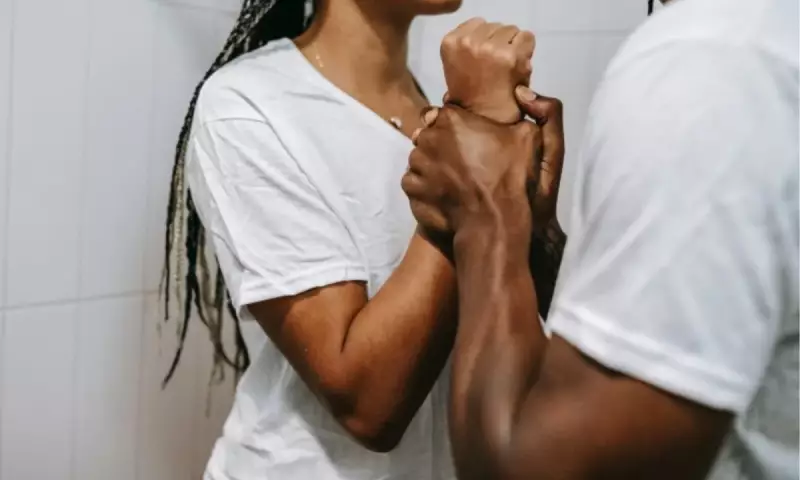
Ending the scourge of gender-based violence in Nigeria requires a fundamental shift in approach, with experts now identifying the protection of women and the education of girls as the most effective pathway forward. This urgent call comes as the global community marks the start of the 16 Days of Activism against Gender-Based Violence, a period that holds particular significance for a nation grappling with prolonged conflict.
The Crisis in Nigeria's Northeast: A Breeding Ground for Violence
Gender-based violence does not emerge in a vacuum. It flourishes in environments where systems are fragile, essential services have collapsed, and communities are marginalized by conflict and displacement. This is the stark reality across many parts of Nigeria today, most acutely in the north-east states of Borno, Adamawa, and Yobe.
For over a decade, families in these regions have endured relentless conflict. Entire communities have been uprooted, children have lost years of schooling, and women have seen their livelihoods destroyed. Trond Jensen, the outgoing Head of the UN Office for the Coordination of Humanitarian Affairs (UNOCHA) in Nigeria, emphasizes that when crisis becomes chronic, women and girls bear the heaviest burden.
They are systematically deprived of basic rights guaranteed by domestic and international law. Access to school, healthcare, protection, income, and dignity vanishes. With each passing day, their risks multiply. Societal attitudes, often worsened by conflict, leave them acutely vulnerable to sexual and gender-based violence.
Education as a Lifesaving Shield, Not a Luxury
The solution, however, is evident. Time and again, it has been proven that when girls are in school and when women have agency, protection improves dramatically. Education stands as one of the most powerful deterrents to gender-based violence.
A girl who remains in school gains awareness of her rights, is less likely to be forced into early marriage, and is more equipped to shape her own future. The connection is direct and practical. In crisis settings, a classroom is far more than a place of learning; it is a safe space, a shield against surrounding risks, and a source of stability.
Humanitarian programs focused solely on material support are insufficient. Education must be treated as a lifesaving intervention. The same principle applies to women. When women are empowered to make decisions about their health, income, and families, communities recover faster. Households become more resilient, children healthier, and the cycle of dependence that fuels vulnerability begins to break.
A Unified Path Forward: Integrating Services and Leadership
Therefore, the humanitarian response in Nigeria must place girls' education and women's leadership at its core. Rebuilding schools, training teachers, restoring health services, expanding livelihood programs, and improving access to justice are not separate endeavors. They form one interconnected path that reduces the likelihood of violence and builds community self-reliance.
International partners, including the European Union, Canada, the United Kingdom, Norway, and the United States, have invested heavily in these areas. Their support has rebuilt classrooms, established safe spaces, trained caseworkers, and strengthened referral systems. The evidence from these investments is clear: girls in school are at lower risk, women with livelihoods are less dependent, and communities with functioning services report fewer violence cases.
As the 16 Days of Activism commences, the message for Nigeria is simple. The fight against gender-based violence cannot be won without strengthening the humanitarian response, restoring essential services, and radically expanding access to education for women and girls. This mission demands investment, political will, and a collective commitment from families, leaders, and institutions. It requires valuing every woman and girl not as a victim, but as an essential partner in rebuilding her community. A nation grows stronger when its women are safe, and it grows even stronger when its girls and women are educated.




