
The European Union has issued a strong call for urgent and coordinated measures to counter the escalating danger of Technology-Facilitated Gender-Based Violence (TFGBV). The bloc warns that digital platforms are being increasingly weaponised to target women and girls across Nigeria and the globe.
Digital Tools Turned Into Weapons of Harassment
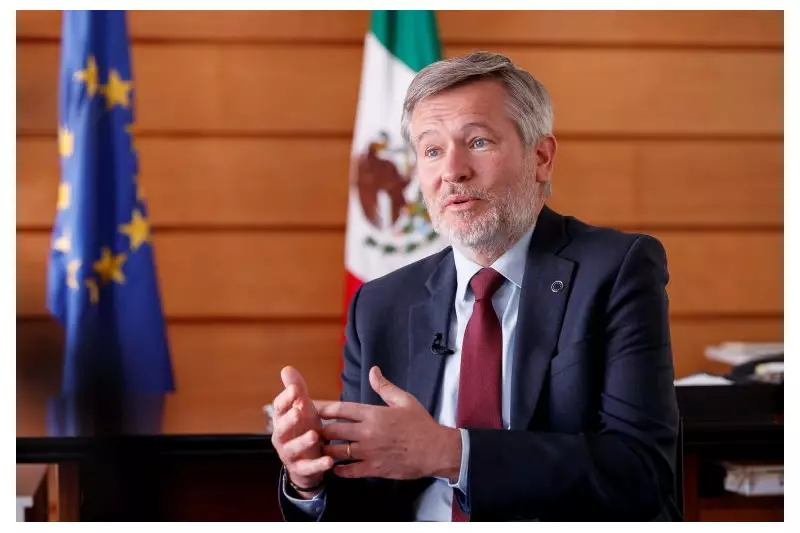
Ambassador Gautier Mignot, the Head of the EU Delegation to Nigeria and ECOWAS, made this urgent appeal. He spoke at the 11th Network Conference of Sexual Assault Referral Centres (SARCs). This event was part of the activities marking the 2025 16 Days of Activism Against Gender-Based Violence.
In a statement delivered yesterday, Ambassador Mignot acknowledged the vital role of digital platforms. They enable civic participation, communication, and economic growth. However, he stressed that these same tools have become instruments for harassment, intimidation, and persecution. This is especially true for women who are active in public life.
He cautioned that TFGBV is rapidly expanding the scope of violence against women and girls. This expansion happens through several malicious channels:
- Online harassment and cyberstalking
- Non-consensual sharing of intimate images
- Creation and distribution of deepfakes
- Coordinated disinformation campaigns
"Digital attacks and disinformation are being weaponised to intimidate, silence, and discredit women," Mignot stated. "This directly undermines their participation in democratic processes."
Nigeria's Steps and the Need for Adaptive Laws
The EU Ambassador commended the Nigerian Government for its existing efforts to bolster digital security. He specifically mentioned the Cybercrimes Prohibition and Prevention Act 2024 and the National Cybersecurity Strategy.
Despite these steps, Mignot emphasised a critical challenge. The pace of technological change is relentless. It demands legal protections that are more adaptive and responsive. These laws must be backed by robust institutional enforcement to be truly effective.
EU Announces Major Funding for Support and Reform
Ambassador Mignot revealed ongoing collaboration between the EU and Nigeria's Federal Ministry of Justice. The goal is to enhance national capabilities to prevent, detect, prosecute, and deter cyber-enabled abuse targeting women and girls.
This support is set for a significant boost. The EU is launching a forthcoming €18 million programme funded by the bloc and implemented with International IDEA. This major initiative aims to achieve several key objectives:
- Strengthening survivor support systems.
- Driving necessary legal reforms.
- Promoting advocacy for digital rights.
- Improving the justice sector's response to such crimes.
Dr. Roba Sharamo, Regional Director for International IDEA, supported the EU's concerns. He noted that while technology has widened civic engagement, it has also made violence "cheaper, faster, more anonymous, and infinitely scalable."
He issued a further warning. Unchecked digital abuse threatens the integrity of democratic participation and elections. This risk is magnified when gendered disinformation and deepfake technologies are deployed to distort political discourse and target female participants.
The call from the EU highlights a pressing intersection of technology, security, and human rights in Nigeria. It underscores the need for a dynamic approach to protect women and girls in an increasingly digital society.




