
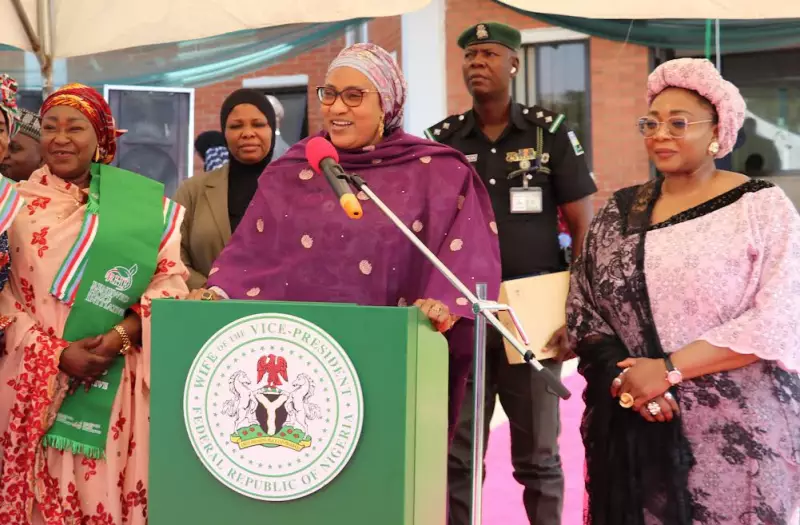
The Federal Government has announced a staggering figure of 10,326 reported cases of Gender-Based Violence (GBV) across Nigeria between January and September 2025. This alarming statistic was revealed during a National Multi-stakeholder dialogue organized by ActionAid and other development partners.
Scale of the Crisis and Government Response
While presenting the data, the Minister of Women Affairs and Social Development, Imaan Suleiman-Ibrahim, stated that out of the total cases, 2,444 survivors received care in specialized recovery centres. Furthermore, 511 survivors were supported with livelihoods and empowerment interventions to help them rebuild their lives.
The Minister, who was represented by the Senior Special Assistant to the President on Women’s Health, Dr. Adanna Steinacker, expressed deep concern that violence against women, children, and vulnerable groups remains a pervasive issue. She noted that despite a decline indicated in the 2024 National Demographic and Health Survey, one in three women still experienced GBV during the referenced period.
To improve the national response, Suleiman-Ibrahim disclosed that the government has finalized plans to relaunch the National Electronic Dashboard on Gender-Based Violence. This tool is deemed vital for tracking trends, identifying patterns, and enhancing case management and coordination across the country.
The Rising Threat of Online Violence
A significant portion of the dialogue focused on the growing menace of Technology-Facilitated Gender-Based Violence (TFGBV). The minister lamented that many such cases go unreported due to their complex nature. TFGBV includes severe offenses like:
- Sexual torture
- Non-consensual sharing of intimate images
- Online blackmail
- Manipulation of digital platforms
These acts have led to severe trauma and, in some instances, fatalities.
Supporting this, Niri Goyit, a representative from ActionAid Nigeria, presented data showing the extent of the problem. In Nigeria, 45% of women have experienced cyberstalking, with women in public roles being particularly targeted. Additionally, 10.6% have faced doxing—the malicious publication of private personal information.
Goyit identified key drivers of TFGBV, including patriarchal norms, low digital literacy, weak enforcement of laws against online harassment, gaps in platform moderation, and the rapid spread of smartphones and apps.
Call for Collaborative Action and Policy Reform
In response to the funding challenges faced by support services, the Minister announced that the ministry is urgently prioritizing the establishment of an Emergency GBV Response Fund. This ring-fenced mechanism aims to bridge financial gaps and ensure the operational stability of shelters, Sexual Assault Referral Centres (SARCs), hotlines, and rehabilitation programs.
Stakeholders emphasized the need for a multi-sectoral approach. Goyit stressed that law enforcement needs support from digital forensics experts, and SARCs must collaborate closely with cybercrime units. She also called on technology companies to improve their processes for taking down harmful content and cooperating with investigations.
Mrs. Cynthia Rowe, representing the United Kingdom Foreign, Commonwealth & Development Office, advocated for a national online gender safety policy. She urged social media platforms to remove harmful content within 48 hours, employ culturally aware moderation teams, and publish transparency reports. She also called for the creation of digital abuse courts and protection orders to serve as one-stop reporting portals, integrating police, legal aid, and psychosocial support.
The event, which took place in Abuja, also featured the naming ceremony of the ICT block at the Maryam Babangida National Centre for Women Development (MBNCWD) in honour of the late Abibat Mogaji, mother of President Bola Tinubu.




