Jos: The Unending Crisis of Identity, Politics, and Violence on the Plateau
For more than two decades, the city of Jos, the capital of Plateau State, has become a symbol of Nigeria's unresolved tensions, where faith, identity, and belonging collide in endless cycles of violence. Once celebrated as a cool and cosmopolitan hilltop retreat, Jos today bears deep scars of division that run through markets, neighborhoods, and collective memories. The losses are staggering and hard to quantify, with thousands dead, tens of thousands displaced, homes burned, and entire streets renamed by religious affiliation. However, what becomes clearer with each new outbreak of bloodshed is that Jos's crisis is not merely a religious conflict; it is profoundly political, rooted in colonial history, economic inequality, and a state structure that has failed to provide all Nigerians with a sense of equal citizenship.
A City Born of Migration and Colonial Division
Jos was fundamentally built by movement. When British miners discovered tin on the Plateau in the early 1900s, they drew labor from across the northern region, including Hausa, Fulani, Nupe, and Kanuri Muslims. These migrants worked alongside local ethnic groups such as the Berom, Afizere, and Anaguta, whose farmlands framed the young mining town. Colonial authorities organized daily life along ethnic and occupational lines, confining indigenous communities largely to the surrounding hills while migrants occupied the lowland mining settlements and commercial centers. The British also administered most of northern Nigeria through Muslim emirs, but the Plateau's mainly non-Muslim peoples resisted such rule, making Jos a special territory outside the emirate hierarchy that defined other northern provinces.
This historical arrangement gave birth to two enduring and divisive notions: the indigene, whose ancestors claim ownership of the land, and the settler, who is seen as a guest even after generations. Initially a bureaucratic distinction, this divide hardened over time into a rigid identity marker, setting the stage for future conflicts.
Post-Independence Injustice and Political Exploitation
After Nigeria gained independence in 1960, the country consolidated these categories rather than healing them. Every state determined who its "indigenes" were, linking access to public jobs, school scholarships, and land ownership to ancestral origin. In Plateau State, where Christians dominate local government, Hausa-Fulani Muslims, whose families have lived in Jos for over a century, were classified as settlers. This pattern repeated across Nigeria, but in Jos, it became explosive due to the close overlap of religion, ethnicity, and politics. Political scientist Adam Higazi describes the result as "a civic apartheid," one that simultaneously excludes, humiliates, and provokes communities.
As Jos expanded through the 1970s and 1980s, competition for resources intensified. Minor disputes over farmland or business licensing sometimes escalated into violence. Politicians, aware of the emotional power of belonging, often mobilized communal loyalties for electoral gain, further entrenching divisions.
The Spark of 2001 and Escalating Violence
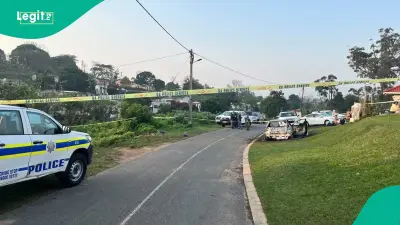
Everything changed dramatically in September 2001. The crisis began over a minor administrative appointment—the nomination of a Muslim official to coordinate a federal poverty-reduction program in the Jos North Local Government Area. Demonstrations quickly escalated into street fights, and within hours, entire districts were engulfed in flames. For five days, residents turned on neighbors they had lived beside for years, with churches torched and mosques razed. Human rights groups estimate that more than 500 people were killed, though locals believe the toll was higher.
When the army finally restored calm, the city had become starkly divided. Christians retreated to the south and west, Muslims to the north and east. The sense of normalcy that followed was an illusion, as violence returned in 2008 after disputed local elections and again in 2010 when rural clashes spread to nearby Kuru Karama, where scores were massacred. Each wave of bloodletting deepened suspicion, creating invisible borders that continue to define daily life in Jos.
A Pattern of Governmental Failure and Eroded Trust
Successive governments have pledged "never again," yet every promise has collapsed into what Plateau residents cynically call government by condolence. A series of commissions, including the Ajibola Panel in 2001 and the Presidential Panel on the Plateau Crisis in 2004, identified political provocateurs and recommended prosecutions. However, none of these reports were made public, and no high-profile figure was ever punished, leading to a predictable cycle of violence, inquiry, and silence.
Security forces have fared no better in restoring trust. Residents accuse both police and soldiers of partisanship, with Muslim groups alleging disproportionate raids on their neighborhoods and Christian communities claiming that security agencies turn a blind eye to attacks on their churches. Some soldiers deployed under the Joint Task Force were later implicated in extrajudicial killings, further eroding the state's authority as trust vanished.
Meanwhile, political leaders have exploited these divisions to consolidate their bases. Plateau's largely Christian administrations portray themselves as defenders of indigene rights, while Hausa-Fulani leaders, backed by northern political allies, frame the conflict as evidence of religious marginalization. The result is a city where justice is often negotiated along identity lines, perpetuating a cycle of conflict that shows no signs of abating.