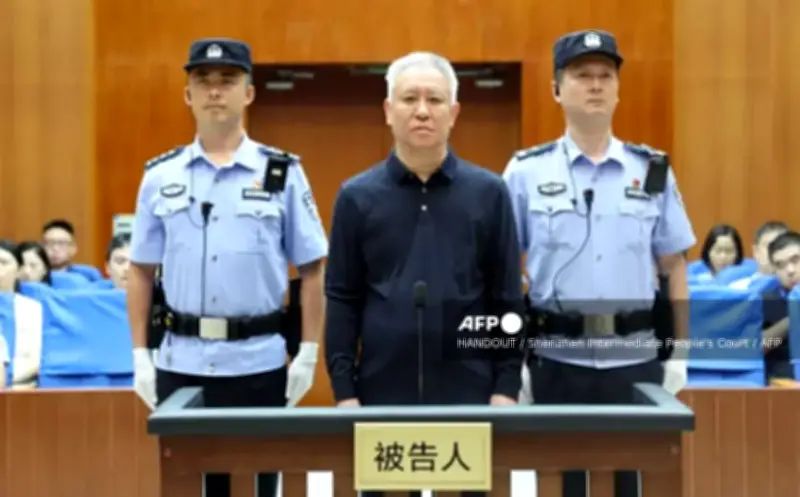
The Shenzhen Intermediate People's Court in Guangdong province, southern China, on Thursday, August 20, handed down a life sentence to Hui Ka Yan, the founder of the troubled real estate giant Evergrande Group. The court also ordered the company and its real estate arm to pay combined fines exceeding $2 billion for large-scale financial fraud and other crimes.
Court Ruling and Fines
The court fined the firm and its real estate arm a total of 15.82 billion yuan, equivalent to $2.4 billion. In a statement posted on its WeChat account, the court said: "Xu Jiayin was sentenced for multiple crimes and fined, received a life sentence, with political rights revoked for life and all his personal property confiscated." Xu Jiayin is the Mandarin name of Hui Ka Yan, who is known in Cantonese as Hui Ka Yan.
Between 2016 and 2021, Evergrande and Xu as its boss "violated national laws by engaging in continuous, large-scale financial fraud and other means to inflate assets and conceal liabilities," the court added. The court also noted that the parties "gained control of financial institutions" through bribery, though it did not name the institutions involved.
Background of Evergrande's Collapse
Evergrande Group was once the face of Chinese real estate, riding a decades-long property boom as it marketed home-ownership dreams. However, its access to credit dramatically narrowed when the Chinese government introduced curbs on excessive borrowing and speculation. The company defaulted in 2021 after struggling to repay creditors, marking one of the largest corporate debt crises in the country.
Xu pleaded guilty in April to charges that included embezzlement and bribery, according to the court at the time. The court's ruling on Thursday covered a list of crimes, including "large-scale financial fraud," which formed the basis for the life sentence.
Sentences for Other Executives
In addition to Hui Ka Yan, five other senior executives of Evergrande Group were also sentenced on Thursday by the Shenzhen court. They received prison terms ranging from six to 18 years for crimes including fraud. The court did not provide further details on the identities of these executives or the specific charges against each individual.
The sentencing marks a significant legal action against the once-dominant property developer, which had been under investigation for years. The fines and confiscation of personal property are intended to penalize the company and its founder for the financial misconduct that contributed to the company's default and the broader crisis in China's real estate sector.