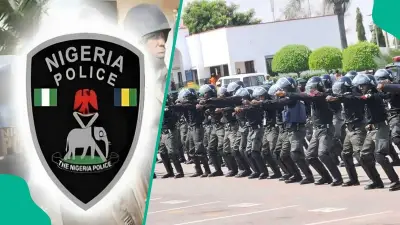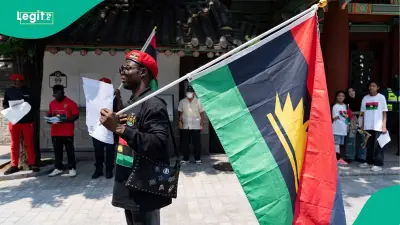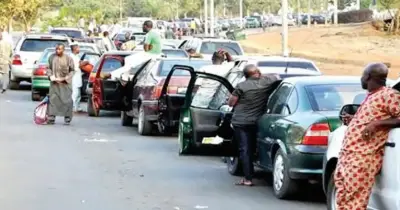
While government officials claim security has improved in Nigeria's South-East, a starkly different reality unfolds after sunset. Major roads and commercial hubs become deserted, transforming vibrant cities into ghost towns by 9:00 p.m. due to persistent fears of criminal elements like cultists and petty thieves.
Official Claims Versus On-Ground Realities
Former Chief of Defence Staff and current Minister of Defence, General Christopher Musa (Retd), stated that the region's security situation improved following the November 2024 arrest of separatist figure Simeon Njoku Ekpa in Finland. Ekpa was later convicted on terrorism charges in September 2025. Musa noted a gradual return to normalcy, impacting the economy positively.
Residents acknowledge a reduction in the brazen attacks and killings that peaked around 2021. Monday commercial activities are slowly resuming, though federal institutions still observe the sit-at-home order. However, this perceived daytime improvement vanishes completely at night.
The Silent Streets: How Fear Enforces Curfew
Investigations reveal that nightlife and related businesses are a shadow of daytime activities. By 9:00 p.m., prominent roads and leisure spots are empty. This is compounded by state government policies restricting commercial transport—taxis, buses, and tricycles—from operating beyond this time, ostensibly to curb insecurity.
The situation is further strained by the life imprisonment sentence handed to IPOB leader Mazi Nnamdi Kanu in November 2025. His continued incarceration fuels apprehension, causing most businesses to close early. Only major pubs and clubs with private security operate at night, catering to patrons who arrive in expensive private or hired vehicles.
Residential streets are commonly locked by 8:00 p.m., leaving latecomers stranded. Security patrols on major roads often withdraw as the night deepens, creating a vacuum for hoodlums to rob citizens.
Personal Ordeals: Voices from the Fearful Residents
The human cost of this insecurity is severe. Ikenna Uzokwe, an Uber driver in Owerri, Imo State, was kidnapped by armed robbers after a late-night trip. They stole his car, phones, and drained his bank accounts. He now vows never to leave home after 7:00 p.m..
In Awka, Anambra State, Jerry Nanka was robbed by gun-wielding cult boys at a joint on Abakaliki Street around 7:30 p.m. Another resident, Ikechukwu Umeh, who returned from Australia, was shot and killed in Enugu one night after pulling over to urinate.
Chukwubuike Ozonna, a shop owner in Eke-Awka, summarised the sentiment: "You cannot compare the nightlife in Abuja, Lagos, or Port Harcourt with the South-East. The South-East is a dead region at night."
Regional Hotspots and Lingering Threats
Ibuchukwu Ezike, Executive Director of the Civil Liberties Organisation (CLO), detailed specific insecurity hotspots across the region:
- Imo State: Orlu, Orsu, Oru, Okigwe, Obowu, and Mbaise areas remain volatile. Arondizogu is still considered a no-go area.
- Anambra State: Lilu (Ihiala), Ogwuaniocha (Ogbaru), Ayamelum, Aguata, and Dunukofia, among others.
- Ebonyi State: Communal clashes plague Izzi, Ezza, Onicha, and Afikpo communities.
- Enugu State: Isi Uzo, Uzo Uwani, and parts of Nsukka, Igbo Etiti, and Awgu local councils face dire threats, including recent murders of a newlywed man and a Catholic priest.
Ezike stressed that the circulation of illegal guns and the grip of hoodlums on many communities continue to force residents to stay home after dark.
A Glimmer of Hope and Calls for Action
Despite the challenges, some see signs of a slow rejuvenation. John Echefula, a security expert in Umuahia, Abia State, noted that nights now occasionally feature pre-wedding parties, church crusades, and clubbing, which was unthinkable three years ago.
He urged South-East governors to lift the restrictive curfews and transport bans, arguing that the return of police to strategic junctions should be bolstered. Restoring vibrant nightlife, he said, would boost the economy and create jobs.
An eatery operator at Ogui Junction, Enugu, named Benjamin, exemplifies the adaptation. He operates until 11:00 p.m. but sleeps in his facility because the cost of a late-night cab home is prohibitive—N18,000 for a trip that costs N1,000 by tricycle during the day.
The consensus is clear: for nightlife to truly thrive again in the South-East, residents must overcome deep-seated fear, but this can only happen with tangible, sustained security and policy reforms from state authorities.