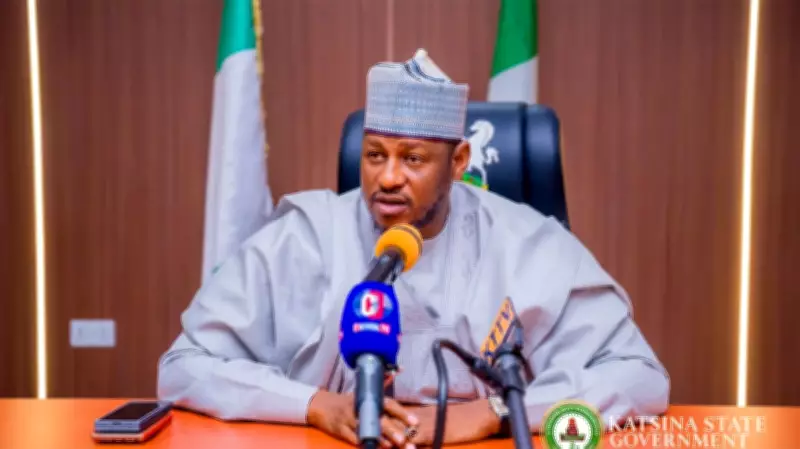
Katsina State Governor, Malam Dikko Radda, has raised serious concerns about the presence of informants within government circles, security agencies, and local communities who allegedly leak intelligence to bandits operating in the state. Speaking during an interview on Channels Television, Radda said the activities of these informants have continued to frustrate efforts to tackle insecurity in parts of Katsina State.
Governor Reveals Identity of Notorious Bandit Leader
The governor revealed that authorities are aware of the identity of a notorious bandit leader identified simply as Mohammed, but efforts to apprehend him have been repeatedly compromised by information leaks. "This notorious person that is disturbing us — we know him. He is Mohammed; that is his name. Everybody knows him. His father, his mother, and his grandfather were born there. But the problem we have is the community. The communities are not giving the right information. I can say that, in a way, some of them are helping him," Radda said.
Intelligence Leaks Frustrate Security Operations
According to the governor, the suspected bandit leader often receives advance information about security operations, enabling him and his associates to evade arrest and launch ambushes against security operatives. Radda disclosed that during a recent high-level security meeting held at the state government house, details of the discussions allegedly reached the bandit leader within minutes. "The day I called for a high-level security meeting here at the state government on how to operate and deal with the situation, five minutes after the meeting, he already knew what we had discussed," he said.
Informants Within Communities and Security Agencies
He further alleged that some informants within affected communities alert bandits whenever security personnel are deployed to certain areas, including disclosing the routes being used by operatives. "There are moles giving him information among us. In fact, he has even developed a new strategy where he incites villages to protest against the government so they can pressure the government not to pursue him," the governor added. Radda also stated that the informants are not limited to local communities, insisting that some security personnel are also involved in leaking sensitive information. "So, this is the kind of situation we are in. There are moles among us, moles among the security agencies, and moles among the communities," he said.
Governor's Stance on Negotiations with Bandits
On the issue of negotiations with bandits, the governor said he initially opposed dialogue with criminal groups but later allowed some communities to engage in peace talks after residents pleaded for alternative measures to end attacks. According to him, several local government areas that entered into peace agreements with bandits have recorded relative peace for more than a year. "I was the one who initially took the position against negotiating with bandits. But when the situation became unbearable, the communities approached me and said, 'Your Excellency, we have met with these people, they are ready to lay down their arms, and we have suffered so much without getting the protection we need from security agencies. Please allow us to negotiate with them if it can bring peace,'" he said.
Radda's Conditional Acceptance of Dialogue
Radda explained that while he permitted the communities to proceed with negotiations, he deliberately stayed away from the process. "I told them they could go ahead, but I would not be part of it. So they proceeded," he added. The governor maintained that although he would not personally initiate negotiations with bandits, he remains open to dialogue if approached by them from what he described as a position of strength. "What we want is peace," Radda said.