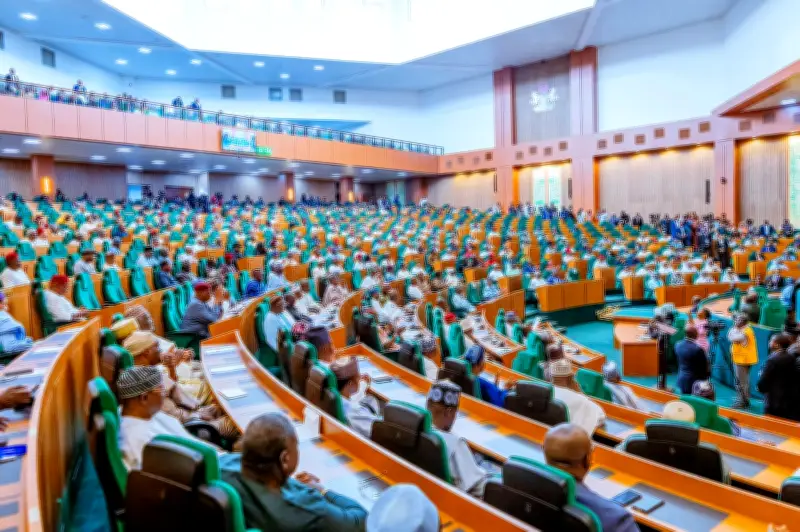
The House of Representatives has mandated its Committees on Diaspora and Foreign Affairs to conduct a comprehensive audit of losses incurred by Nigerians during the recent xenophobic attacks in South Africa. The resolution followed the adoption of a motion of urgent public importance sponsored by Hon. Bamidele Salam (PDP, Osun) during plenary on Wednesday.
Motion Details and Scope of Audit
Presenting the motion, Hon. Salam expressed deep concern over the recurring xenophobic violence against Nigerians and other African nationals in South Africa. He noted that the attacks have resulted in loss of lives, destruction of properties, and disruption of businesses worth millions of dollars. The lawmaker emphasized the need for accurate documentation of losses to facilitate claims for compensation from the South African government.
The House resolved that the audit should cover all forms of losses including but not limited to properties, businesses, and livelihoods of Nigerians affected by the violence. The committees are expected to collaborate with the Nigerian Mission in South Africa, the Nigerians in Diaspora Commission (NiDCOM), and other relevant stakeholders to compile a comprehensive database of victims and their losses.
Call for Diplomatic Action
In addition to the audit, the House urged the Federal Government to engage the South African government at the highest level to ensure adequate compensation for victims. The lawmakers also called for the prosecution of perpetrators of the violence and the implementation of measures to prevent future occurrences. Hon. Salam stressed that the Nigerian government must take a firm stance to protect its citizens abroad, stating that "the lives and properties of Nigerians must not be treated with levity."
The motion was unanimously adopted by the House after a voice vote, with Speaker Tajudeen Abbas directing the committees to report back within four weeks.
Background of Xenophobic Attacks
The recent wave of xenophobic violence in South Africa began in early September 2024, targeting foreign-owned businesses in several townships around Johannesburg and Pretoria. Reports indicate that at least two Nigerians were killed and dozens of shops looted or destroyed. The attacks have strained diplomatic relations between Nigeria and South Africa, with Nigeria summoning the South African High Commissioner and recalling its envoy for consultations.
In response, the South African government has condemned the attacks and deployed security forces to restore order. However, Nigerian lawmakers argue that previous incidents have not been adequately addressed, leading to a cycle of violence and impunity.
Economic Impact and Previous Incidents
The economic impact of the xenophobic attacks on Nigerian businesses in South Africa is estimated to be in the millions of dollars. Many victims are small-scale traders who have lost their entire livelihoods. The House noted that previous audits and compensation claims following the 2017 and 2019 attacks were either incomplete or not fully honored. This new audit aims to provide a thorough and updated account to support legal and diplomatic efforts for restitution.
Hon. Salam cited statistics from the Nigerian Union in South Africa indicating that over 100 Nigerians have been killed in xenophobic attacks since 2015. He called for a more proactive approach to protect Nigerians abroad, including the establishment of a diaspora emergency response fund.
The committees are expected to engage with victims, community leaders, and diplomatic staff to ensure that all losses are captured. The report will be submitted to the House for further legislative action.