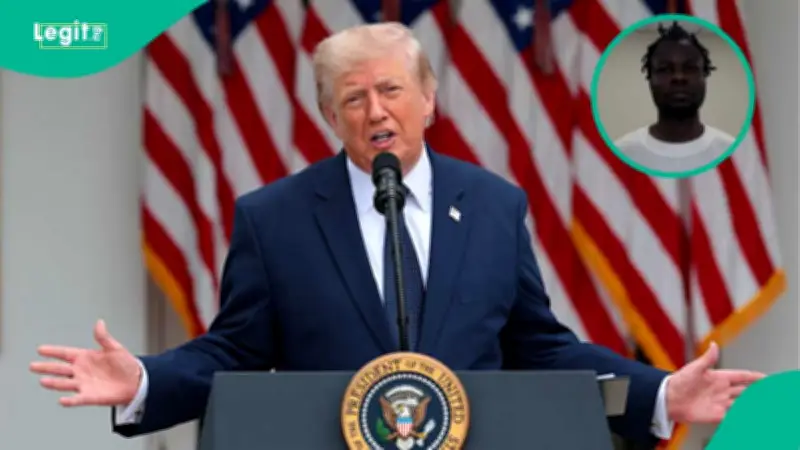
US Publishes Deportation List of Nigerian Cyber Fraudsters
The United States Department of Homeland Security (DHS) has updated its public register of online fraudsters, commonly known as Yahoo boys, who are slated for deportation. Among the 124 Nigerians flagged on the DHS portal are five notorious cyber fraudsters whose identities, photographs, and criminal profiles have been officially published. The database, called the "Worst of the Worst" (WOW) portal, highlights individuals convicted of major federal crimes and prioritised for removal by US Immigration and Customs Enforcement (ICE).
Obinwanne Okeke: From Forbes List to Deportation
Perhaps the most famous name on the list is Obinwanne Okeke, widely known as Invictus Obi. In 2016, Okeke was celebrated internationally, making the prestigious Forbes "30 Under 30" list of Africa's most promising entrepreneurs. However, his empire crumbled when the FBI arrested him for masterminding an $11 million global cyber-intrusion and Business Email Compromise (BEC) scheme. His team successfully hacked the email systems of Unatrac Holding Limited, a heavy machinery supplier, to divert massive payments. Okeke was sentenced to 10 years in a US federal prison in 2021. Following his release, he was transferred to ICE and placed on the priority deportation list.
Oriyomi Aloba: Hacked LA Court System
Oriyomi Aloba carried out one of the most unusual cyberattacks by targeting the US justice system itself. He hacked into the Los Angeles Superior Court computer system and hijacked the court's servers to send over 2 million malicious phishing emails, aiming to steal credit card details and personal identity data. In 2019, US federal authorities sentenced him to 145 months (over 12 years) in prison. He has now been officially listed on the DHS portal for deportation to Nigeria.
Chibundu Anuebunwa: $2.5 Million BEC Scheme
Chibundu Anuebunwa specialised in high-level corporate impersonation to swindle international companies. He was a key player in a transnational cyber fraud ring that ran a $2.5 million BEC scheme. The team spoofed and hacked corporate emails to impersonate high-ranking executives, tricking companies worldwide into executing fraudulent wire transfers. He was sentenced to 66 months (5.5 years) in federal prison in 2023. His profile and photo are now active on the US deportation registry.
Quazeem Adeyinka: Exploited COVID-19 Relief Funds
Quazeem Adeyinka was part of a team that exploited US government emergency funds during the pandemic. He participated in a wire fraud conspiracy that used stolen identities to file fraudulent claims for COVID-19 unemployment insurance benefits. The scheme siphoned over $2.2 million from US taxpayer-funded relief programs. He was sentenced to 26 months in federal prison and has been marked on the priority list for deportation.
Olaolu Alabi: Lavish Lifestyle from Fraud Proceeds
Olaolu Alabi used stolen pandemic relief and corporate fraud proceeds to fund a lavish lifestyle before his arrest. Operating out of Owings Mills, Maryland, he was convicted of conspiracy to commit wire fraud, access device fraud, and aggravated identity theft. He defrauded individuals and businesses of over $1.5 million using stolen identities to claim pandemic relief. Alabi personally pocketed at least $500,000, some of which he spent on a luxury trip to Hawaii. He was sentenced to 66 months (5.5 years) in federal prison and is now awaiting repatriation to Nigeria on the DHS list.
Deportation Process and Legal Context
While the US government has published their names and photographs, the DHS has not released specific deportation flight dates. Under US law, each individual's deportation will be processed systematically as they complete their prison sentences or exhaust their remaining legal options. The release of this list underscores ongoing US efforts to combat cyber fraud originating from Nigeria and to hold perpetrators accountable.