In a stark illustration of Nigeria's deepening security crisis, the pervasive fear of kidnapping and banditry is now severing the vital familial and social ties that bind rural communities to urban centers. For many, the simple act of visiting home has become a life-threatening gamble.
A Civil Servant's Painful Separation
Abubakar Abdullahi, a 45-year-old civil servant, has not seen his wife and five children for nearly three months. He remains in Minna, the capital of Niger State, while his family lives 200 kilometres away in Kontagora. The town's proximity to Papiri, where over 300 schoolchildren were abducted in a mass kidnapping two weeks prior, fuels his terror.
"I'm too scared to visit my family because of kidnappers," Abdullahi confessed. His communication is now limited to phone calls and electronic money transfers for their upkeep. This fear is rooted in trauma: his elder brother was kidnapped from their Kontagora home in 2022 and held for three months until the family paid a 50 million naira ($35,000) ransom.
Abdullahi's story is far from unique in Minna. Mamman Alassan has not returned to his village in Shiroro district since moving to the city three years ago. "We cannot go home to visit our people because nobody will risk his life," Alassan stated, noting that social interactions have drastically reduced.
Social Fabric Unraveling
The crisis is eroding the country's cherished social and religious harmony. Niger State is predominantly Muslim with a significant Christian population, where communities have historically lived side-by-side. James David Gaza, a Catholic priest, lamented the change. "We are a culturally and religiously mixed society with close kinship ties but the current security situation has made people stop going to see their people in the villages," he said after mass. "This is pulling us apart and destroying our social bonds."
As the Christmas season approaches, festive gatherings in many areas will be replaced by phone calls and digital transfers. Isyaku Ibrahim Gada, a perfumer at Minna market, observed a steep decline in all social ceremonies. "Weddings, naming ceremonies, funerals have considerably reduced due to the prevailing situation," he said.
The Mechanics of Fear
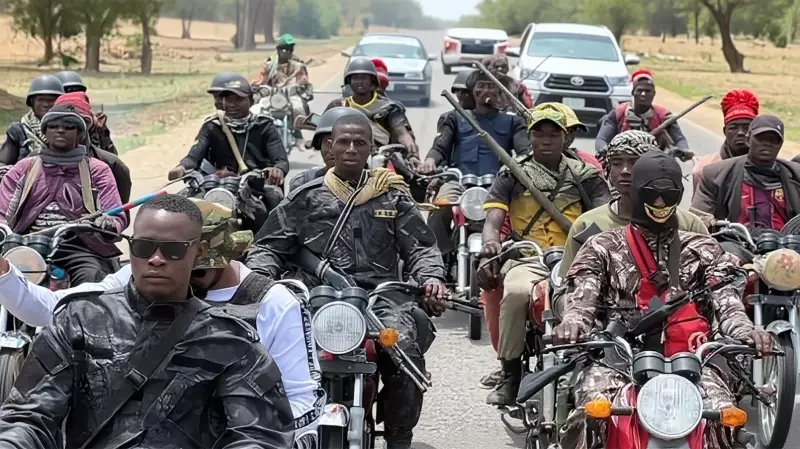
Niger State, the largest in Nigeria by landmass—more than twice the size of Belgium—has vast forests that provide sanctuary for bandits. These criminal gangs terrorize the northwest and central regions, raiding villages, abducting residents, and burning homes.
A key element of their operation is a network of local informants who spy on communities and identify potential targets. "They believe everyone from the city has money which is why we are always their target," Abdullahi explained. Victims are rarely released without a ransom, and those whose families cannot pay are often killed.
This reality forces impossible choices. Civil servant Isah Usman, 52, skipped his brother-in-law's wedding in Kontagora two weeks ago. "We no longer visit home, we only call and send whatever financial help we can offer," he said. Even the recent arrest of eight suspected bandit informants in Kontagora did not reassure him enough to travel.
The economic ripple effects are severe. Ifeoma Onyejekwe, a second-hand clothes trader from eastern Nigeria, faces a "slow" and "dull" festive season. She had built strong bonds with rural customers she considered "relations," but they have stopped coming to the city, and she fears highway kidnapping too much to take her business to them. "The relationship now is not that close," she said sadly.
The situation presents a grim paradox: while physical security is threatened, the social and cultural security provided by family and community ties is being sacrificed, leaving a nation fractured not just by violence, but by the fear it instills.