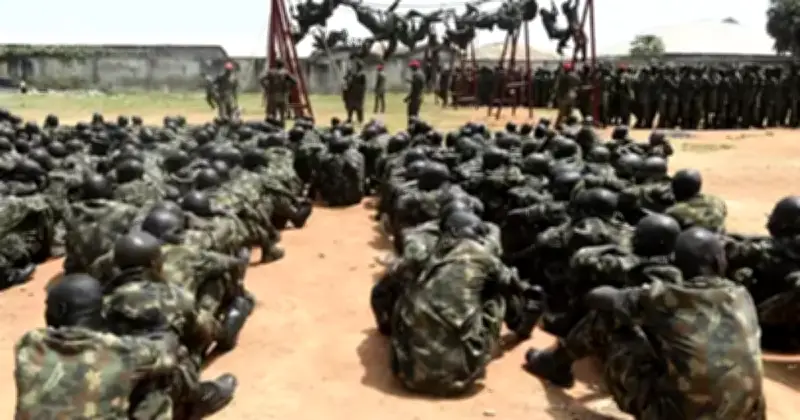
The Nigerian Army is deploying 14,000 freshly trained soldiers across the country following an expanded recruitment initiative approved by President Bola Tinubu to combat persistent insecurity. The Chief of Army Staff, Lieutenant-General Waidi Shaibu, announced that half of the 28,000 newly recruited personnel have completed an intensive 11-month training program focused on counter-insurgency, counter-terrorism, and combat skills.
Recruitment and Training Details
Speaking during an interactive session with media executives at the 2026 Nigerian Army Day Celebration in Port Harcourt, Shaibu explained that the decision to boost manpower came shortly after he assumed office. “Within one week of assuming command, I reviewed the manpower state of the Nigerian Army and saw the need to improve our strength because of the emerging security challenges across the country. I recommended to Mr. President the need to improve our manpower, and he graciously approved the recruitment of 28,000 personnel,” he said.
The new soldiers were trained at multiple facilities: 6,000 graduated from the Nigerian Army Depot in Zaria, 5,000 from the Osogbo training school, and about 3,000 more are expected to graduate from the Amasiri-Edda Training Depot. The remaining recruits are still undergoing training.
Emphasis on Specialized Training
Shaibu stressed that these are not ordinary recruits. The training curriculum was upgraded to focus on marksmanship proficiency, counter-insurgency, counter-terrorism, and critical field skills. “Having manpower is one thing; ensuring they are properly trained is another. We have reviewed the curriculum to focus on marksmanship proficiency, counter-insurgency, counter-terrorism and critical field skills. Before deployment, these young soldiers undergo almost 11 months of intensive training to ensure they are combat-ready,” he said.
Security experts have long argued that fighting insurgent groups requires more than just increasing troop numbers. Intelligence gathering, technology, logistics, and collaboration with local communities are also critical factors.
Operational Successes and Equipment
Shaibu revealed that Nigerian troops have arrested or neutralized 1,877 terrorists through intelligence-led operations conducted alongside other security agencies and international partners. He attributed recent successes to improved logistics, better training, government support, and strategic partnerships.
The Army is also investing heavily in modern warfare equipment. Mine-resistant vehicles, surveillance platforms, unmanned aerial vehicles (UAVs), and other combat equipment have been deployed across Nigeria. “UAVs are among the critical combat enablers in modern warfare. We have acquired and deployed them across the various geopolitical zones to support ongoing operations. Some have surveillance capabilities, while others have strike capabilities,” Shaibu said.
Locally manufactured combat vehicles are also in use. “One of the platforms recently produced locally is the Vampire combat vehicle. We procured about 15 of them, and they are currently being used in various operations, while some have even been deployed outside the country,” he added. The Army continues to work with the Defence Industries Corporation of Nigeria (DICON) and other indigenous manufacturers to strengthen local defense production.
Rescue Efforts and Welfare
On the recent abduction of pupils and teachers in Oyo State, Shaibu assured Nigerians that rescue efforts are ongoing. “Operations are currently ongoing to rescue those children, and we are making tremendous progress,” he said.
Shaibu also emphasized improving soldier welfare, including renovating barracks, expanding affordable housing schemes for retiring soldiers, and creating more opportunities for training and career development. “A well-motivated soldier is critical to operational effectiveness. We are investing in their welfare because the soldier remains one of our greatest national assets,” he said.
He appealed to Nigerians to support security agencies by providing credible information. “This is your Army. We need your support, your prayers and credible information to enable us to discharge our constitutional responsibilities effectively,” he added.
While the deployment of 14,000 new soldiers is expected to strengthen operations against terrorists, bandits, and kidnappers, many Nigerians will ultimately judge the success of the recruitment by whether it leads to safer roads, peaceful communities, and fewer attacks across the country.