Nigerian Army Detains Soldier Over N114 Million Fraud and Fabricated Role in Notorious Gang Leader's Death
The Nigerian Army has taken into custody a serving soldier, Staff Sergeant Amoke Simon, on allegations of large-scale fraud amounting to approximately N114 million. Additionally, the soldier faces charges for making false claims regarding his involvement in the 2010 operation that resulted in the death of the infamous kidnap suspect, Obioma Nwankwo, widely known as "Osisikankwu."
Arrest at Port Harcourt International Airport
Military sources report that the soldier, who is attached to the Army Engineers Corps based in Lagos, was apprehended at the Port Harcourt International Airport. He was allegedly attempting to travel to Abuja at the time of his arrest. This action followed an ongoing investigation into accusations of impersonation and financial misconduct.
The operation leading to his detention was executed by troops from the 14 Brigade and the 6 Division Provost units. Intelligence reports had linked him to multiple fraudulent activities, prompting the coordinated effort.
Deception of Abia State Government Officials
Preliminary findings indicate that the suspect allegedly misled officials of the Abia State Government by presenting himself as a key operative in the 2010 mission that targeted Osisikankwu. This false assertion reportedly earned him recognition and promises of assistance, including medical support.
Investigators have further revealed that the soldier was already under scrutiny by the Economic and Financial Crimes Commission (EFCC) due to separate fraud-related complaints involving various individuals and organizations.
Details of the Alleged Fraud
Sources familiar with the case claim that the suspect collected about N100 million from a company, obtained an additional N6 million from a private individual under false pretenses, and received approximately N8 million from a group of persons before going into hiding.
Military insiders also noted that the soldier allegedly intensified his fraudulent activities after sustaining injuries in a motorcycle accident in Lagos. He reportedly used this incident as justification to seek financial help from different people.
Contradiction of Military Records
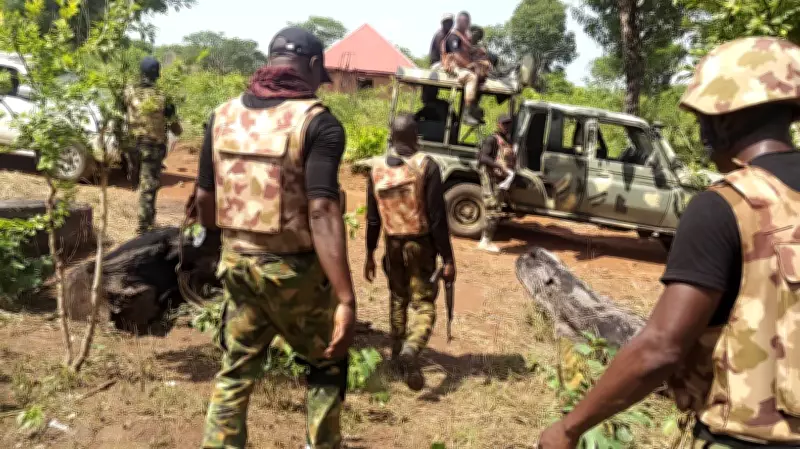
However, military records reviewed during the investigation reportedly show that the soldier was not part of the 2010 operation in Abia State. Officers who participated in the mission have maintained that the exercise was led by then Major Timothy Oparon under the command of Brigadier-General Andrew Audu. The operation involved a team of 26 soldiers deployed to track the gang leader in the forest, ultimately resulting in the killing of the suspect, the rescue of several kidnapped victims, and the recovery of weapons.
Further checks by military authorities indicated that the detained soldier was never deployed to Maiduguri or any North-East theatre of operation. This contradicts claims he allegedly made while seeking assistance, including statements that he was injured during operations against Boko Haram terrorists.
A source within the North-East operational command stated that the soldier had no record of frontline deployment, describing the alleged claims as fabricated and capable of undermining the sacrifices of personnel who actually took part in such missions.
Ongoing Investigation and Disciplinary Action
Military authorities have announced that arrangements are being made to transfer the suspect to Lagos for further investigation and potential disciplinary action. This incident has sparked renewed concerns about the necessity for proper verification of claims made by individuals seeking official recognition, compensation, or support based on security operations.
The case highlights the importance of stringent checks and balances within military and governmental systems to prevent exploitation and maintain the integrity of security forces.