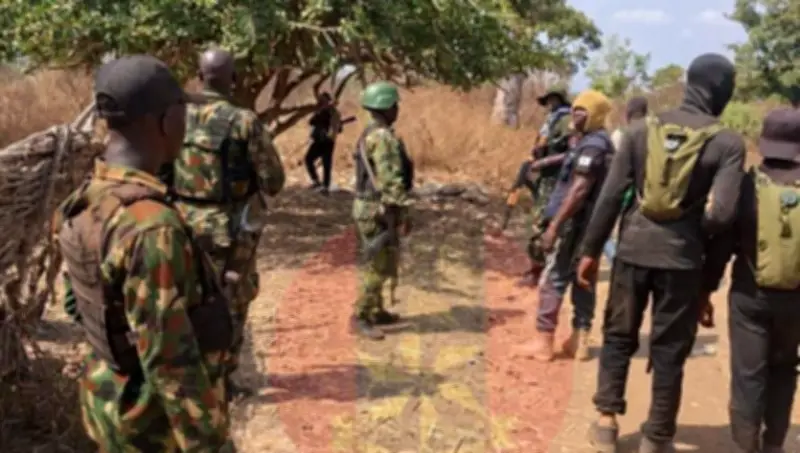
The Nigerian Army has announced that troops of Operation Hadin Kai (OPHK), a joint task force operating in the North-east, have successfully rescued 360 individuals who were abducted from a Boko Haram camp located in the Mandara mountain axis of Gwoza, Borno State. While local sources and security personnel indicated that the insurgents released the captives, the military stated that the rescue was the result of a major intelligence-driven operation.
Background of the Abduction
PREMIUM TIMES previously reported that Boko Haram fighters abducted 416 people, including minors, during an invasion of Ngoshe in March. Following the attack, the group released a propaganda video filmed inside Ngoshe, in which a commander boasted that the community would remain under their control throughout Ramadan and that they would observe Eid-el-Fitr prayers at the Ngoshe Central Mosque. However, subsequent clearance operations by troops of Operation Hadin Kai forced the insurgents to abandon the area. By the day of Eid al-Fitr, soldiers and local worshippers were able to safely conduct prayers at the same mosque, delivering a symbolic blow to the group's propaganda.
Video Ultimatums and Pleas
A few weeks after the abduction, the terrorists released a video on 10 April showing the captives. On 19 April, a Boko Haram commander identified as Mallam Abu issued a 72-hour ultimatum demanding a N5 billion ransom and warned against any military rescue attempt. In a subsequent video released on 17 May, the captives lamented their ordeal in the mountainous terrain and pleaded for government assistance.
The Rescue Operation
In a statement on Sunday, the acting spokesperson for Operation Hadin Kai, Haruna Sani, a lieutenant colonel, said the rescue mission was the culmination of weeks of intelligence gathering, surveillance, and operational planning. According to him, the operation was launched after security agencies received credible intelligence pinpointing the location of the hostages and identifying an insurgent support network sustaining the camp. Military intelligence personnel subsequently combined human intelligence, signals intelligence, and surveillance operations using unmanned aerial systems and long-range reconnaissance patrols to map the area, monitor insurgent activities, and assess the condition of the captives.
Mr Sani stated that a breakthrough came when intelligence operatives successfully penetrated the terrorist network, providing detailed information on the exact location of the abductees, the disposition of insurgent commanders, and planned movement routes. Coordinated information and psychological operations also created confusion within the insurgents' ranks, weakening their command structure ahead of the assault. Acting on this intelligence, troops launched a multi-axis operation under the cover of darkness, isolating the objective area and blocking potential escape routes.
“The operation achieved complete tactical surprise, overwhelming the terrorists before an organized response could be mounted,” he said. The army spokesperson added that several insurgents fled into the surrounding mountainous terrain while others surrendered as troops advanced on the enclave. Following the assault, soldiers secured and evacuated the hostages, who were subjected to medical screening before being moved to safe locations for treatment and humanitarian assistance.
Casualties and Aftermath
Mr Sani disclosed that two infants died from exhaustion due to the difficult terrain and harsh conditions endured during captivity. He described the rescue as one of the most significant hostage recovery operations conducted in the North-east in recent times and a major setback for the terrorist group. The military high command commended the troops involved, noting that the success demonstrated the effectiveness of intelligence-led operations and the growing coordination among security agencies. The high command also assured the public that follow-up clearance operations are ongoing to track down fleeing insurgents, dismantle remaining support networks, and prevent future abductions in the region.