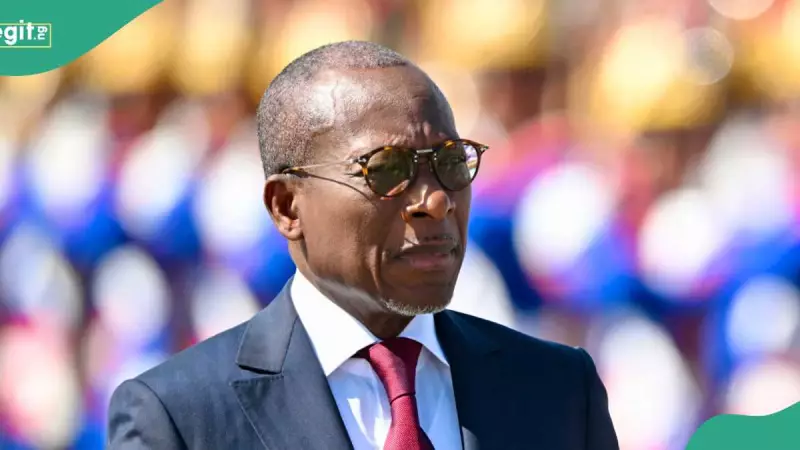
In a dramatic turn of events that has sent shockwaves across West Africa, soldiers in the Republic of Benin have announced the overthrow of President Patrice Talon and the seizure of state power.
Military Seizes National Television, Announces Takeover
The crisis unfolded in the early hours of Sunday, December 7, 2025, when a group of soldiers appeared on Benin's state television. Identifying themselves as the Military Committee for Refoundation, they declared the dissolution of the government and stated that President Patrice Talon had been "removed from office."
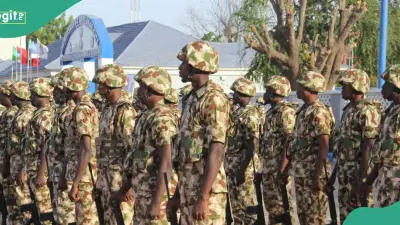
The broadcast showed uniformed soldiers reading a statement justifying their actions by condemning President Talon's management of the French-speaking nation. They announced a suspension of the constitution, the closure of all land borders, and the shutdown of the country's airspace, effectively isolating Benin.
Attack on Presidential Residence and Unrest in Porto-Novo
Reports indicate the unrest began with an armed attack on President Talon's residence in Porto-Novo, the capital. The assault was reportedly led by Lieutenant Colonel Pascal Tigri, who, with troops loyal to him, subsequently took control of the national broadcaster to make the coup announcement.
The French Embassy in Benin confirmed the instability, posting on X (formerly Twitter) that "gunfire was reported at Camp Guezo" near the president's official residence. The embassy urgently advised French citizens to remain indoors. As of the announcements, President Talon's whereabouts were unknown.
Historical Context and Regional Implications
This attempted power grab marks a significant rupture in Benin's recent political stability. The nation, bordered by Togo, Nigeria, Burkina Faso, and Niger, has a deep history of military interventions. Between 1963 and 1972, the country, then known as Dahomey, witnessed at least six coups.
The most notable was the 1972 coup by Major Mathieu Kérékou, who established a Marxist-Leninist regime. However, since Benin's transition to a democratic system in 1991, it has been regarded as a relatively stable democracy in a region recently plagued by coups. This development threatens to further destabilize West Africa's political landscape.
The coup announcement also comes amid recent tensions over border policies. Benin had recently shut several land borders linking to Nigeria, a move aimed at stopping the export of agricultural commodities like soya beans and maize, following a directive from President Talon's administration.
The situation remains fluid, with the military junta in control of national communications and borders sealed. The international community is closely monitoring events, concerned about a potential violent power struggle and the fate of the ousted president.