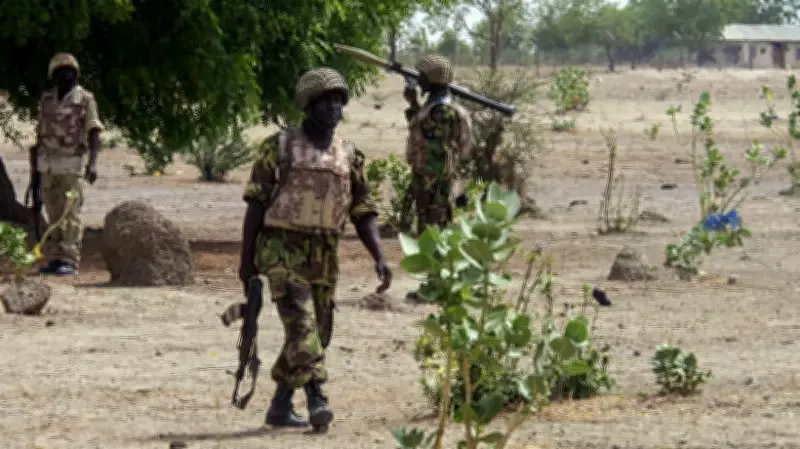
Troops Capture 18 Suspected Boko Haram Logistic Suppliers in Borno State
In a significant security operation, troops from the North-East Joint Task Force, known as Operation Hadin Kai (OPHK), have apprehended 18 individuals suspected of being logistic suppliers for the Boko Haram terrorist group. The arrests occurred along the 40-kilometre Maiduguri-Magumeri Road in Borno State, marking a critical blow to the insurgents' support networks in the region.
Interception and Confessions Reveal Supply Network
According to a credible military source based in Maiduguri, the suspects were intercepted while traveling along the 85-kilometre Maiduguri-Gubio Road. They were allegedly en route to deliver essential logistic supplies to terrorists operating in the northern parts of Borno State. Preliminary investigations conducted after the arrests revealed that all 18 suspects confessed to regularly supplying goods and services to the terror group.
The suspects admitted to routinely purchasing and immediately delivering assorted logistic items to insurgents still active in Guzamala and Kukawa local government areas of the state. This confession underscores the persistent threat posed by Boko Haram in these remote regions, with the Gudumbali-Kukawa axis identified as an active and functional hideout for the terrorists.
Economic Hardship as a Driving Factor
The Army reported that the suspects justified their actions by citing a lack of employment opportunities, highlighting a critical socio-economic challenge in Maiduguri and its surrounding areas. This development validates recent remarks by the Chief of Defence Staff, who emphasized the link between economic hardship and the sustenance of insurgency logistics networks in Borno, Adamawa, and Yobe states.
The arrest brings to light the crucial role of civilian collaborators in sustaining terrorist operations, particularly in remote communities such as Gubio and Gudumbali. It points to a broader issue where economic desperation can fuel support for insurgent activities, complicating counter-terrorism efforts in the region.
Call for Comprehensive Strategies
In response to these findings, the Army has called for a comprehensive non-kinetic approach to address the root causes of insurgency. This strategy involves combining military operations with economic empowerment and job creation initiatives. By tackling the socio-economic drivers that enable logistic support for terrorists, authorities aim to weaken the insurgency's infrastructure and promote long-term stability in the affected states.
The operation not only disrupts Boko Haram's supply chains but also underscores the need for holistic solutions that integrate security measures with developmental programs to combat terrorism effectively in Nigeria's northeastern region.