U.S. Marines Arrive in Gulf as Pentagon Prepares Contingency Plans for Potential Iran Ground Operations
The Pentagon is reportedly developing contingency plans for potential ground operations in Iran, as thousands of additional U.S. military personnel arrive in the Middle East region. According to multiple reports, these plans would involve targeted raids by special forces and conventional troops rather than a full-scale invasion, though no final decision has been made regarding implementation.
Trump Administration's Position and Military Deployment
Former President Donald Trump has not approved any such action and has previously downplayed the idea of deploying ground forces to Iran. "I'm not putting troops anywhere. If I were, I certainly wouldn't tell you, but I'm not putting troops," Trump told reporters in the Oval Office during his administration.
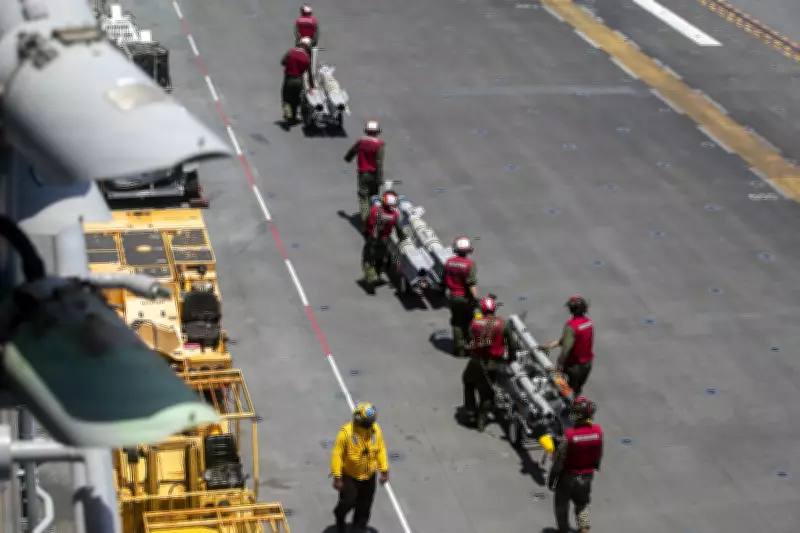
Despite these statements, approximately 3,500 additional U.S. personnel have entered the region as part of a deployment led by the USS Tripoli (LHA-7), which carries Marine forces and significant assault capabilities. This military buildup represents a substantial increase in American presence in the strategically vital Persian Gulf area.
Iranian Response and Regional Tensions
Iranian officials have responded with strong warnings to the increased U.S. military presence. Speaker Mohammad Bagher Ghalibaf declared that Iran's armed forces are prepared for any confrontation with American troops.
"[The armed forces]... are waiting for the arrival of American troops on the ground to set them on fire and punish their regional partners forever," Ghalibaf stated. "Our firing continues. Our missiles are in place. Our determination and faith have increased."
The escalation comes amid broader regional tensions, including recent threats by Iran to target U.S.-linked institutions following strikes on Iranian infrastructure. Speculation has focused on Kharg Island in the Persian Gulf as a potential strategic objective for any military operation, given its crucial role in handling a significant portion of Iran's crude oil exports.
Domestic Opposition and Official Statements
Any potential ground operation against Iran is expected to face significant domestic opposition within the United States. Polling cited in reports indicates that a majority of Americans oppose deploying troops on Iranian soil, reflecting wariness about another major military engagement in the Middle East.
White House press secretary Karoline Leavitt emphasized that planning does not indicate a final decision has been made. "It's the job of the Pentagon to make preparations in order to give the Commander in Chief maximum optionality. It does not mean the President has made a decision," she stated, clarifying the administration's position on the contingency planning.
Strategic Implications and Regional Dynamics
The deployment of U.S. Marines to the Gulf region and the development of contingency plans for potential ground operations in Iran represent a significant escalation in military preparedness. This development occurs within the complex geopolitical landscape of the Middle East, where tensions between Iran and the United States have fluctuated for decades.
The presence of the USS Tripoli and its Marine complement provides the United States with enhanced rapid response capabilities in the region. However, military analysts note that any ground operation in Iran would present substantial challenges, including difficult terrain, determined Iranian resistance, and complex regional alliances that could be affected by such actions.
As the situation continues to develop, international observers are monitoring both military movements and diplomatic channels for indications of how this heightened state of preparedness might influence broader U.S.-Iran relations and regional stability in the coming months.