Ado Ekiti, Ekiti State — A staff member of the Benin Electricity Distribution Company (BEDC) tragically lost his life on Saturday, August 1, 2026, after being electrocuted while working on an electricity pole. The incident took place opposite the Federal Polytechnic Satellite Campus, where the worker was part of a team assigned to repair a fault and restore power to the area.
The BEDC crew had responded to a disruption that had left residents without electricity. According to eyewitnesses, the man was perched atop the pole when he suddenly began to show signs of weakness and disorientation, raising immediate fears that he had suffered a severe electric shock. His condition quickly deteriorated, prompting those nearby to raise the alarm.
Panic, Rescue, and Emergency Response
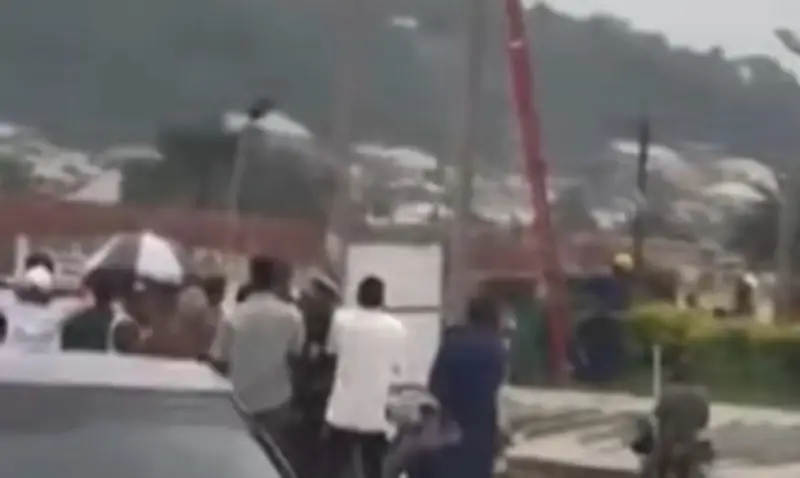
Panic spread among residents and passersby as the gravity of the situation became clear. People gathered around the pole, some trying to offer assistance while others shouted for help. A fellow BEDC staff member was reportedly the first to climb up the pole to aid his colleague, but it became evident that specialized equipment was needed to bring him down safely.
The Ekiti State Fire and Emergency Service operatives soon arrived at the scene and took charge of the rescue operation. With professional precision, they managed to bring the unconscious worker down from the pole. He was then quickly placed in an ambulance and rushed to a nearby hospital for emergency medical treatment.
Tragic Outcome at the Hospital
Upon arrival at the hospital, the victim was immediately attended to by medical personnel who worked to stabilize him. However, the electric shock had caused severe internal damage. Hospital sources confirmed that the BEDC staff member subsequently died while receiving treatment, leaving the medical team and his colleagues in shock.
The news of his death was met with sorrow at the scene, where a somber mood enveloped the crowd. Many expressed sympathy and called for a thorough investigation into the incident to determine if proper safety measures had been followed.
The Perils of Power Distribution Work in Nigeria
This tragic incident shines a light on the perilous conditions under which electricity distribution workers operate in Nigeria. These workers are regularly exposed to high-voltage lines, often without the luxury of guaranteed safety equipment. In emergency repair situations, the pressure to restore power quickly can increase the risk of accidents. A single lapse in concentration or a missed safety check can result in tragedy, as occurred on Saturday.
BEDC, which serves states including Ekiti, Edo, Delta, and Ondo, is tasked with maintaining vast networks of poles, cables, and transformers. Workers are trained to follow strict safety protocols, but the aging infrastructure and the urgency of repairs can create lapses. In many cases, workers must handle live cables, and any miscalculation can be fatal.
In Nigeria, electricity workers are often called upon to work during adverse weather conditions and at odd hours, especially when outages occur. These men and women are the unsung heroes of the power sector, frequently operating under challenging and hazardous circumstances.
Community Reaction and Calls for Enhanced Safety
The death of the BEDC staff member in Ado Ekiti has reignited calls for better safety standards in the power sector. Community members, including those who witnessed the incident, have urged utility companies to provide their staff with modern safety gear and to invest in regular safety drills. Some have also pointed out that upgrading the power grid could reduce the need for dangerous manual repairs.
The Federal Polytechnic Satellite Campus area, a busy part of Ado Ekiti, became the site of this unfortunate event. The presence of the Fire and Emergency Service and the quick response of the victim's colleagues were commendable, but they could not save his life. The incident serves as a stark reminder of the human cost behind the essential service of electricity delivery.
As investigations are expected to follow, the family of the deceased, his coworkers, and the entire community are left to mourn a life lost in the line of duty. The hope is that lessons from this tragedy will lead to concrete improvements to protect those who risk their lives to keep Nigeria's lights on.