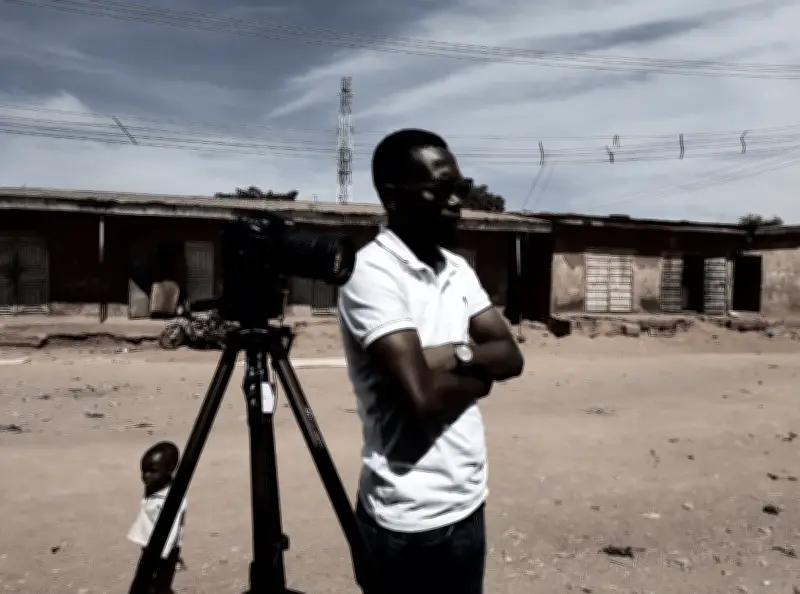
Low remuneration and job risks are driving a significant exodus of journalists from full-time practice in Nigeria, according to a new survey. Of 50 former full-time practitioners surveyed, 64 per cent identified low pay as their primary reason for leaving the profession.
Financial struggles force journalists out
Amos Abba, a finalist for the 2019 Thomson Reuters Young Journalist Award, left full-time journalism in Nigeria in 2022. “I was just exhausted,” Mr Abba said. “If I had depended on my take-home for the month, it was usually not sustainable. I had to look for other sources of livelihood to sustain my living. For me, that was the biggest challenge.”
After graduating in 2016, Mr Abba began his career through unpaid freelance work for a major Nigerian newspaper until 2018. He later secured a full-time job in 2019 but faced persistent financial challenges due to poor remuneration. He left in 2022 to pursue a master’s degree in the United States and has not returned to full-time Nigerian journalism.
Kabir Adejumo, a winner of the 2020 Thomson Reuters Young Journalist Award, also left full-time practice within five years. He won the award for exposing how border guards on the Nigeria-Benin Republic border allowed people to cross in violation of COVID-19 rules. “I left because I felt like I wanted a bigger challenge and I wanted better pay,” he said.
Pay below minimum wage
Paylab, a Slovakia-based salary survey platform, estimates the monthly minimum and average salaries for Nigerian journalists at N172,461 ($126.55) and N347,760 ($255.17), respectively, based on the Central Bank of Nigeria’s rate of N1,362.84 to one dollar as of June 9, 2026. However, many journalists earn well below the N70,000 ($51.36) national minimum wage.
A 28-year-old broadcaster in Nigeria’s South-west earns N50,000 ($36.69) monthly. “I survive through careful budgeting, taking on small freelance media tasks like voice-overs, event anchoring, and other side engagements,” the journalist said. In Northern radio stations, pay falls below half the minimum wage, with two journalists earning N30,000 ($22) and N40,000 ($29.35) respectively.
Short careers and side hustles
About 67 per cent of journalists aged 18 to 34 spend barely five years on the job, survey data show. To supplement meagre salaries, 38 per cent of former journalists established side businesses, 36 per cent engaged in freelancing, and 32 per cent provide public relations consulting. Most concerning, 14 per cent admit to accepting money, commonly known as “brown envelope”, to stay afloat.
Lekan Otufodunrin, executive director of Media Career Services, mentors young journalists and offers a long-term vision. “People need to be convinced by real examples, and each time we do that, their anxiety is not as bad as it used to be,” Otufodunrin said.
Proposed legislation and challenges
The Nigeria Union of Journalists (NUJ) is canvassing support for a Media Enhancement Bill to enhance labour rights. “We have one or two [National Assembly] members we have identified, and they have agreed to sponsor the bill. We hope and pray that, at the end of the day, the bill will scale through,” said the union’s president, Alhassan Yahaya. However, compliance in the private sector may be difficult.
Beyond low pay, other factors drive journalists away. Aishat Babatunde left after three years due to personal struggles, newsroom politics, and financial challenges. She is now pursuing a doctoral degree in comparative literature. “That seems like a dream that is far gone right now,” she says.
Political appointments and safety risks
Political appointments also draw journalists away. Femi Owolabi, former pioneer Head of Investigations at The Cable Foundation, entered politics after helping develop a policy document for a gubernatorial candidate. “We carried out several investigations and made recommendations, but nothing substantial was done by those in authority. That was always discouraging,” he said. He also survived a near-fatal experience covering the Boko Haram insurgency.
Kabir Adejumo faced threats after reporting how a pastor allegedly raped a teenager. “At that point, the threats didn’t just test my professional resolve but also my personal courage,” he said. He also believed he was targeted for execution by bandits in Zamfara State.
Press freedom and attacks
As of 11 May 2026, the Centre for Journalism Innovation and Development (CJID) reported 86 deaths and 1,326 attacks since tracking began in 1986, including physical assault, threats, unlawful arrests, and unlawful imprisonment. Nigeria ranks 112 out of 180 countries in press freedom, according to Reporters Without Borders.
Mr Otufodunrin recommends a tripartite approach to journalist safety: government should make the environment safe, journalists should avoid risky situations, and newsrooms should provide backup. The NUJ is working to provide health and life insurance coverage for journalists. In March, the FCT council enrolled 150 journalists in the FCT Health Insurance Scheme.
Newsroom struggles
Dayo Aiyetan, executive director of the International Centre for Investigative Reporting (ICIR), noted that the not-for-profit newsroom struggles to retain talent due to tight funding. “ICIR receives donor funding basically to promote investigative journalism in Nigeria. But we went beyond that. We started our own newsroom. The truth of the matter is that there is no money to fund that newsroom. It is from the non-profit’s savings that we fund the newsroom.”
Internal data from a top Nigerian newsroom shows that approximately 44 per cent of journalists who worked there as of March 2022 had left the organisation or journalism entirely by March 2026. “With their constant exit, we don’t get to read many investigative stories again,” said Tunde Akanni, a professor of journalism and communications at Lagos State University.
Foreign outlets as both lifeline and challenge
Transitioning to foreign news organisations like the BBC, Deutsche Welle, AFP, and Reuters has become a lifeline for top talent seeking financial stability. However, one journalist who requested anonymity noted that while pay and global audience were upgrades, they felt their stories were sometimes treated as marginal.
Foreign outlets also poach talent from local newsrooms. “They are killing us!” Mr Aiyetan exclaimed. “We can’t compete with them in terms of pay. They have enormous resources, but I think they are selfish.” He proposed that foreign outlets partner with local newsrooms instead of poaching. Mr Akanni foresees challenges, as foreign outlets have different agendas.
Emotional attachment persists
Despite leaving full-time practice, many journalists remain emotionally attached. “I didn’t completely stop,” says Femi Owolabi. “I still contribute opinions and occasional reports from time to time.” Banjo Damilola, Nigeria’s 2020 Investigative Journalist of the Year, said she would not return to a local newsroom even if offered N1 million. “Sustenance is important for me. I can’t return to any newsroom offering me N1 million. I have responsibilities that working in a local newsroom won’t just make sense,” she said.
This piece was made possible by support from the International Center for Journalists’ Michael Elliott Award.