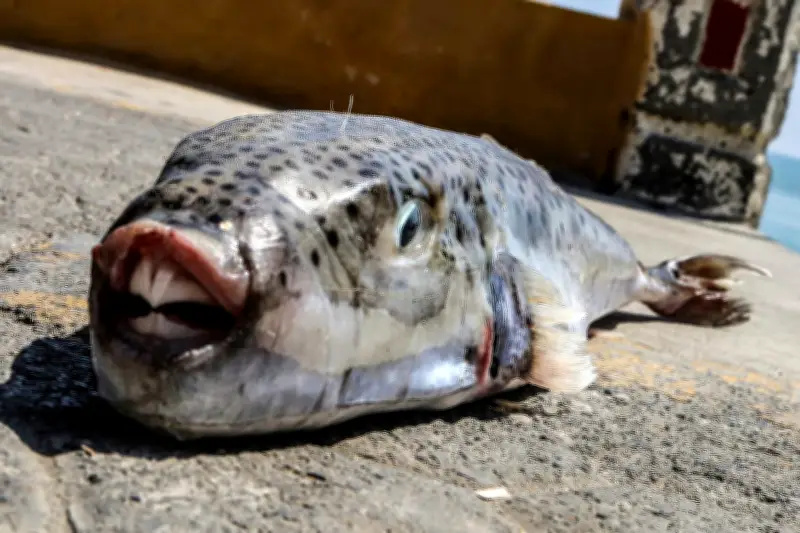
Greece is facing an invasion of a toxic fish with human-like teeth just as the country's peak tourist season begins, raising concerns among fishermen and prompting a limited public health response. The silver-cheeked toadfish, scientifically known as Lagocephalus sceleratus, is a torpedo-shaped species with sharp, protruding teeth and highly toxic flesh containing tetrodotoxin, a potent neurotoxin that can cause respiratory and cardiac failure, making it unsafe for human consumption.
Origin and Spread of the Invasive Species
Native to the Indian Ocean, the silver-cheeked toadfish is believed to have entered the Mediterranean via the Suez Canal, with warming sea temperatures facilitating its northward spread. Fishermen in Greece are now being offered financial incentives to catch the invasive species as it damages marine equipment and disrupts local fishing activity. While authorities say the fish has not been reported in designated bathing areas at popular Greek island resorts, it has caused significant disruption off Crete and other islands, where it has been found tearing through fishing nets.
Impact on Fishermen and Control Measures
“It’s got to the point where we might go out fishing one day and then spend the next three days fixing our nets,” said Giorgos Kyriakakis, of a Cretan fishermen’s association, speaking to Greek public broadcaster ERT. “They eat our catch and damage our nets, that’s very costly,” he added. The issue has also prompted neighbouring Cyprus to introduce a similar capture and control programme earlier this year.
From Friday, Greece began offering €5.33 per kilogram for catches of the fish, marking the first time such a scheme has been implemented in the country, Agriculture Minister Margaritis Schinas said ahead of the launch. He added that the fish, which is typically found in tropical waters and belongs to the pufferfish family, will be frozen and incinerated at government facilities, with the scheme expected to expand beyond the currently affected regions.
Public Safety Concerns and Incidents
Public awareness has grown following viral videos shared by fishing crews showing the fish biting through objects such as aluminium cans and wood. Health concerns were also raised after an elderly woman in Varkiza, near Athens, was bitten while swimming and required stitches. Local reports said the fish attacked without provocation.
The Greek Red Cross has since issued safety guidance, warning of potential injuries and highlighting the dangers posed by the fish’s toxic organs. Marine expert Nota Peristeraki of the Hellenic Centre for Marine Research warned against close contact. “If you see it approaching you, you really need to avoid it,” she said.
Expert Advice and Reassurance
She added that most incidents occur when people attempt to feed or handle the fish, noting that rare cases of severe injury, including loss of fingers or toes, have been recorded. However, she stressed such encounters remain uncommon, adding: “You are more likely to encounter a shark.”
Authorities and tourism stakeholders in Crete have urged against alarmism, stating that the presence of the species in the Mediterranean has been known for years and does not pose an immediate threat to swimmers. “There is, however, no ‘invisible’ or imminent danger to bathers. Marine predators do not threaten the safety of visitors and residents,” a joint statement from 16 medical and tourism associations on Crete said. It added that “exaggeration is often a feature of public debate.”