Ukraine has intensified its maritime campaign against Russia, claiming to have targeted more than 200 vessels—officially 201—linked to the Kremlin's so-called "shadow fleet" over the past three weeks. The offensive aims to disrupt Russian shipping in the Black Sea and Sea of Azov, cutting off revenue streams that fund Moscow's war effort.
Operation MoLoChKa: A Coordinated Maritime Assault
According to reports, the operation, named MoLoChKa, began on July 6 and has focused on vessels transporting oil, grain, and other cargo that generate income for Russia's military operations. Recent footage reportedly shows multiple vessels being hit during the campaign: one sustained damage, another caught fire, two were abandoned, and a fifth was towed away after an attack.
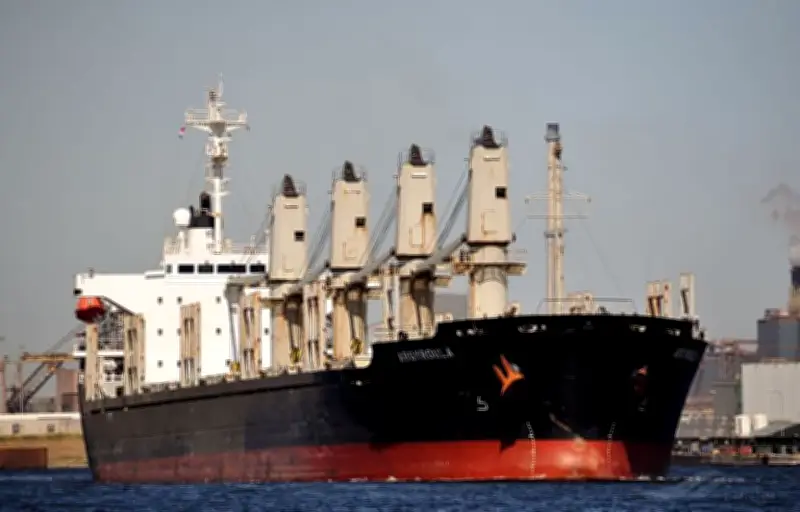
Among the vessels struck was the Belize-flagged bulk carrier New Victory, formerly known as Argyroula, which was damaged by a Ukrainian drone near the Russian port of Taman. The campaign has also targeted tankers, bulk carriers, ferries, gas carriers, tugboats, and floating cranes operating in waters linking mainland Russia with occupied Crimea.
Strategic Importance of the Kerch Strait
The Kerch Strait, which connects the Black Sea and the Sea of Azov, remains a strategically vital route for Russian military logistics and commercial shipping. Reports indicate that repeated drone attacks have forced Russia to temporarily suspend civilian shipping through the strait on several occasions. Ukraine says disrupting maritime traffic through the area is intended to isolate occupied Crimea and reduce Russia's ability to finance its military operations.
The campaign represents a significant escalation in Ukraine's ability to project power at sea, utilizing unmanned systems to target a wide array of vessel types. Analysts note that the shadow fleet—often composed of aging, poorly insured ships—plays a key role in Russia's circumvention of international sanctions on oil and grain exports.
Expanded Theater: Caspian Sea Strike
The operation comes days after Ukraine reportedly struck an Iranian cargo vessel in the Caspian Sea. Ukrainian officials alleged the ship was transporting drone and missile components from Iran to Russia rather than civilian cargo. This strike marks a broadening of Ukraine's maritime operations beyond the Black Sea basin.
Iran condemned the strike, saying one sailor was killed and another injured. Iranian Foreign Minister Abbas Araghchi described the attack as "a blatant UN Charter violation done at Israel's behest to drag Europe into its war." He added that the incident "CANNOT GO UNANSWERED." Russia also criticized the attack, with Kremlin spokesman Dmitry Peskov accusing Ukraine of expanding what Moscow described as its "terrorist attacks" and suggesting the strike should be regarded as an attack on Iran.
Impact and International Reactions
The shadow fleet has been a persistent challenge for Western nations seeking to enforce sanctions on Russian energy exports. Ukraine's strikes aim to degrade Russia's logistics and reduce its war-financing capacity. The Kerch Strait disruptions have already caused delays and insurance cost spikes for Russian shipping. While Russia has not officially confirmed the numbers, satellite imagery and open-source intelligence have corroborated several of the attacks.
International observers have cautioned that the escalation could increase tensions in the region, particularly involving Iran. The Caspian Sea strike, if confirmed, would represent a significant geographic expansion of the conflict. Ukraine has not formally acknowledged responsibility for that attack but has not denied it either.