Dubai was placed on high alert after Iran launched a barrage of missiles and drones toward the United Arab Emirates for the first time since the ceasefire, escalating tensions in the Gulf region. The attack came just hours after US President Donald Trump announced a military operation to escort stranded ships through the Strait of Hormuz.
Air Defense Response
According to UAE authorities, air defense systems successfully intercepted 12 ballistic missiles, three cruise missiles, and three drones. Another projectile reportedly crashed into the sea. Explosions were heard across parts of the country as defenses responded to the threat.
“Air defense systems are currently responding to a missile threat,” the UAE’s National Emergency Crisis and Disaster authority said in a statement. “Please remain in a safe location and follow official channels for warnings and updates.”
Maritime Incidents
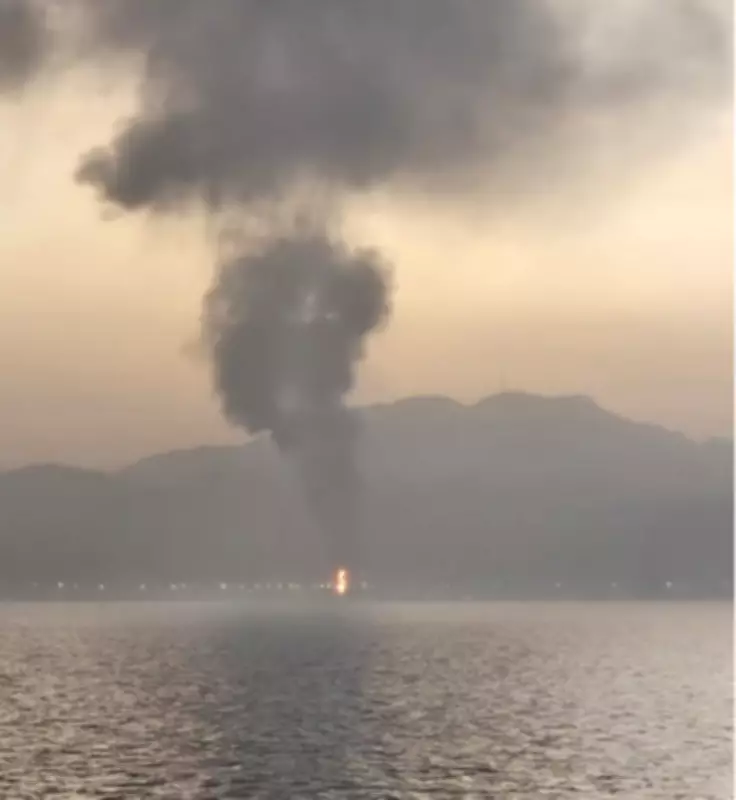
The United Kingdom Maritime Trade Operations reported an incident involving a cargo vessel approximately 36 nautical miles north of Dubai, confirming that all crew members were accounted for. Separate reports indicated another fire on a vessel west of Mina Saqr.
Fujairah Oil Zone Fire
Fires broke out at the Fujairah Oil Industry Zone following what officials described as a drone strike. Three Indian nationals were reported injured in the incident.
Official Condemnation
The UAE’s foreign ministry directly blamed Iran for the attacks. “The resumption of such acts represents a dangerous escalation, an unacceptable action, and a direct threat to the country’s security and stability,” the ministry said in a statement.
Air Traffic Disruption
Air traffic in the region was also disrupted, with flights to Dubai and Sharjah delayed or diverted, according to flight tracking data.
Impact in Oman
Reports from Oman indicated that a residential building in Bukha was hit, injuring at least two people and causing damage to nearby vehicles.
Iranian Response
Iranian officials rejected accusations of targeting oil infrastructure and instead blamed US actions in the region. Iranian state media said the fire at Fujairah was “the result of US military adventurism to create passage for illegal ship transit.”
Ahmad Vahidi, commander in chief of the Islamic Revolutionary Guard Corps, warned that any vessel passing through the Strait of Hormuz without Iran’s approval would be considered a target. “No vessel has the right to pass through the route without permission,” he said. “If this is violated, it will be considered a legitimate target.”
US Operation
The escalation follows the launch of “Project Freedom,” under which the US has reportedly deployed thousands of troops, naval assets, and aircraft to secure passage for commercial vessels trapped in the waterway. Trump defended the move as a humanitarian effort.
“For the good of Iran, the Middle East, and the United States, we have told these countries that we will guide their ships safely out of these restricted waterways,” he said, adding that many vessels were running low on supplies.
The Strait of Hormuz remains a critical global shipping route, and the latest developments have heightened fears of a wider regional conflict.