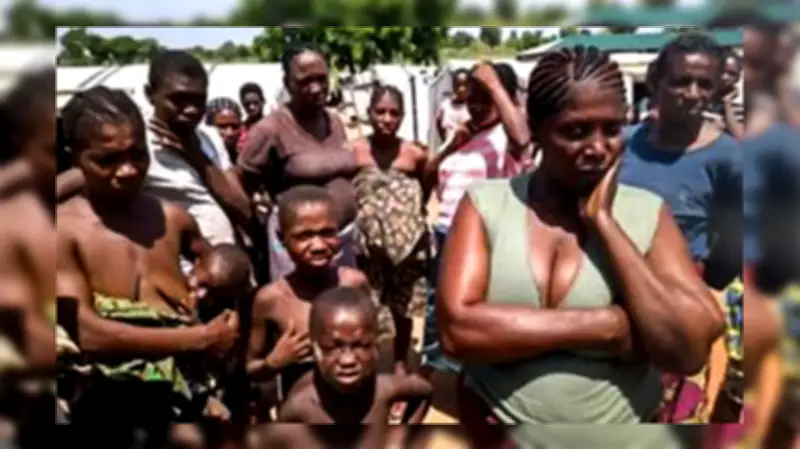
One year after the Yelewata massacre in Benue State claimed over 200 lives, a fresh attack in Kebbi State has intensified concerns over Nigeria's security crisis, prompting renewed calls for decisive action from political leaders, religious figures, and international observers.
At least 20 people were killed when suspected Lakurawa insurgents attacked Fasken Rafi village in Arewa Local Government Area of Kebbi State. Residents described it as one of the most coordinated assaults on the area in recent times. The attack comes amid rising anxiety over persistent killings, kidnappings, and banditry across the country, including the recent death of former Director of Defence Information, retired Major General Rabe Abubakar, in bandits' custody, and the abduction of teachers and pupils in Oyo State on May 15.
Government officials confirmed the Kebbi attack, prompting the state government to dispatch a delegation led by Deputy Governor Umar Tafida to the affected community. Tafida pledged immediate reinforcement of security operations. “This senseless loss of lives deeply saddens us. This administration remains unyielding in its commitment to restoring peace. We are immediately deploying additional security personnel and critical operational resources to this axis to guarantee the safety of lives and property,” he said.
The attack occurred days after the Emir of Argungu, Mohammed Mera, urged communities to obtain legal permits for firearms and organise lawful self-defence measures against bandits. “If you acquire such weapons legally, make sure the attackers are aware that your community possesses the means to defend itself. This alone can serve as a warning and discourage the invaders from attacking,” he said.
The renewed violence came as residents and leaders in Benue marked the first anniversary of the June 13-14, 2025, massacre in Yelewata, Guma Local Government Area, where armed attackers killed more than 200 people. At the unveiling of a memorial monument, Senate Minority Leader Patrick Abba Moro criticised the Federal Government for failing to fully confront security challenges. “Can we in all honesty gallivant around during campaigns and tell the people to vote for us again when the mandate that has already been given to us and which we are still holding has not been effectively applied for the people's well being? We need to wake up,” Moro said.
Catholic Bishop of Makurdi Diocese, Wilfred Anagbe, called for a shift from maintaining displaced persons in camps to resettling them in ancestral communities. He argued that prolonged dependence on IDP camps weakens communities and erodes human dignity, while also accusing the Benue and Nasarawa state governments of failing to act on intelligence reports warning of the attack.
Internationally, US Congressman Riley Moore renewed calls for focus on violence affecting Christian communities. “One year ago, Fulani Islamic terrorists stormed Yelwata, Nigeria, slaughtering more than 200 Christians. Most were women and children sheltering at a local Catholic mission. Today, we remember the martyrs. The world must not forget the Christian genocide in Nigeria,” he wrote on X.
The Christian Association of Nigeria (CAN) declared Black Sunday, urging urgent action on insecurity. CAN President Archbishop Daniel Okoh said democracy is founded on the sanctity and dignity of human life, the rule of law, justice, and the protection of citizens. “Today, we are not only mourning; we are speaking with one voice,” he said, adding that the period of mourning coincided with Democracy Day, offering an opportunity to recommit to building a nation where citizens can live safely.
Deputy Speaker of the House of Representatives, Benjamin Okezie Kalu, called for increased local production of arms and ammunition and stricter financial monitoring to disrupt criminal financing. He urged stakeholders to reduce reliance on imported military hardware by investing in domestic manufacturing capabilities.
Former Director-General of Voice of Nigeria, Osita Okechukwu, proposed allocating three per cent of the Federation Account to fund the proposed State Police system. He warned that leaving funding solely to state governments could undermine the reform, given varying fiscal capacities.
Human rights lawyer Femi Falana condemned government negotiations with terrorists and bandits, describing them as illegal under the Terrorism (Prevention and Prohibition) Act. He cited Section 12, which prescribes a minimum of 20 years imprisonment for anyone who knowingly participates in meetings connected to terrorist groups. “Those who engage in negotiations or meetings with terrorists are acting outside the law,” Falana said.
In Ondo State, the Amotekun Corps intercepted several women and youths carrying household items into forests under suspicious circumstances. Commander Adetunji Adeleye paraded 97 suspected criminals, including kidnappers, armed robbers, and informants for kidnappers. “Upon interrogation, some claimed they were fleeing security challenges in the North. However, investigations revealed that some had been invited into the forests by individuals already residing there,” Adeleye said.
Bauchi State Governor Bala Mohammed visited Oyo State Governor Seyi Makinde following the abduction of teachers and pupils in Oriire Local Government Area. Mohammed called for a comprehensive overhaul of Nigeria's security architecture, stressing the need for stronger coordination among security agencies and improved collaboration with citizens.