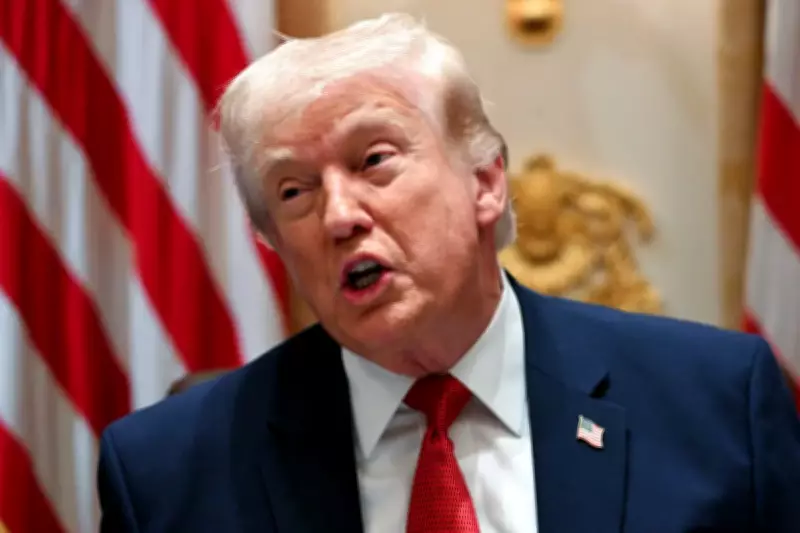
United States President Donald Trump has stated that the U.S. naval blockade against Iran could continue for months, a strategy he claims is more effective than bombing in compelling Tehran to abandon its nuclear program.
Oil Markets React
Following Trump's remarks, oil prices surged to their highest levels in over four years. Brent crude hit $126.41 per barrel, while West Texas Intermediate rose to $110.31 before paring some gains.
Military Review
The President is scheduled to meet with Admiral Brad Cooper, head of U.S. Central Command (CENTCOM), on Thursday to review new military options. CENTCOM reported a significant milestone this week, claiming it successfully redirected the 42nd commercial vessel attempting to bypass the blockade.
Economic Impact on Iran
Officials estimate that 41 tankers carrying 69 million barrels of oil, valued at over $6 billion, are currently stalled and cannot be sold by the Iranian regime. Trump told Axios, “They are choking like a stuffed pig. And it is going to be worse for them,” emphasizing his strategy of economic strangulation.
Geopolitical Tensions
The blockade comes amid significant geopolitical friction. Negotiations between the U.S. and Iran are at a standstill. Vice President JD Vance recently aborted two trips to Pakistan intended for mediation, as U.S. officials expressed uncertainty over who is currently leading Iranian policy following Israeli strikes on top officials.
International Reactions
Russian President Vladimir Putin warned Trump of “damaging consequences” if the U.S. and Israel resume active warfare. Meanwhile, Trump threatened to reduce U.S. troop presence in Germany after Chancellor Friedrich Merz refused to support the blockade or a peacekeeping force in the Strait of Hormuz.
Humanitarian Concerns
The UN Development Programme warned that the conflict and rising fertilizer costs could plunge 30 million people into poverty globally. In Iran, the rial has hit historic lows, fueling a sense of despair among residents.
Iranian Stance
Despite the pressure, Iranian Parliament Speaker Mohammad Bagher Ghalibaf insisted the blockade is a tool intended to “make us collapse from within.” Tensions also remain high on the Lebanese front; despite a ceasefire, the Lebanese army reported that recent Israeli strikes have killed and wounded its soldiers, while a UN-backed report indicates over 1.2 million people in Lebanon face acute hunger due to the ongoing instability.