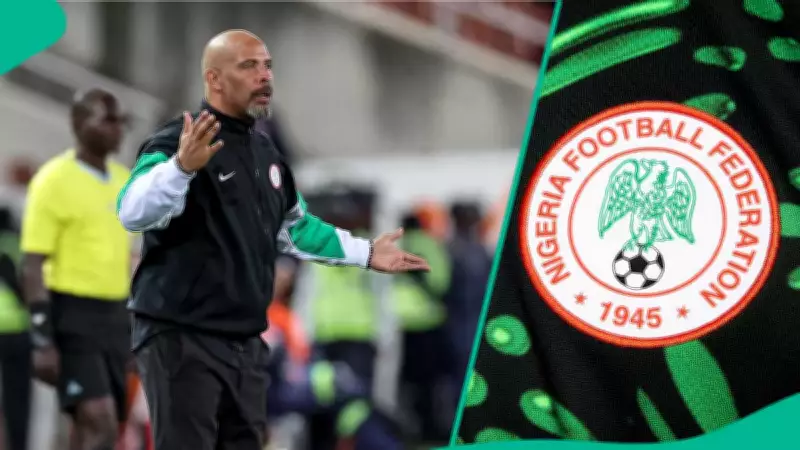
Super Eagles Coach Eric Chelle Clarifies $130,000 Monthly Salary Request
Super Eagles head coach Eric Chelle has publicly addressed the controversy surrounding his demand for a $130,000 monthly salary during contract renewal negotiations with the Nigeria Football Federation (NFF). In a recent interview, Chelle provided detailed justification for the substantial increase, which has sparked debate among Nigerian football fans and media outlets.
Background of Contract Negotiations and Performance
Eric Chelle, appointed as Super Eagles coach on January 7, 2025, initially signed a two-year contract with the primary objective of qualifying Nigeria for the 2026 FIFA World Cup. Despite this goal, the team failed to secure qualification after losing to DR Congo on penalties in the African playoff final. Following this setback, the NFF maintained confidence in Chelle, tasking him with leading the team to the 2025 Africa Cup of Nations in Morocco.
Under Chelle's leadership, Nigeria achieved a third-place finish at the tournament, securing the bronze medal by defeating Egypt on penalties. This performance, while falling short of the 2023 second-place achievement, generated mixed reactions among Nigerians. Some supporters advocated for his dismissal due to unmet objectives, while others viewed the team's showing as promising for future development.
Leaked Document Reveals 19-Point Proposal
The salary controversy emerged when a confidential document outlining Chelle's 19-point contract renewal proposal was leaked to Nigerian media. The most notable item in the leaked document was the request for a monthly salary of $130,000, a significant increase from his current earnings of $55,000 per month since January 2025.
In response to the leak, the NFF acknowledged that many of the proposal's items were already covered under Chelle's existing contract but refrained from commenting specifically on the salary demand. Chelle himself expressed frustration about the document's public exposure, questioning its appearance on social media platforms.
Chelle's Detailed Justification for Salary Increase
During an interview with Canal+, Chelle elaborated on his salary request, emphasizing that the proposed amount covers not only his personal compensation but also the salaries of four essential staff members he currently pays from his own earnings. He identified these positions as:
- Assistant coach
- Fitness coach
- Goalkeeping coach
- Mental preparation specialist responsible for helping him manage pressure and stress
Chelle explained, "What everyone needs to know is that I pay the wages of my technical staff. There are five of us: an assistant coach, a fitness coach, a goalkeeping coach, and another person responsible for preparing me mentally to deal with pressure and stress." He further noted that the $130,000 figure might appear surprising without this context, but it reflects the comprehensive support system required for optimal team performance.
Current Contract Status and Future Plans
Regardless of whether the NFF agrees to the new terms, Chelle confirmed he will continue fulfilling his current contract obligations. He is scheduled to lead the Super Eagles in an upcoming four-nation invitational tournament in Jordan, as officially announced by the federation.
An NFF insider previously commented on the situation, indicating that the federation remains calm about Chelle's demands since he remains under contract and is expected to complete his tenure even if an extension is not granted. This perspective suggests that while negotiations continue, there is no immediate threat to Chelle's position as head coach.
Broader Context of Nigerian Football Management
The salary discussion occurs amid ongoing debates about resource allocation in Nigerian football. Former Super Eagles star Edema Fuludu has previously called for the NFF to prioritize investing in local coaching talent rather than extensive spending on foreign personnel. This conversation highlights the balancing act between securing experienced leadership and managing financial resources effectively within the national football program.
As contract talks progress, the NFF faces the challenge of addressing Chelle's justified concerns about staff compensation while considering budgetary constraints and public expectations. The outcome of these negotiations will likely influence future coaching contracts and the federation's approach to technical team support structures.