
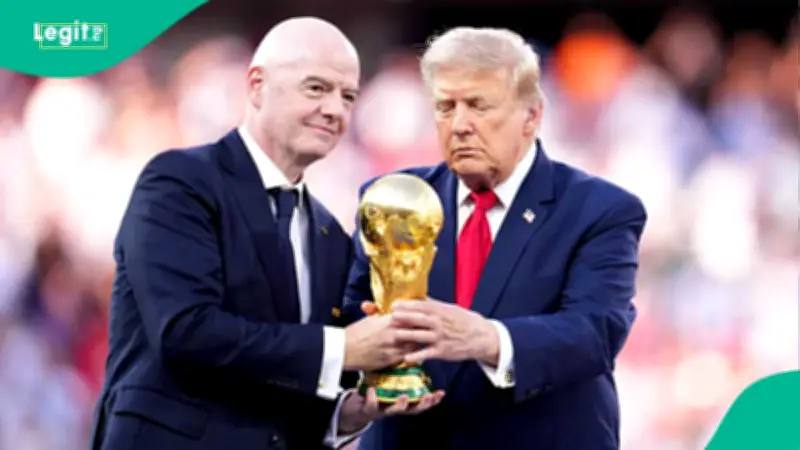
Gianni Infantino, FIFA's president, formally abandoned the organisation's plan to sell minority stakes in World Cup competitions to private investors on Friday, July 31. The decision followed an unprecedented wave of opposition from the sport's most influential governing bodies, which the president himself acknowledged had undermined the project's original purpose. Infantino said the proposal had created divisions that were 'no longer in the interest' of the goal it was designed to achieve.
“As a result, this proposal will not proceed,” Infantino said, adding that he intended to bring all interested parties together “in the coming days and weeks in the spirit of shared interest in our game.” The reversal marks a major defeat for Infantino's commercial vision and raises fresh questions about his leadership ahead of a re-election bid next year.
The plan, first reported by BBC Sport, involved the creation of a commercial subsidiary called FIFA Forward Enterprise (FFE). Through FFE, outside investors would have acquired minority, non-controlling stakes in FIFA's flagship tournaments, including the men's and women's World Cups. A 25-page document prepared by investment bank JP Morgan had outlined how the arrangement could significantly boost payouts to member associations by the 2035-2039 cycle.
The incentive offer and investor group
To secure support, Infantino had offered each of FIFA's 211 member associations $40 million in return for backing the proposal. An initial $20 million payment was available to those who agreed by September 19. The investor group was expected to be led by Thrive Eternal, an American venture capital firm founded by Joshua Kushner, brother of Jared Kushner, son-in-law of US President Donald Trump. Trump, speaking publicly on Friday for the first time about the matter, said he had not discussed the plan with Infantino.
How the opposition built
UEFA was the first major confederation to push back, voting formally to boycott World Cups if the proposal went ahead. Concacaf followed suit, with its members rejecting the plan outright. Sources said the vast majority of associations in the region had lost confidence in Infantino. The Asian Football Confederation then joined the resistance, issuing a statement of solidarity with UEFA and Concacaf.
The arithmetic made the plan effectively impossible to pass. According to Al Jazeera, FIFA required 106 of its 211 member associations to vote in favour. With UEFA controlling 55 votes, Concacaf 35, and the Asian confederation 46, a full bloc against the proposal would have produced 136 opposition votes, comfortably exceeding the number needed to block it.
Internal fallout at FIFA
The backlash extended to FIFA's own administration. Chief operating officer Kevin Lamour said the governing body's administration had been 'deceived' about the project. Senior adviser Carlos Cordeiro resigned over the matter, describing the proposal as 'a bad deal for football' that would 'mortgage football's future.' UK Prime Minister Andy Burnham added that Infantino was 'the wrong man' to lead FIFA.
Reactions and what comes next
AFC president Sheikh Salman bin Ebrahim Al Khalifa welcomed the withdrawal, saying the future of global football 'must always be shaped through proper consultation, collective dialogue and respect for the established governance structures of our game.' The collapse of the plan increases pressure on Infantino as he seeks a fourth term at the FIFA Congress in March.
Impact on Nigeria and NFF funding
The Nigerian Football Federation (NFF) had been set to benefit from the increased payouts that the proposed structure would have unlocked. Legit.ng previously reported details of the plan, which included significant grant increases for member associations. However, with the proposal now withdrawn, those additional funds will not materialise in the near term. The controversy has nonetheless highlighted the financial dependence of national federations on FIFA's central revenues and the delicate balance of power that governs global football.