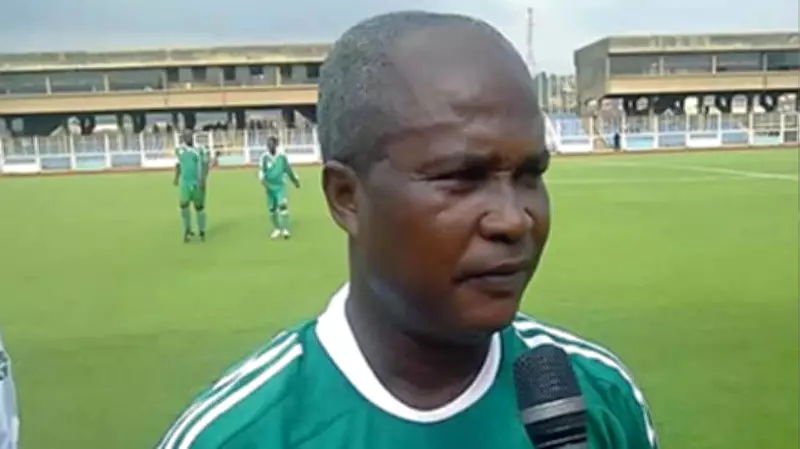
Remembering Henry Nwosu: A Football Prodigy's Rise and Nigeria's Sports Decline
When I enrolled at Edo College in Benin City back in 1977, the legacy of former military ruler Samuel Ogbemudia's substantial investments in Bendel State's sports sector was still vividly apparent. Numerous gifted students were already establishing themselves as legitimate members of various Bendel State teams on the national stage.
A Thriving Sports Culture in Bendel State
My classmate, Fatai Enabulele, competed on the state's swimming team, while Okhamera, the Head of Esigie House, represented Bendel State as a boxer. I distinctly recall my astonishment upon seeing another schoolmate, Oritsejolomi Isebor, wearing the green tracksuit with "Nigeria" boldly displayed on the back. Isebor had already progressed beyond the Bendel State team and was playing basketball for Nigeria while still a student.
Football, however, reigned as the most popular sport, sustained by multiple competitions that maintained its prominence. These ranged from under-13 championships to the Principals' Cup and the Bendel State Academicals. Additionally, the Giwa-Osagie Cup was exclusively for schools offering Advanced Levels, including Edo College, Government College Ughelli, Federal Government College Warri, and St. Patrick's College Asaba.
The Formidable Edo College Team
After securing the Giwa-Osagie Cup in the 1977/78 session, Edo College meticulously assembled an exceptionally talented squad aiming to qualify for the World School Championships in Spain during 1978/79. This all-star lineup featured future notable names such as George Ebojoh, Adebayo, Afejukwu, George Okoh, Bobson Akpotohwo, and several others.
The football team proved formidable, often winning matches in ways that humiliated their opponents. Following a series of intensely contested qualifying matches, they earned the right to represent Nigeria at the World School Championships in Spain. Observing these skilled footballers train on the pitch during evenings became a highly popular pastime among students, providing considerable entertainment.
The Arrival of a Football Prodigy
In preparation for the journey to Spain, Saint Finbarr's College in Akoka, renowned for its sporting excellence under long-time principal Reverend Father Slattery, was invited to compete against Edo College's star-studded team. Although we had never faced them directly, we were aware that St. Finbarr's team was among the nation's top college teams.
Anticipation grew significantly as we looked forward to what we expected to be an exceptionally entertaining game. Our most respected football pundits, Ehizogie Airewele and Chibuzo Aguocha, both described the upcoming match as "the closest thing to Mohammed Ali's 'Thrilla in Manila.'"
Henry Nwosu's Dominant Performance
The match at Ogbe Stadium in Benin City exceeded all expectations, delivering entertainment comparable to a modern European cup final. However, one player stood out remarkably. Surprisingly, he was not on the Edo College side. Despite being the smallest and likely youngest player on the pitch at just 15 years old, he was omnipresent.
He dribbled past opponents effortlessly, motivated his teammates, dictated the pace of play, and made the star-studded Edo College team appear ordinary. As enthusiastic supporters of Edo College, this was unexpected. We anticipated a challenging match but did not foresee an opponent coming to Benin City to diminish our highly rated team's stature.
Yet, we were so captivated by this football talisman's dexterity that, despite our duty to cheer for Edo College unconditionally, we frequently found ourselves applauding the young, diminutive player. Word spread rapidly, and soon everyone in the stadium knew his name: Henry Nwosu.
A Talent Beyond His Years
His skills elevated him far above everyone else, placing him in a class of his own. We could not help but admire and applaud the sheer magnificence with which he orchestrated play through his artistry. The boy was a master craftsman, a true magician with the ball.
The match concluded with a 3-3 draw, but Henry Nwosu had significantly demystified the Edo College team in our youthful perspectives. We pondered how a single player could exert such a dramatic influence on a football match. Ironically, although only 15 and the smallest player on the field, Nwosu's performance suggested he was competing in a league for which he was excessively talented.
Rapid Ascent to National Prominence
It came as little surprise when, barely a year later, Henry Nwosu received a call-up to the national team, the Green Eagles. Clearly, he belonged among Nigeria's elite professionals. At just 17, Nwosu featured in the AFCON-winning Green Eagles team of 1980, earning himself an MON award alongside other team greats like Christian Chukwu and Segun Odegbami.
He remained an integral part of the national team for many years before transitioning to coaching upon retirement. Henry Nwosu's career trajectory illustrates that sports development should be a strategic process involving training programs and structured tournaments to identify and refine talent.
Nigeria's Contemporary Sports Development Crisis
Regrettably, it is challenging to identify any strategic sports development program in Nigeria today. All the youth sporting tournaments of the past have vanished nationwide. Sporting facilities, where they exist, are typically in severe neglect and more commonly associated with political gatherings and religious crusades than athletic events.
Many schools lack sporting facilities entirely. Had Henry Nwosu not been fortunate enough to attend St. Finbarr's College, whose founding principal established a strong sports foundation, his football genius might never have been discovered. This reality reflects the predicament of millions of Nigeria's young people today.
The Diaspora Success Contrast
The increasing number of professional footballers of Nigerian origin in elite European leagues—such as Eberechi Eze, Fikayo Tomori, Tammy Abraham, Karim Adeyemi, Michael Olise, and Bukayo Saka—results from their talents being discovered and honed in environments meticulously designed for that purpose.
Unfortunately, for each of these stars, there are perhaps 20 others on the streets of Ajegunle and Mushin, inherently talented but lacking the means or opportunities to express that talent. Nigeria continues to squander the potential of millions of its youth through lackluster and unambitious approaches to sports development.
The Broader Implications
Compounding the issue, the country forfeits the entertaining, unifying, and economic potential of sports. While we enjoy football broadcast from European leagues, basketball from America's NBA, and tennis from global professional circuits, we must recognize that these spectacles are the end results of deliberate, painstaking, and strategic investments by those nations in sports.
I sincerely hope that reflecting on Henry Nwosu's legacy as a football prodigy will prompt Nigerians to critically examine our country's sports predicament and compel sports administrators and politicians to fulfill their responsibilities. May Henry Nwosu's talented soul find eternal rest in the bosom of his creator.
• Okoruwa works for XLR8, a communications company.