Iran's Soccer Chief Confirms World Cup Participation Amid U.S. Boycott
Iran's national soccer team is steadfastly continuing its preparations for the 2026 FIFA World Cup finals, with no plans to withdraw from the tournament, even as the country refuses to send its players to the United States. This announcement was made by Mehdi Taj, the president of the Football Federation of the Islamic Republic of Iran (FFIRI), on Wednesday, according to reports from Reuters.
Geopolitical Tensions Cast Shadow Over Tournament Participation
Iran was among the first nations to secure qualification for the World Cup, but its involvement has been uncertain since late February, when conflicts escalated between the Islamic Republic and the United States. The 2026 World Cup is scheduled to take place from June 11 to July 19 across three host countries: the United States, Mexico, and Canada.
Team Melli, as the Iranian national team is known, is set to play all three of its opening-round group matches in the United States. However, Taj stated on Monday that the FFIRI is actively negotiating with FIFA to relocate these matches to Mexico. "We will boycott America, but we will not boycott the World Cup," Taj was quoted as saying by the Fars News Agency on Wednesday.
Training and Friendly Matches Proceed in Turkey
Currently, the Iranian national team is holding a training camp in Turkey, where they will also participate in two friendly matches. These matches are part of a four-nation invitational tournament that was originally planned for Jordan but had to be moved to Antalya, Turkey, due to ongoing conflicts in the Middle East. Iran is scheduled to face Nigeria on March 27 and Costa Rica four days later.
Meanwhile, Taj made these remarks while welcoming members of Iran's women's national team back at the border crossing from Turkey. The women's team had recently returned from Australia, where they participated in the Women's Asian Cup. The Australian government had offered asylum to the entire delegation over safety concerns in Iran, with seven players initially accepting, though only two ultimately remained.
Political Statements Influence Venue Decisions
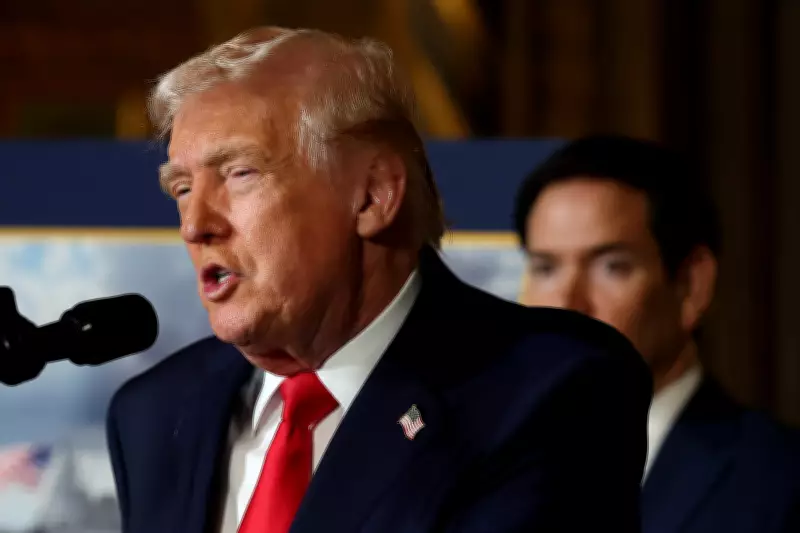
U.S. President Donald Trump had previously encouraged Australia to grant asylum to the Iranian women players and later commented that while the Iranian men's team was welcome to compete in the U.S., it might not be safe for their "life and safety." Trump later clarified that any threats would not originate from the United States. Taj, a former member of Iran's hardline Revolutionary Guard, cited Trump's statements as justification for demanding the venue change.
In response, Mexican President Claudia Sheinbaum expressed openness on Tuesday to hosting Iran's World Cup matches against New Zealand, Belgium, and Egypt in June. However, FIFA retains the final authority on any alterations to the match schedule.
FIFA's Role and Safety Concerns Highlighted
FIFA, soccer's global governing body, confirmed it is in communication with the FFIRI but emphasized its expectation for all teams to compete according to the schedule announced on December 6, 2025. Beau Busch, the Asia-Pacific president of the football players' union FIFPRO, underscored FIFA's responsibility to ensure the safety of all participants at the World Cup.
"FIFA have an institutional responsibility to protect human rights," Busch told Reuters. "What's critical is that FIFA undertake a really comprehensive human rights impact assessment, and they assess to ensure that every single participant at the World Cup, every player, every fan, can be safe, and that any risks are identified and mitigated effectively."
As the 2026 World Cup approaches, the situation remains fluid, with Iran's participation hinging on diplomatic negotiations and FIFA's decisions regarding venue changes and safety protocols.