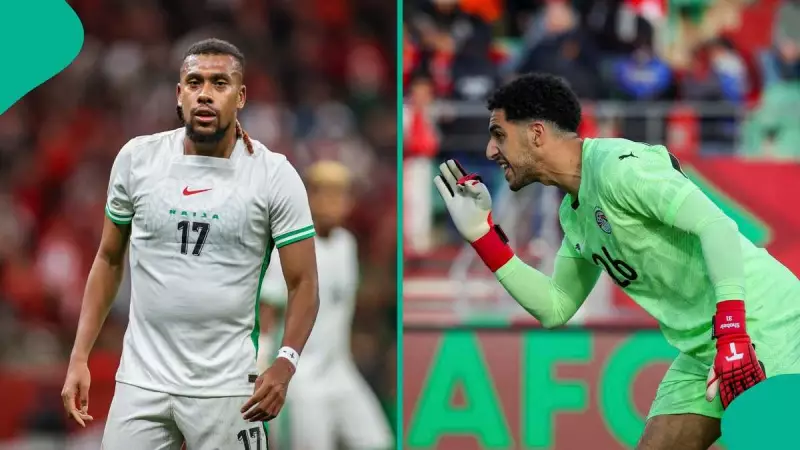
In a recent revelation that has captivated football fans across Nigeria and beyond, Super Eagles midfielder Alex Iwobi has shared a fascinating insight into the psychological dynamics of a high-stakes penalty shootout. The Everton player disclosed a brief but telling exchange with Egyptian goalkeeper Mostafa Shobeir during a critical moment in their recent encounter.
The Tense Moment on the Pitch
During the intense penalty shootout, which often tests the nerves and mental fortitude of even the most seasoned players, Iwobi found himself in a pivotal position. As he prepared to take his spot-kick, the Egyptian shot-stopper, Mostafa Shobeir, approached him with a few words. According to Iwobi, this interaction was not merely a routine part of the game but a strategic move aimed at unsettling his concentration.
Shobeir's Psychological Tactic
Iwobi recounted that Shobeir told him something along the lines of attempting to get into his head, a common tactic used by goalkeepers to distract penalty takers. This revelation sheds light on the mind games that often play out in such high-pressure situations, where mental resilience can be as crucial as technical skill. The Nigerian midfielder emphasized how such moments require players to maintain focus and block out external influences to execute their duties effectively.
Iwobi's Response and Performance
Despite the psychological pressure applied by Shobeir, Iwobi demonstrated commendable composure. He managed to stay focused and successfully converted his penalty, contributing to his team's efforts in the shootout. This episode highlights the importance of mental strength in football, particularly in scenarios where the outcome hinges on individual performances under immense scrutiny.
Broader Implications for Football
This incident underscores the tactical nuances involved in penalty shootouts, where goalkeepers often employ verbal or non-verbal cues to gain an edge. For players like Iwobi, sharing such experiences provides valuable lessons for aspiring footballers on handling pressure and maintaining poise in critical moments. It also adds an intriguing layer to the narrative of matches, showcasing the human element behind the sport's competitive nature.
As fans and analysts reflect on this revelation, it serves as a reminder of the intricate strategies that define modern football. Iwobi's openness about the encounter offers a glimpse into the psychological battles that complement the physical and technical aspects of the game, enriching the overall understanding of what it takes to succeed at the highest levels.