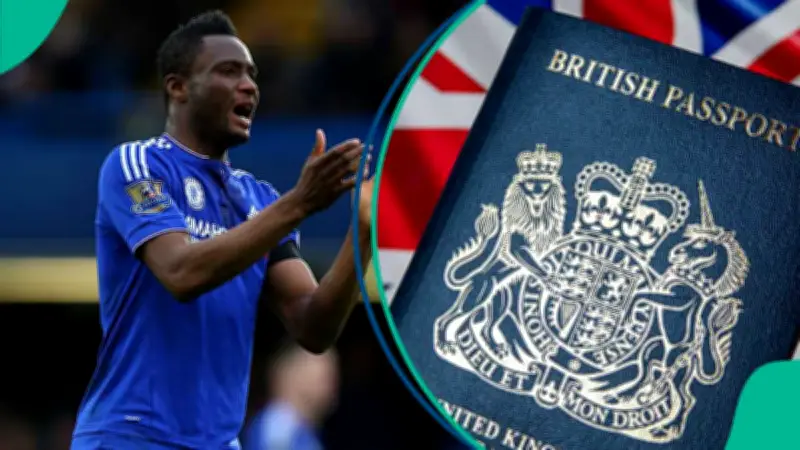
Nigerian footballers can become eligible for a British passport after six years of lawful residence in the UK through the International Sportsperson visa route. The journey involves securing a club contract, obtaining an International Sportsperson visa, qualifying for Indefinite Leave to Remain (ILR), and later applying for British citizenship. Several Nigerian stars, including Nwankwo Kanu, John Obi Mikel, Joseph Yobo, Wilfred Ndidi, and Kelechi Iheanacho, spent enough years playing in Britain to potentially meet the residency requirement.
Step 1: Secure a Professional Contract with a British Club
The journey begins with signing for a professional club in England or Scotland. Before a Nigerian footballer can move to Britain, the club must sponsor the player under the UK's International Sportsperson visa route. According to the UK government, this also requires a Governing Body Endorsement (GBE), which confirms that the player meets the sporting criteria established by the relevant football authorities. Without a valid sponsorship and endorsement, a player cannot obtain the visa needed to play professionally in Britain.
Step 2: Move to the UK on an International Sportsperson Visa
Once the visa is approved, the footballer can legally live and work in the United Kingdom. The International Sportsperson visa allows elite athletes and coaches to compete professionally while residing in the country. Importantly, time spent under this visa can count towards settlement, provided the player continues to meet the immigration requirements throughout their stay. Maintaining lawful immigration status is essential. Long absences from the UK or extended periods without the appropriate visa may affect future eligibility for permanent residence.
Step 3: Complete Five Years of Continuous Residence
The next milestone is completing five years of continuous residence in the United Kingdom. During this period, the player must continue living and working in Britain while complying with immigration conditions. The five-year period is one of the most important requirements for those seeking permanent settlement. Although footballers regularly travel for club and international matches, immigration authorities consider overall residency patterns when assessing applications. Players are therefore expected to maintain Britain as their primary place of residence during this period.
Step 4: Apply for Indefinite Leave to Remain
After completing five years of qualifying residence, eligible footballers can apply for Indefinite Leave to Remain (ILR), commonly referred to as permanent settlement. Receiving ILR allows a player to remain in the United Kingdom without immigration time restrictions. It also marks the final immigration step before citizenship can be considered. Applicants must continue meeting the Home Office's requirements, including good character and compliance with immigration laws.
Step 5: Hold ILR for One Year Before Applying for Citizenship
Obtaining ILR does not immediately result in a British passport. Most applicants must first hold settled status for an additional 12 months before becoming eligible to apply for British citizenship through naturalisation. During this period, applicants are also expected to satisfy other legal requirements, including maintaining their residency and demonstrating good character.
Step 6: Pass the Citizenship Requirements
Before British citizenship is granted, footballers must complete the same requirements as other applicants. These include passing the Life in the UK Test, which assesses knowledge of British history, culture, and institutions; demonstrating the required level of English language proficiency where applicable; meeting the Home Office's good character requirements; and completing the naturalisation application successfully. Once citizenship is approved, the individual can apply for a British passport.
How Long Does the Entire Process Take?
For most professional footballers following this pathway, the timeline is approximately six years. The process generally follows this schedule: five years living and working in Britain under an eligible sports visa, plus one additional year after obtaining Indefinite Leave to Remain before applying for citizenship. In total, a player who continuously satisfies all immigration conditions can become eligible for a British passport after around six years.
Nigerian Stars Who Spent Years in British Football
Several Super Eagles stars enjoyed lengthy careers in British football. Nwankwo Kanu became one of Nigeria's greatest exports after joining Arsenal in 1999 before later starring for Portsmouth; his professional career in England stretched well beyond a decade. Joseph Yobo established himself as a dependable defender during eight seasons with Everton between 2002 and 2010. Yakubu Aiyegbeni enjoyed an outstanding goalscoring career across multiple Premier League clubs, including Portsmouth, Middlesbrough, Everton, and Blackburn Rovers, with his stay in English football lasting almost ten years. John Obi Mikel spent 11 highly successful seasons at Chelsea, winning Premier League titles, FA Cups, League Cups, the UEFA Champions League, and UEFA Europa League. Efe Ambrose spent several years with Celtic in Scotland before moving to Hibernian; time spent lawfully living and working elsewhere in the UK may also count toward residency requirements. Kelechi Iheanacho spent nearly nine years in English football after joining Manchester City in 2015 before moving to Leicester City and later enjoying a loan spell with Middlesbrough. Wilfred Ndidi joined Leicester City in January 2017 and remained at the club until 2025; across more than eight years in England, he became one of the Premier League's most consistent defensive midfielders while helping Leicester win both the FA Cup and Community Shield.
Playing in Britain Does Not Automatically Guarantee Citizenship
Although many Nigerian footballers spend enough years in England or Scotland to potentially qualify for settlement, obtaining a British passport is never automatic. Each application is assessed individually by the UK authorities. Factors such as immigration compliance, continuous lawful residence, eligibility for settlement, absence limits, English language requirements, and the good character test all play an important role. For footballers planning a long-term future in Britain, understanding the immigration process early can be just as important as performing consistently on the pitch. Those who meet every legal requirement may eventually earn not only medals and trophies but also the opportunity to become British citizens.