Nigerian Football Community Erupts Over Controversial Serie A Red Card Decision
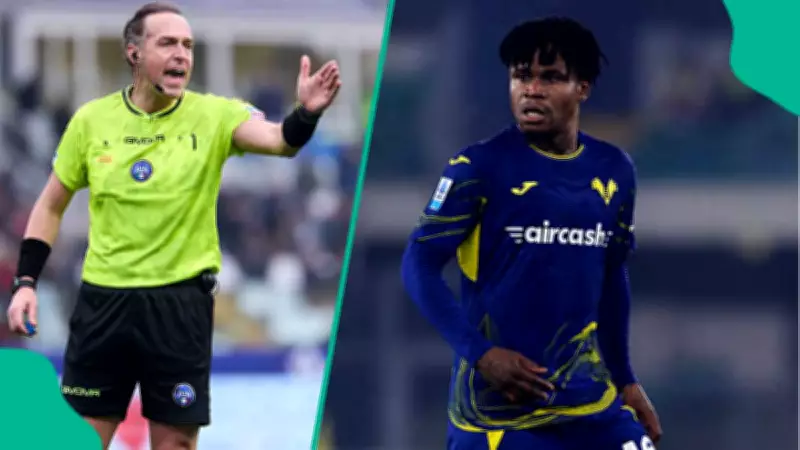
Nigerian football enthusiasts have unleashed a torrent of criticism across social media platforms following the controversial dismissal of Super Eagles invitee Gift Orban during a Serie A encounter. The 23-year-old forward, currently playing for Hellas Verona, was shown a straight red card merely 11 minutes into the match against Parma on Sunday, February 15, 2026, after protesting a foul decision.
Immediate Dismissal Sparks Widespread Outrage
According to detailed match reports, the incident occurred when Orban reacted to a challenge from Enrico Del Prato in the center circle of the pitch. The young Nigerian forward, clearly frustrated by the situation, made gestures toward referee Luca Pairetto, who responded by immediately producing the red card. This decision reduced Hellas Verona to ten players for the remainder of the contest, significantly impacting the team's tactical setup and competitive chances.
The controversial dismissal quickly gained momentum on social media platform X, where a post linked to Orban's account stated: "Sent off for protesting a decision. As a Black player in Italy, I can't ignore how often we're treated differently. I love the game, and all I ask for is fairness, respect, and equal treatment on the pitch." This statement ignited heated discussions about both the specific officiating decision and broader concerns regarding racial equity in European football.
Nigerian Supporters Rally Behind Their Player
Nigerian football fans emerged in substantial numbers across digital platforms to defend Orban, who has previously been involved in various football controversies. The overwhelming sentiment among supporters was that the punishment appeared excessively harsh, with many pointing to perceived inconsistencies in refereeing standards across Europe's premier football leagues.
Social media reactions reflected deep frustration with the officiating decision. One user commented: "This is the most bizarre red card I've ever seen in a football game. Gift Orban and his club need to sue the Italian FA. This is madness." Another supporter questioned: "Explain to me why Gift Orban got a red card earlier today? Explain to me why VAR couldn't overturn this?"
Additional reactions highlighted concerns about potential racial bias in officiating, with one comment stating: "If it was a white player... There's no way he's getting sent off! Yes I said it. Go watch the video and make your own conclusion. JUST 11 minutes IN! Disgrace." These responses demonstrated that the controversy extended beyond mere dissatisfaction with a single decision to encompass broader questions about fairness and consistency in football officiating.
Club Officials Take Firm Stance Following Incident
Meanwhile, Hellas Verona's management reportedly adopted a firm position regarding the controversial incident, expressing clear support for Orban and dissatisfaction with the referee's handling of the situation. According to emerging reports, the club entered a period of press silence following their defeat to Parma, with executives claiming that an injustice had been committed not only against the team but also against their supporters and the broader community.
Verona officials reportedly refused to engage with media representatives after the match, with sources indicating they believed the red card decision represented an unfair disadvantage that affected the club, its fanbase, and the city itself. This organizational response underscored the seriousness with which the club viewed the controversial officiating decision.
Broader Implications for Serie A Officiating Standards
As emotions continue to run high within the football community, Orban's red card has evolved into a significant flashpoint for debates surrounding refereeing standards in Italy's top football division. The incident has prompted renewed discussions about consistency in decision-making, the appropriate use of disciplinary measures, and the potential role of technology in reviewing contentious calls.
The controversy arrives at a time when European football faces increasing scrutiny regarding officiating quality and fairness across different competitions. This particular incident involving a Nigerian player has amplified concerns about how players from diverse backgrounds experience and are treated within European football structures.
In a related development within Nigerian football, reports indicate that another Nigerian player, Usman Mohammed, recently received a red card while playing for Ironi Tiberias in the Israeli League. The 31-year-old was dismissed in the 66th minute after accumulating two yellow cards within four minutes during a match against Hapoel Hafia. These consecutive disciplinary incidents involving Nigerian players abroad have further intensified discussions about the treatment of African footballers in international competitions.