Trump Dismisses Iran's World Cup Boycott Threat Amid Escalating Tensions
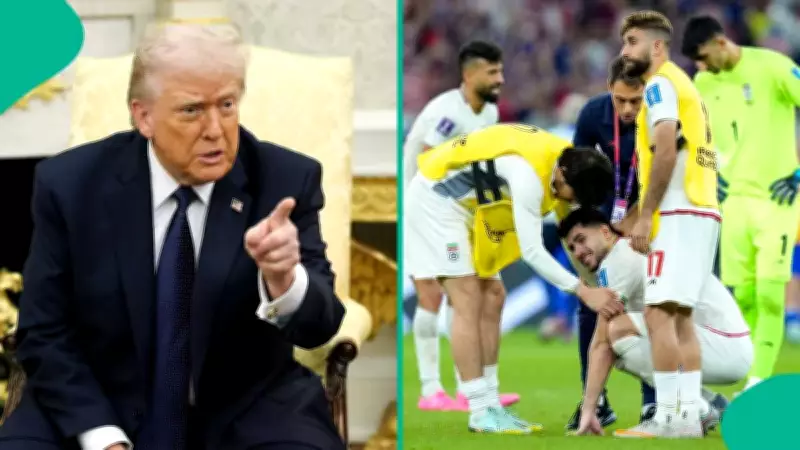
United States President Donald Trump has issued a blunt response to reports that Iran may boycott the 2026 FIFA World Cup, which the US is co-hosting with Canada and Mexico. When asked about the potential withdrawal, Trump stated unequivocally, "I really don't care. I think Iran is a very badly defeated country. They're running on fumes."
Iran's Qualification and Threat to Withdraw
Iran secured qualification for the 2026 World Cup in March 2025, marking what would be their fourth consecutive appearance at the global football tournament. The team was drawn into Group G alongside Belgium, Egypt, and New Zealand, with their scheduled matches set to take place in Los Angeles and Seattle.
However, Mehdi Taj, President of the Football Federation Islamic Republic of Iran, has strongly hinted that the nation may not participate despite having qualified. "It's not possible to say exactly, but there will certainly be a response," Taj stated regarding the escalating tensions between Iran, the United States, and Israel.
Taj emphasized that "What is certain is that after this attack, we cannot be expected to look forward to the World Cup with hope," referring to recent military strikes. He added that a final decision would be made by Iran's high-ranking sports officials as the tournament's June 11 kickoff date approaches rapidly.
FIFA's Precarious Position and Potential Replacements
The Middle East crisis has placed FIFA in a delicate position as it prepares for the 2026 World Cup. Should Iran follow through on their boycott threat, FIFA has the authority to replace them at its discretion.
Currently, Iraq and the United Arab Emirates are considered the most likely beneficiaries if Iran withdraws. Iraq would need to win an intercontinental play-off against either Bolivia or Suriname, scheduled for March 31 in Monterrey, Mexico, to secure the spot.
The situation creates significant logistical challenges for FIFA, which must prepare contingency plans while navigating complex geopolitical tensions that threaten to spill over into the sporting world.
Trump's Role and Relationship with FIFA
President Trump has played a leading role in promoting the 2026 World Cup across North America. He maintains a close relationship with FIFA President Gianni Infantino, who awarded Trump the FIFA Peace Prize just three months ago.
The US president's dismissive comments about Iran's potential boycott come amid heightened military tensions in the region. Recent days have seen Israeli and American strikes targeting Iran, with retaliatory attacks reportedly launched against US-allied states in the Gulf region.
Trump's characterization of Iran as "a very badly defeated country" reflects the ongoing geopolitical standoff that now threatens to impact one of the world's most prestigious sporting events.
Broader Implications for International Sports
The potential boycott raises questions about the intersection of international politics and sports. World Cup tournaments have historically faced boycotts and withdrawals due to political conflicts, but rarely has such a threat emerged so close to the tournament with a qualified team.
FIFA now faces the difficult task of maintaining the tournament's integrity while managing geopolitical tensions that extend far beyond the football pitch. The organization must balance its commitment to global participation with the practical realities of international conflict.
As the June 2026 start date approaches, all eyes will be on Iran's final decision and FIFA's response, with the situation serving as a stark reminder of how deeply politics can penetrate even the most celebrated international sporting events.