Turkish Football Pundit Defends Victor Osimhen's Controversial Nigeria Trip Following Injury
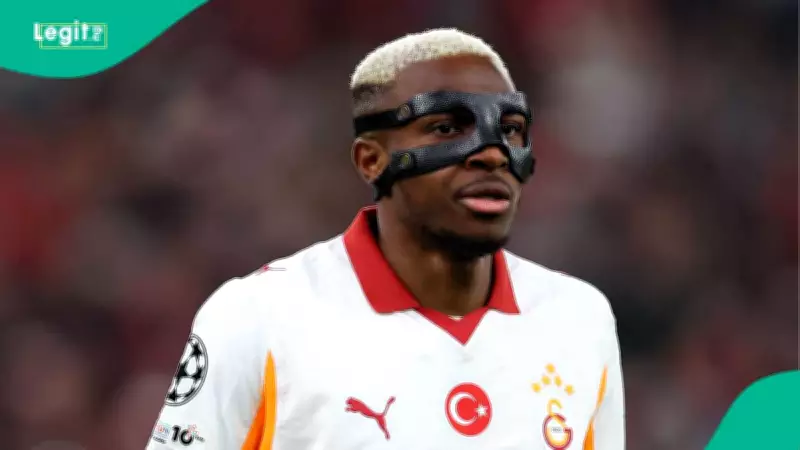
A prominent Turkish football commentator has come to the defense of Nigerian striker Victor Osimhen after the Galatasaray star's decision to travel to Nigeria immediately following a serious arm injury during a UEFA Champions League match. The incident has sparked widespread debate among football fans and pundits regarding player professionalism and recovery protocols.
Injury Incident and Immediate Aftermath
Victor Osimhen suffered a significant hand injury during Galatasaray's 4-0 defeat to Liverpool in the UEFA Champions League Round of 16 on Wednesday, March 18, 2026. The injury occurred following a collision with Liverpool defender Ibrahima Konate, forcing medical staff to immediately cast the affected arm. Due to persistent pain, Osimhen was substituted at halftime, marking an unfortunate end to his European campaign.
Despite the severity of his injury, the Super Eagles forward was spotted in Lagos, Nigeria, less than twenty-four hours after the match. Osimhen spent the Eid Al-Fitr holiday with friends and family while visibly carrying his cast arm around town. This unexpected trip generated considerable controversy among football enthusiasts, with many questioning the striker's commitment to his recovery process and professional responsibilities.
Ahmet Cakar's Strong Defense
Turkish football pundit Ahmet Cakar has launched a vigorous defense of Osimhen's actions during a recent appearance on Libero TV. Cakar directly addressed critics who questioned the striker's decision to travel to Nigeria with an injured arm, arguing that the trip was both reasonable and harmless.
"His misfortune was breaking his arm. He went to Nigeria to be with his family, then came back and had surgery. Should he just stay home and sleep because his arm is broken?" Cakar questioned during the broadcast. "As long as he doesn't do anything about his arm, he can still have fun. What harm is there in him having fun at home in Nigeria for 3-4 days? He visited his family, then came back and had surgery."
Cakar further emphasized that Osimhen's trip did not interfere with his medical treatment timeline, as the striker returned to Istanbul days later and underwent successful surgery performed by Galatasaray's club doctor, Dr. Yener Ince.
Medical Update and Recovery Timeline
Upon his return to Turkey, Victor Osimhen underwent a successful surgical procedure under the supervision of Galatasaray's medical team. Dr. Yener Ince provided an official update through the club's website, stating: "Victor Osimhen underwent a successful operation today. His recovery will be monitored daily, and our medical team will do everything necessary to ensure his return to the pitch as soon as possible. Updates will be shared with the public by our club throughout the process."
The €75 million striker is expected to be sidelined for approximately six weeks, with his recovery progress being closely monitored by club medical staff. Reports suggest Osimhen is targeting a return during the crucial intercontinental derby against Fenerbahce in late April, though this timeline remains subject to his rehabilitation progress.
Historic Praise for Osimhen's Galatasaray Impact
Beyond defending Osimhen's personal decisions, Ahmet Cakar offered extraordinary praise for the Nigerian striker's impact at Galatasaray, describing him as potentially the greatest foreign player in the club's storied history.
"Osimhen is one of the greatest foreign players ever to come to Galatasaray, perhaps even number one, in terms of feeling a sense of belonging and ownership," Cakar declared during his television appearance.
This praise comes with statistical backing, as Osimhen currently ranks fourth among foreign scorers in Galatasaray history with 56 goals, trailing only Milan Baros (61 goals) and legendary Romanian Gheorghe Hagi (72 goals). His current teammate Mauro Icardi holds the record for most goals by a foreign player at the club with 76 goals.
Broader Context and Professional Considerations
The debate surrounding Osimhen's Nigeria trip touches on broader questions about player autonomy during injury recovery periods versus club expectations for rehabilitation protocols. While some critics argue that injured players should remain close to club medical facilities, others contend that psychological well-being and family support play crucial roles in recovery.
Cakar reinforced his defense by noting that Osimhen maintained his fitness through gym work during his recovery period and that the striker's seamless integration into Galatasaray's culture demonstrated his professional commitment despite the controversial trip.
The incident highlights the complex balance between professional footballers' personal lives and their club obligations, particularly during injury periods that can significantly impact team performance and player careers.