Premier League Issues Official Statement on Gabriel-Haaland Incident
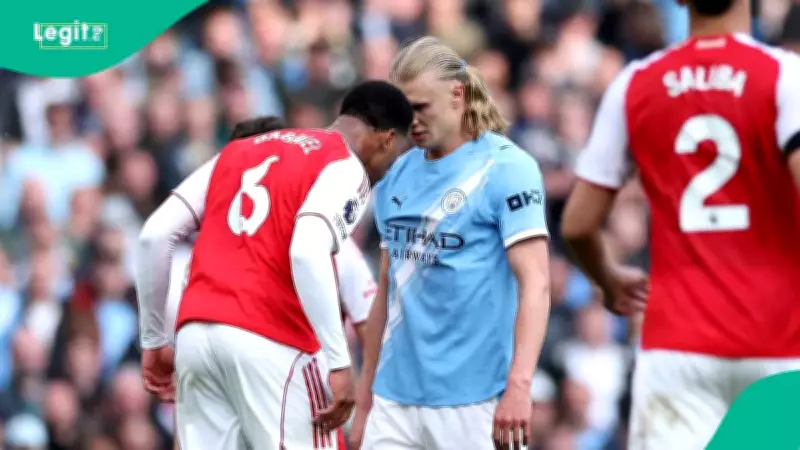
The Premier League has released a strong official statement addressing the controversial decision not to show Arsenal defender Gabriel Magalhaes a straight red card following his heated clash with Manchester City striker Erling Haaland. The incident occurred during the closing minutes of a crucial Premier League match at the Etihad Stadium on Sunday, April 19, which Manchester City won 2-1 to close the gap on league leaders Arsenal to just three points.
Referee's Decision Backed by VAR Review
During the intense confrontation, referee Anthony Taylor chose to issue yellow cards to both Gabriel Magalhaes and Erling Haaland rather than sending off the Brazilian defender. This decision was subsequently reviewed by Video Assistant Referee official John Brooks, who confirmed the on-field call. In a tweet on social media platform X, the Premier League explicitly stated that Gabriel's actions were "deemed not to be excessively aggressive or violent", which formed the basis for not upgrading the punishment to a red card.
The league's statement read: "The referee's call of no red card was checked and confirmed by VAR - with the action from Gabriel deemed not to be excessively aggressive or violent." This clarification comes amid significant debate among football pundits, former officials, and fans regarding the consistency of disciplinary decisions in high-stakes matches.
Former Referee Clattenburg Disagrees with Decision
Former Premier League and FIFA referee Mark Clattenburg has publicly stated that Gabriel Magalhaes was "very fortunate" not to receive a red card for what he described as "an attempted headbutt" on Erling Haaland. Speaking to Arsenal Insider, Clattenburg provided detailed analysis of the incident, explaining that while initial head-to-head contact might warrant yellow cards for both players, Gabriel's subsequent head movement should have resulted in a dismissal.
Clattenburg elaborated: "When both players put their heads together, I would expect two yellow cards for adopting an aggressive attitude. But when Gabriel makes a clear movement of his head again, then a red card should have been shown even if contact was not made." This perspective highlights the ongoing debate about interpretation of violent conduct rules in football, particularly regarding intent versus actual contact.
Haaland's Reaction and Match Context
Erling Haaland himself commented on the incident, suggesting that his decision not to exaggerate the contact may have influenced the referee's decision. The Norwegian striker stated: "If I fell on the floor, which I will not do unless someone really attacks me, I think maybe it would be a red card, I'm not sure. I will not fall on the floor as easy like this. Yellow card, for me I don't know why. He comes up to my face!"
The match itself proved crucial in the Premier League title race, with Manchester City's victory narrowing Arsenal's lead at the top of the table. City now sit just three points behind the Gunners with a game in hand, scheduled against Burnley on Wednesday, April 22. The intensity of the match reflected the high stakes, with both teams aware that every point could prove decisive in the championship battle.
Fan Reactions and Broader Implications
Football fans have reacted strongly to the incident on social media, with many expressing divided opinions about the referee's decision. One user commented: "If it was Casemiro or Maguire, it would have been a direct red card," suggesting potential inconsistency in how different players are treated for similar offenses. Another observer noted: "Decisions like this remind us how much interpretation matters in big matches and why every angle gets analyzed."
The Gabriel-Haaland confrontation adds another chapter to the growing rivalry between the two players, who have had several physical encounters in previous matches. This incident also raises broader questions about:
- The consistency of VAR interventions across different matches
- How referees interpret "violent conduct" versus "aggressive attitude"
- The role of player reputation in disciplinary decisions
- Whether current rules adequately address head-to-head confrontations
As the Premier League season enters its decisive phase, such controversial decisions could have significant implications for the title race, European qualification, and relegation battles. The league's decision to publicly explain the reasoning behind this particular call represents an effort toward greater transparency, though it remains to be seen whether this will satisfy critics who believe different standards are applied to different players and clubs.