Gold Medal Para-Athlete Faces Prison Over Disability Claim Dishonesty
A former British soldier who transitioned to become a gold medal-winning para-athlete now confronts the possibility of imprisonment after being accused of deliberately misrepresenting the severity of her disability during a multi-million pound compensation claim against the Ministry of Defence.
The Injury and Subsequent Claim
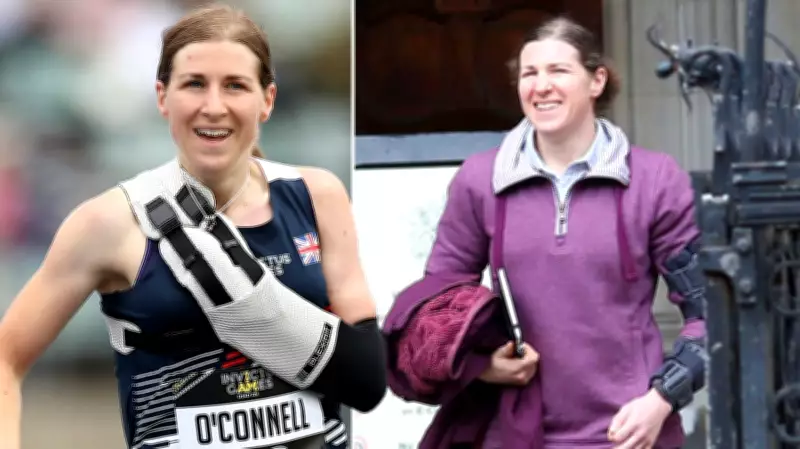
Debbie O'Connell, aged 37, sustained a significant injury in 2015 while training with the Royal Horse Artillery's ceremonial unit, known as the King's Troop. She fractured her collarbone in four separate places after falling from a horse. Following this incident, O'Connell asserted that the injury rendered her left arm nearly unusable, leading to her discharge from the military two years later.
After leaving the army, she embarked on a successful para-athletics career, notably winning gold medals in cycling at the 2018 Invictus Games held in Sydney. In September 2018, she initiated a damages claim against the MoD, initially seeking £2.4 million, which was later adjusted to £1.74 million.
Court Findings of Fundamental Dishonesty
The High Court dismissed her claim last year, with Judge Christopher Kennedy KC ruling it was fundamentally dishonest. The judge determined that her evidence regarding persistent pain was dishonest after reviewing surveillance footage that showed her performing various tasks with her left arm, including leading a horse and chopping vegetables.
Judge Kennedy ordered O'Connell to pay over £200,000 in legal costs. In his judgment, he noted that by 2022, she continued to report needing assistance with daily activities like cutting food, preparing drinks, bathing, and dressing, claiming her pain levels remained unchanged. However, the surveillance video presented a starkly different picture, depicting someone with normal or near-normal function in her left upper limb and shoulder.
Contempt of Court Proceedings
The case returned to court last week after the Ministry of Defence applied to have O'Connell committed to prison for contempt of court, alleging she lied about the extent of her disability during the compensation proceedings. Mr Justice Coppel permitted the contempt proceedings to advance, emphasizing that it is in the public interest for such applications to proceed when claims are prosecuted on a false basis.
During the original trial, the MoD contested her claim, arguing she exaggerated her injuries while dishonestly competing in the T46 para-athletics category. This category is designated for athletes with limb impairments comparable to a unilateral above-elbow amputation. MoD barrister Niazi Fetto KC stated she had relied upon her dishonest pursuit of a para-athletics career, knowing her condition did not meet the T46 classification criteria.
O'Connell's Defense and Athletic Achievements
O'Connell has consistently denied any dishonesty. She testified that she accurately described her condition during assessments and was assigned the classification accordingly. She explained that her military training taught her to push through pain, and she was striving to rebuild her life despite her injury.
Her athletic accomplishments include winning two gold and two silver medals at the 2018 Invictus Games and participating in sprinting and CrossFit competitions thereafter.
Legal Arguments and Future Hearing
At the recent hearing, MoD lawyers argued there is a clear public interest in pursuing contempt proceedings, which can result in a maximum sentence of two years in prison. In contrast, O'Connell's barrister, Ian Denham, contended that she has suffered enough already, having lost her claim, been ordered to pay substantial legal costs, and faced public findings of dishonesty. He also pointed out that the dishonesty was established to the civil standard of proof, not the higher criminal standard required for contempt.
Despite these arguments, Mr Justice Coppel ruled against her, citing the strong findings of fundamental dishonesty in the previous judgment. He granted permission for the claimant to pursue each allegation. A subsequent hearing will now determine whether O'Connell is in contempt of court and if she should face imprisonment.