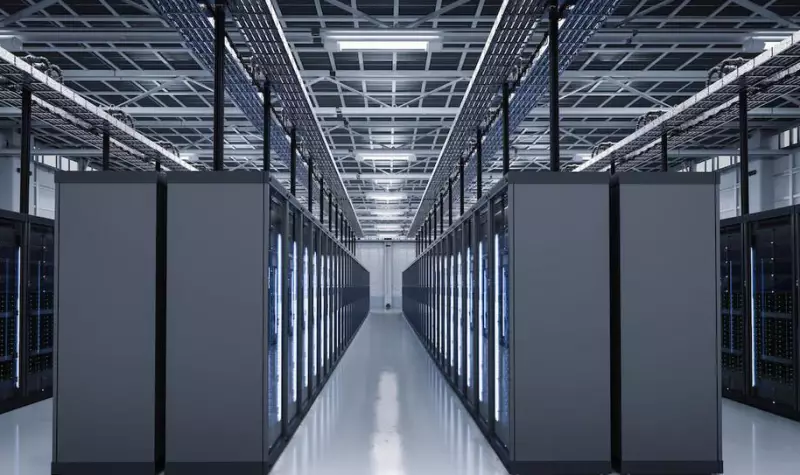
The global data centre industry is on the cusp of a massive, multi-trillion dollar expansion, driven overwhelmingly by the relentless demands of artificial intelligence. According to the 2026 Global Data Centre Outlook report from real estate giant JLL, total worldwide capacity is projected to nearly double, skyrocketing from 103 gigawatts (GW) to 200 GW by the year 2030.
The AI Engine Fueling Unprecedented Demand
Artificial intelligence is no longer a niche application but the central force transforming data centre infrastructure. JLL forecasts that AI workloads will account for a staggering 50% of all data centre capacity by 2030, a dramatic leap from approximately 25% in 2025. The firm identifies a critical shift coming in 2027, when the need for AI inference—the process of using trained models—will surpass that for AI training as the dominant requirement.
This AI revolution is creating a new class of infrastructure. "We're witnessing the emergence of an entirely new infrastructure paradigm where AI training facilities demand 10x the power density and command 60 per cent lease rate premiums over traditional data centres," explained Andrew Batson, Global Head of Data Centre Research at JLL. The strategic importance is now global, with countries investing in sovereign AI capabilities, representing an $8 billion capital expenditure opportunity by 2030.

A $3 Trillion Investment Supercycle
Supporting this explosive growth will require colossal financial investment. JLL estimates the sector will need up to $3 trillion in total investment over the next five years. This monumental sum includes roughly $1.2 trillion in real estate asset value creation and approximately $870 billion in new debt financing, signaling what experts call an infrastructure investment supercycle.
Matt Landek, Global Division President for Data Centres at JLL, highlighted the scale of the challenge. "The sheer scale of demand is extraordinary. Hyperscalers are allocating $1 trillion for data centre spend between 2024 and 2026 alone," he said, pointing to a "perfect storm" of supply constraints and lengthy grid connection delays that are reshaping development and energy strategies.
Regional Growth and Semiconductor Shifts
The growth is not evenly distributed, with each major global region following a distinct path. The Americas will remain the largest market, holding about 50% of global capacity and seeing the fastest growth, primarily driven by the United States. The Asia-Pacific (APAC) region is set to expand from 32 GW to 57 GW, led by colocation services as companies move away from on-premise capacity. Meanwhile, Europe, the Middle East, and Africa (EMEA) will add 13 GW of new supply, fueled by hyperscaler demand in hubs like London, Frankfurt, and Paris, alongside emerging Middle Eastern markets.
The ripple effects extend to the semiconductor industry. AI chips are projected to grow their share of total semiconductor market revenue from 20% to 50% by 2030. Furthermore, custom silicon developed by hyperscalers for their own needs is expected to capture a 15% market share. Looking ahead, technologies like neuromorphic computing could enable ultra-efficient AI inference, helping to manage future power demands.
Despite the breakneck pace of expansion, JLL's analysis concludes that the sector's fundamentals are solid, with no indication of a property bubble. The report underscores that the race to build and power the AI-driven digital future is now the defining story for global infrastructure and investment.