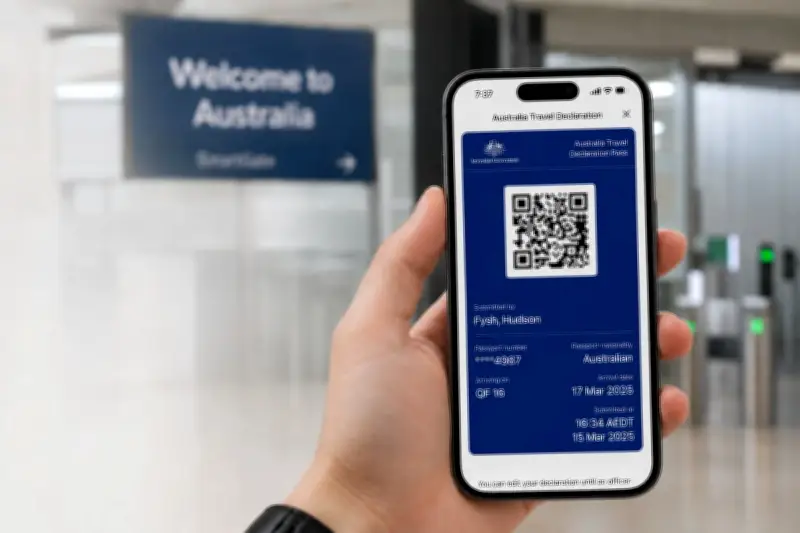
The Australian government has announced a major shift in its border processing procedures, phasing out the traditional paper Incoming Passenger Card (IPC) in favor of a new Digital Travel Declaration (DTD) system. The transition is scheduled for completion by 2026, marking a significant step toward modernizing the country's border control infrastructure.
What the Digital Travel Declaration Entails
According to the Australian Department of Home Affairs, the DTD will allow travelers to submit their arrival information digitally before or upon arrival in Australia. The system will collect biographic and contact details, flight information, customs declarations, biosecurity questions, and health status. The digital declaration aims to replace the paper card that international visitors have been required to complete for decades.
The new system is designed to integrate with Australia's existing biometric capabilities, including SmartGates and ePassport gates, to create a seamless and contactless arrival experience. Travelers will be able to submit their declarations via a mobile app or online portal, with the option to scan a QR code at border control upon arrival.

Benefits and Impact on Travelers
The Australian government states that the DTD will reduce processing times at airports, minimize errors in data collection, and enhance the accuracy of border risk assessments. Officials emphasize that the digital system will also improve compliance with biosecurity and customs requirements by pre-screening travelers before they reach the border.
According to a government spokesperson, “The Digital Travel Declaration will make it easier for travelers to comply with Australian border requirements while strengthening our ability to manage biosecurity and security risks. This is part of our broader commitment to digitizing government services and delivering a world-class traveler experience.”
The transition will be phased, with a pilot program expected to launch in late 2024 at select international airports. The paper card will remain available as a backup option during the transition period but will eventually be phased out entirely by 2026.
Data Privacy and Security Considerations
The Department of Home Affairs has assured that the DTD will comply with Australia’s Privacy Act and that personal data will be handled securely. Travelers will have the option to save their information for future trips, reducing the need to re-enter details on subsequent visits.
The move aligns with global trends toward digital border processing, with countries like Singapore, the United Arab Emirates, and New Zealand already implementing similar systems. Australia’s shift is expected to reduce administrative burdens on airlines and border agencies while improving the overall travel experience.
Implementation Timeline and Next Steps
The Australian government will engage with airlines, airport operators, and tourism stakeholders to ensure a smooth rollout. Further details on the mobile app and online portal are expected in the coming months. The DTD will initially be voluntary, with mandatory adoption once the system is fully operational.
The paper Incoming Passenger Card has been a staple of Australian travel for over 50 years. Its replacement by a digital system reflects the increasing reliance on technology to manage the growing number of international visitors. Australia welcomed over 8.5 million international travelers in 2023, and that number is expected to rise in the coming years.