The Federal Government has underscored the importance of mandatory Artificial Intelligence (AI) training in shaping the future of work, emphasizing the growing significance of digital literacy and emerging technologies.
Minister's Remarks at Job Fair
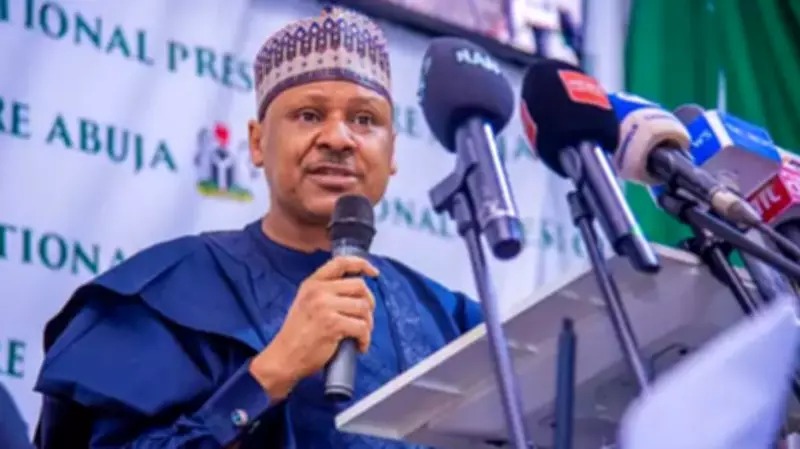
Minister of Labour and Employment, Muhammadu Dingyadi, made this known yesterday at the Job and Employability Fair organized by the Nigeria Employers' Consultative Association (NECA) in Lagos. The event, themed 'Empowering Talents, Building Skills and Driving Inclusive Growth,' saw the minister represented by the Director of Employment and Wages, Titilayo Ayemoba.
Dingyadi noted that as AI continues to transform industries and redefine job roles, equipping youths with relevant competencies is no longer optional but essential. He highlighted Nigeria's energetic and innovative youth population, whose talents, if properly harnessed, could drive economic transformation and social prosperity.
He stressed the need for sustained collaboration among government, employers, educational institutions, and development stakeholders to bridge the skills gap and align workforce capabilities with industry expectations. The ministry remains committed to supporting initiatives that promote decent work, entrepreneurship, digital inclusion, vocational development, and sustainable employment opportunities for all Nigerians.
'We recognize that inclusive growth can only be achieved when every young person, regardless of background or circumstance, has access to opportunities that enable them to contribute productively to national development,' Dingyadi said.
NECA's Perspective
Director-General of NECA, Adewale-Smatt Oyerinde, described the fair as a strategic response to the pressing challenge of unemployment, particularly among the youth. He emphasized that meaningful employment is a pathway to personal dignity and economic independence, as well as a cornerstone for national development and social stability.
Oyerinde stated that the primary objective of the fair is to bring employers and job seekers together, fostering direct engagement and immediate opportunities. Beyond job placements, participants gain critical insights, career guidance, and skills for long-term success in an evolving labor market.
'Our goal is not just to help individuals find jobs, but to empower them to build sustainable and rewarding careers,' he said, urging collective focus on building a more inclusive and prosperous Nigeria.
ITF's Advice
Director-General of the Industrial Training Fund (ITF), Dr. Afiz Ogun, represented by Director of Research and Curriculum, Victor Awoniyi, urged job seekers to engage in skills development, noting that not everyone is suited for white-collar jobs.
Keynote Address Highlights
In her keynote address, Director of Cluster Human Resources at FrieslandCampina WAMCO Nigeria Plc, Edalyn Hadjula-Legarde, cited statistics revealing that 62.5% of Nigerians earn less than N200,000, while 37% of employed Nigerians earn less than N100,000. Only 0.4% of Nigerians earn above N1 million.
She noted that agriculture, telecommunications, and trade are the largest employers of labor in the country. In 2024, ICT/telecommunications, banking, and health sectors were the top hiring industries, while sales, finance, and engineering had the most vacancies.