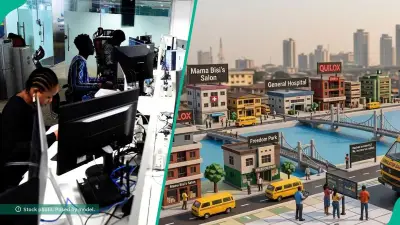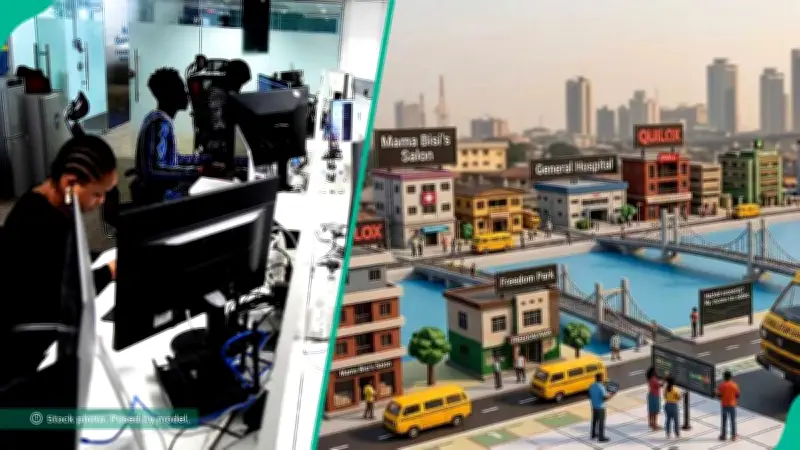
Nigeria's technology landscape has shifted dramatically over 25 years, from MTN's iconic "Mama Na Boy" advertisement celebrating a newborn via mobile phone to Shalom Rayhamen's browser-based game "Lagos Life," which reportedly attracted seven million players within 10 days of its launch on October 1, 2026. The game, set in a simulated Lagos, lets players create characters, find jobs, earn virtual money, rent accommodation, and interact with others, as reported by Techpoint Africa on October 10, though the figures remain unverified.
MTN's Early GSM Era and the Mama Na Boy Advert
MTN Nigeria, an early entrant into the country's GSM market, expanded mobile connectivity and invested in network infrastructure. The "Mama Na Boy" television commercial, delivered in Nigerian Pidgin English, captured a father calling his mother in the village to announce his son's birth, resonating because it presented telecommunications as a way to unite families across distances.
Other MTN initiatives linked telecoms to popular culture: the XtraCool tariff plan became tied to late-night youth conversations, MTN Project Fame West Africa connected the brand with music talent discovery, and the company's association with "Who Wants to Be a Millionaire?" hosted by Frank Edoho embedded it in a popular quiz show.
How GSM Revolutionized Nigerian Telecommunications
Before GSM, access to telephone services was severely limited, with expensive connections and inadequate fixed-line infrastructure for a population exceeding 120 million. The introduction of GSM in 2001 opened the market to investment and competition. MTN and Econet (later Airtel) were early entrants, followed by Globacom and Etisalat (now 9mobile). MTN Nigeria's records identify May 16, 2001, as the date of the first call on its network, ahead of commercial operations starting August 8 that year.
Mobile expansion changed how Nigerians communicated, conducted business, and maintained relationships. Families contacted relatives easily, businesses reached customers without physical contact, and individuals shared information instantly.
Nigeria's Telecom Market Expansion and Current Statistics
Competition among operators drove investment in coverage and services. Globacom's entry offered another option, and its Glo-1 submarine cable, landing in Lagos in 2009, boosted international connectivity. Airtel, 9mobile, and other providers contributed to the digital ecosystem.
According to Nigerian Communications Commission statistics from August 2026, MTN's active mobile subscriptions stood at approximately 102.56 million, compared with 67.42 million for Airtel, 23.58 million for Globacom, and 3.61 million for T2 (operating the 9mobile brand). These figures represent subscriptions, not unique individuals, as one person may own multiple SIM cards. Behind these numbers are investments in transmission networks, fibre-optic infrastructure, mobile sites, and international connectivity.
How Connectivity Drives Nigeria's Digital Economy
Telecommunications impact is visible in commerce: businesses use internet connections to advertise, communicate, process orders, and coordinate deliveries. Digital payment platforms support transactions, while connectivity enables online learning, remote work, music distribution, video streaming, and social media. However, the digital economy's expansion relies on more than telecoms—financial institutions, payment processors, technology companies, entrepreneurs, and consumers all contribute.
A business selling via social media needs internet access but also depends on customers, delivery arrangements, and payment options. Digital entertainment depends on developers, content creators, devices, and platforms. These combined factors create opportunities for Nigerians to develop and distribute products unimaginable during early GSM years.
Lagos Life as a Symbol of Nigeria's Tech Evolution
Lagos Life, developed by Shalom Rayhamen (online as Eliy), offers a contemporary illustration of transformation. The browser-based game allows users to participate in a shared digital representation of Lagos, finding virtual jobs, earning money, renting accommodation, and interacting with others. Its local identity appeals to Nigerians, incorporating aspects of urban life into an interactive experience. The browser-based format reduces barriers by eliminating the need for a separate application download.
Techpoint Africa reported that Lagos Life attracted more than one million players within three days of its October 1 launch and surpassed seven million by October 10, with tens of millions of visits, though these figures are not independently verified. The game has experimented with in-world advertising—businesses could rent virtual billboards and other advertising spaces, creating a potential revenue stream. However, the developer has not publicly established overall revenue or operating costs, so reported popularity indicates audience interest rather than proof of long-term commercial sustainability.
What Lagos Life Means for Nigerian Developers
The game raises questions about whether Nigerian creators can turn online attention into sustainable businesses. Attracting millions of players is a milestone, but retaining users, covering operating costs, and developing reliable revenue streams remain challenges. Telecommunications companies can support the creative economy through dependable networks, affordable data, youth-focused initiatives, and partnerships. MTN's continued engagement with youth culture, including its Pulse proposition, offers one avenue to connect with young Nigerians using digital platforms.
However, meaningful support requires more than brand association. Developers need reliable infrastructure, access to users, and viable business models. Consumers face barriers like high data costs, unreliable electricity, device affordability, and uneven network quality, which limit full participation in the digital economy. Addressing these challenges will be important for more locally developed products to attract large audiences and compete internationally.
The contrast between MTN's Mama Na Boy and Lagos Life captures Nigeria's technological journey. The advertisement represented an era when mobile phones facilitated communication across distances, while Lagos Life reflects a period where internet connectivity enables Nigerian developers to create interactive experiences inspired by local realities and distribute them to large audiences. MTN played a role in the mobile expansion that made this possible, but the next stage depends on building on that foundation—for developers, the ambition includes creating digital products, establishing sustainable businesses, and developing experiences that reflect local realities while reaching audiences beyond Nigeria. From a memorable telephone advertisement to a virtual Lagos with millions of reported players, Nigeria's technology story continues to evolve.