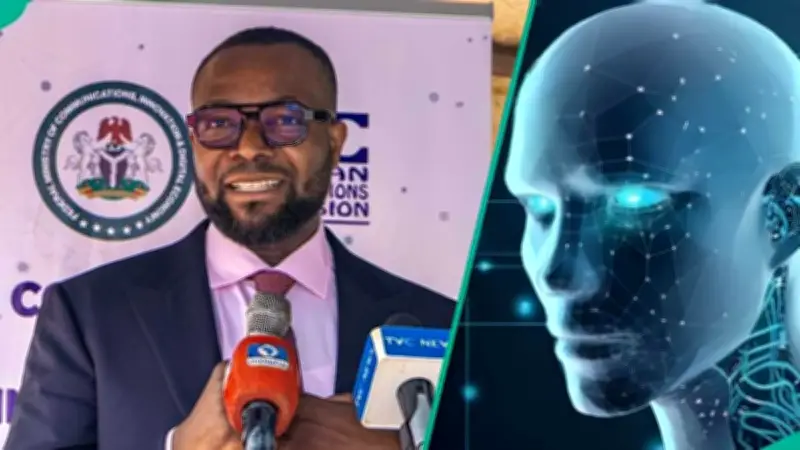
Nigeria has officially launched the Atlas Network, a continent-wide artificial intelligence initiative designed to develop AI systems rooted in African languages, cultures, and indigenous knowledge. Communications Minister Bosun Tijani announced the initiative on Thursday during the 7th Ordinary Session of the Conference of Plenipotentiaries of the African Telecommunications Union (ATU), held in Abuja.
Atlas Network Aims to Bridge the AI Language Gap
The Atlas Network will function as a shared platform connecting African governments, universities, researchers, technology companies, and other stakeholders. Its primary goal is to build AI tools that address challenges unique to the continent and reduce dependence on technologies developed elsewhere. Tijani highlighted a critical gap: while Africa accounts for a large portion of the world's languages, fewer than two per cent of those languages are currently supported by modern AI systems, according to the News Agency of Nigeria (NAN).
The initiative will coordinate efforts to develop large language models trained specifically on African languages, cultures, and knowledge systems. This aims to produce AI solutions that, in the minister's words, are "by Africa and for Africa." Tijani stated: "The Atlas Network is designed to help African countries build AI systems that understand our people, preserve our cultures and solve our local challenges."

Economic Opportunity and Digital Sovereignty
Tijani told delegates that artificial intelligence represents one of the most significant opportunities for Africa's economic growth, but only if the continent takes ownership of how those technologies are built. He linked the Atlas initiative to a broader push to grow Africa's share of the global digital economy, citing the continent's young population, expanding technology sector, and growing investment in digital infrastructure as assets that can support AI development at scale.
He also called on African nations to align their digital policies ahead of the 2026 International Telecommunication Union (ITU) conference, where key decisions on telecommunications and digital governance will be made globally. Presenting a single, coordinated African position at such forums, he argued, would give the continent greater influence over the future direction of technology policy, as reported by BusinessDay.
Regional Cooperation and Infrastructure Needs
The minister noted that the ATU now counts 52 member states, a sign of deepening regional cooperation in telecommunications and digital development. He urged more countries to join the Atlas Network, saying broader participation would help ensure AI systems genuinely reflect the continent's diversity. Tijani also called for increased investment in broadband connectivity, digital skills, and secure infrastructure, describing these as essential foundations for scaling AI development across Africa.
In a related development, Google has announced that its premium AI subscription, Gemini AI Pro, will be available free for 12 months to university students across Africa to build foundational AI skills. Nigerian students are invited to take advantage of the opportunity designed to support higher education. According to Google, the offer is available to eligible students aged 18 and above in Nigeria, Kenya, Ghana, Rwanda, South Africa, and Zimbabwe.