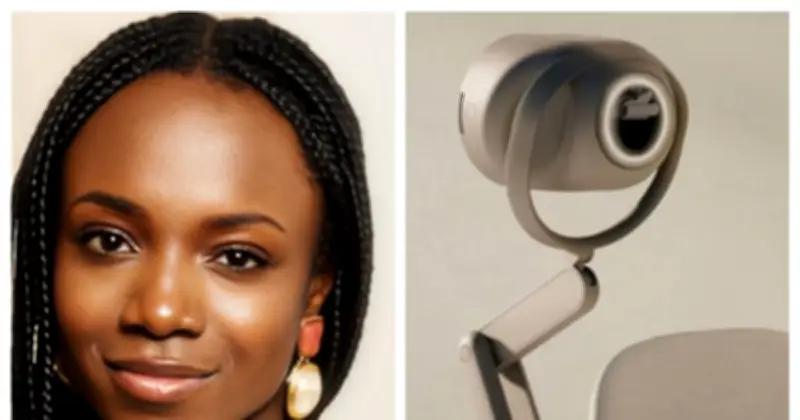
Yinka Ogunbiyi, a Nigerian-American engineer and Harvard graduate, has developed HaloBraid, the world's first braid-assist robot, designed to make hair braiding faster and less physically demanding. The robot works alongside professional braiders, automating repetitive weaving while stylists handle creative and technical tasks. HaloBraid has raised $7 million in seed funding and attracted over 7,000 salons to its waitlist, signalling strong interest in technology that could transform the hair-braiding industry.
A Personal Inspiration Born from Lockdown
Ogunbiyi's journey began during the COVID-19 lockdown in London, when she attempted to braid her own hair for the first time. The process took four days. This frustrating experience led her to question why one of the world's oldest hairstyles had seen little innovation despite advances in robotics. 'I know this firsthand because I've worn braids all my life,' Ogunbiyi said while introducing HaloBraid. She estimates that people collectively spend around 8 billion hours braiding hair every year.
The Problem of Time and Strain
For millions with textured hair, braiding appointments can last six to twelve hours, costing between $200 and $300. Many repeat the process every six to eight weeks. In a survey of 2,000 people conducted by HaloBraid, 95% said they would wear braids more often if appointments took less time. Beyond time, professional braiders suffer from repetitive strain injuries like carpal tunnel syndrome and arthritis due to thousands of intricate finger movements daily.

How HaloBraid Works
HaloBraid is not a replacement for stylists but an assistant. The stylist parts the hair, creates sections, and anchors the braid manually. The robot then attaches to complete the downshaft weaving—the most time-consuming and physically demanding part. After the braid is done, the stylist removes the device, seals ends, and styles. Using machine learning, HaloBraid matches professional quality and completes weaving up to five times faster. The company reports it has already braided thousands of strands and full hairstyles.
Engineering a Solution
Braiding hair poses unique challenges for robotics: hair is soft, flexible, and varies in texture. Ogunbiyi noted, 'It's very easy to make a bad automated hair braider.' Her team went through hundreds of design iterations, borrowing techniques from material science and inkjet printing. She described hair as one of the 'trickiest substrates in the world to manipulate.' Despite decades of robotics, no company had commercialized a braid-assist system until now.
Investor Confidence and Market Potential
HaloBraid's $7 million seed funding round was led by Seven Seven Six, the venture firm of Reddit co-founder Alexis Ohanian, with participation from AlleyCorp and Bling Capital. Ohanian, married to Serena Williams and father to two daughters who wear braids, said he understands the time commitment. 'While companies like Dyson transformed hair tools for other consumers, innovation for textured hair has remained limited,' he remarked. The funding will expand product development, manufacturing, and salon partnerships.
Preserving Artistry, Reducing Strain
Ogunbiyi emphasizes that technology assists, not replaces. 'I don't think anything will get lost from the experience. If anything, it enriches it,' she said. 'Technology simply assists with the repetitive movements that consume the most time and place the greatest strain on the body.' By cutting braiding time, stylists can serve more clients, reduce waiting lists, and increase income without overworking.
Beyond the First Product
HaloBraid is the company's first product, but Ogunbiyi plans to develop more devices for textured hair care, including a braid-removal tool that addresses another lengthy process. 'Time is precious,' she wrote on LinkedIn. 'Halo gives that time back.' After thousands of years of manual braiding, HaloBraid suggests the next chapter is not about replacing human touch but preserving the artistry while freeing clients and stylists from repetitive labor.