Middle East Crisis Exposes Nigeria's $850 Million Cloud Vulnerability
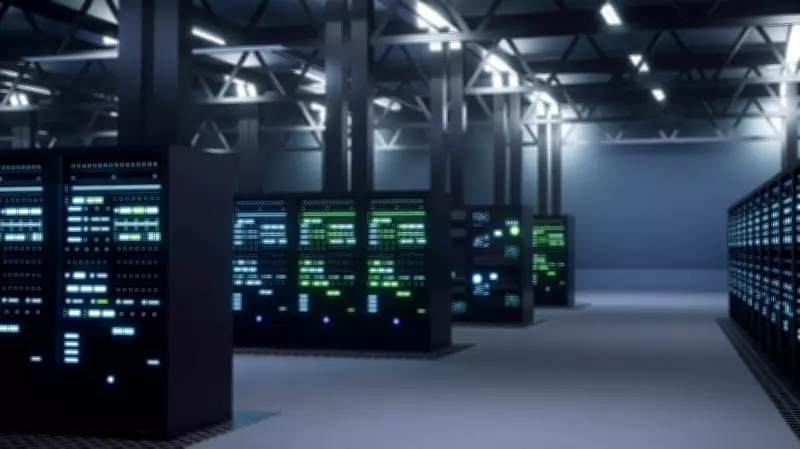
Nigeria's rapid expansion in local data infrastructure is being overshadowed by a critical dependence on foreign cloud hubs, with annual spending of $850 million (N1.18 trillion) now at risk due to escalating conflicts in the Middle East. Despite boasting 21 operational data centres and five high-capacity facilities nearing completion on the Lagos-Lekki corridor, a significant 'digital sovereignty gap' persists as both public and corporate sectors continue to host data offshore.
Infrastructure Growth Amidst Underutilization
Nigeria's data centres, ranging from Tier I to Tier IV according to the Uptime Institute classification, are primarily dominated by Tier III and emerging Tier IV facilities. These are designed to meet the high availability demands of modern sectors like banking, fintech, and telecommunications. However, they remain underutilized domestically. Key operators include Rack Centre, Equinix, Africa Data Centres, Open Access Data Centres (OADC), MTN, Digital Reality, 21st Century, Nxtra by Airtel, and Galaxy Backbone.
A recent report by Research and Markets, titled "Nigerian Data Centre Market- Investment Analysis & Growth Opportunities 2026-2031," estimates the market's capacity between 78.6MW and 136.7MW, valued at approximately $374 million and projected to reach $782.82 million within five years. This growth highlights the potential for local hosting, yet the reliance on foreign infrastructure continues.

Geopolitical Threats to Digital Connectivity
Recent escalations in the Middle East, including conflicts involving the U.S., Israel, and Iran, have targeted digital infrastructure in Gulf Cooperation Council (GCC) countries. These attacks threaten subsea cables and relay hubs that are crucial for West Africa's connection to the global cloud. While Nigeria's physical data centre hardware grows at a 15.9% compound annual growth rate, high-level processing and software operations still migrate offshore.
Nigerian firms and government agencies predominantly use hyperscale providers such as Amazon, Google, and Microsoft, whose data routing often depends on Middle East-based nodes or cables passing through the Red Sea and Suez Canal. In March, drone attacks on Amazon Web Services facilities in the UAE and Bahrain sent shockwaves through Africa's tech ecosystem, with further incidents reported in the Gulf region. Iran's closure of the Strait of Hormuz and ongoing threats have exacerbated the situation, underscoring the vulnerability of Nigeria's digital economy.
Risks and Implications for Nigerian Businesses
Industry analysts warn that the Middle East conflict introduces three critical risks for Nigerian businesses. First, supply chain disruptions have triggered a 12% rise in global data centre operational costs due to shortages in semiconductors and GPU servers. Second, infrastructure strikes in the GCC region have forced traffic rerouting, increasing latency from 40ms to over 150ms for Lagos-based firms using foreign-hosted systems. Third, Nigeria's National Cloud Policy 2025 emphasizes that offshore hosting is now a national security risk, as foreign politics can effectively disable Nigerian enterprise data through sanctions or warfare.
While no immediate impacts have been felt in Africa, the potential for service disruptions looms large. Volatility in global energy markets could also increase the cost of operating local infrastructure, making discussions on data sovereignty, traffic localisation, and domestic hosting capacity increasingly urgent.
Local Infrastructure and Connectivity Efforts
Nigeria has made strides in local connectivity, with AWS establishing a significant presence through Edge Locations, Local Zones, and Direct Connect points. Rack Centre in Lagos serves as a Tier III data centre with a Direct Connect location upgraded to support 100 Gbps connections, helping reduce latency for local companies. Lagos also hosts the first AWS Local Zone in Africa, placing compute and storage services directly in the metropolitan area. Digital Reality acts as a key interconnection hub, linking subsea cables like MainOne and Glo-1 to global networks.

Despite these advancements, Nigeria's $850 million yearly expenditure on offshore data hosting benefits foreign players like AWS, Microsoft Azure, and Google Cloud Platform, which control 65% of the global market. This capital flight has intensified calls for data sovereignty within the country.
Stakeholder Concerns and Path Forward
Stakeholders express deep concerns over jurisdictional exposure, AI-powered cyber-threats, and redundancy failures. Khalid Kamil, a regional tech analyst, noted, "When a missile hits a server in Dubai, a bank in Lagos could go dark. We are realising that 'the cloud' is just someone else's computer in someone else's war zone."
Ayotunde Coker, CEO of Open Access Data Centres Africa, emphasized the need to treat data centres as critical national infrastructure, stating that Nigeria has sufficient capacity for local hosting. Ikechukwu Nnamani, Managing Director of Digital Reality, advocated for service localisation to reduce dependency on foreign infrastructure, while Temitope Osunrinde, Executive Director of Africa Hyperscalers, highlighted the structural reality of Africa's exposure to geopolitical shocks due to Northern control of global compute infrastructure.
Tonye Aki, a data centre analyst, called for urgent action through the National Digital Economy and E-Governance Bill, expected in Q2 2026, to mandate data localisation and incentivize local infrastructure. He stressed that Nigeria's data protection must address physical threats, not just digital ones, as the country faces an average of 4,701 cyber-attacks per week.
In conclusion, Nigeria stands at a crossroads, with the Middle East crisis exposing costly weaknesses in its cloud economy. Strengthening data sovereignty, accelerating local hosting, and building resilient networks are imperative to safeguard the nation's digital future and support its goal of a $1 trillion economy by 2030.