Nigeria's Next-Generation Satellites NIGCOMSAT-2A and 2B Set for 2028 and 2029 Launch
The Federal Government has officially confirmed that Nigeria's next-generation satellite program is now actively in its execution phase, with the highly anticipated NIGCOMSAT-2A and NIGCOMSAT-2B satellites scheduled for launch in 2028 and 2029 respectively. This ambitious initiative represents a critical component of a broader national strategy designed to significantly strengthen connectivity, enhance security frameworks, and accelerate the growth of the digital economy across the country.
Satellite Program Enters Critical Implementation Stage
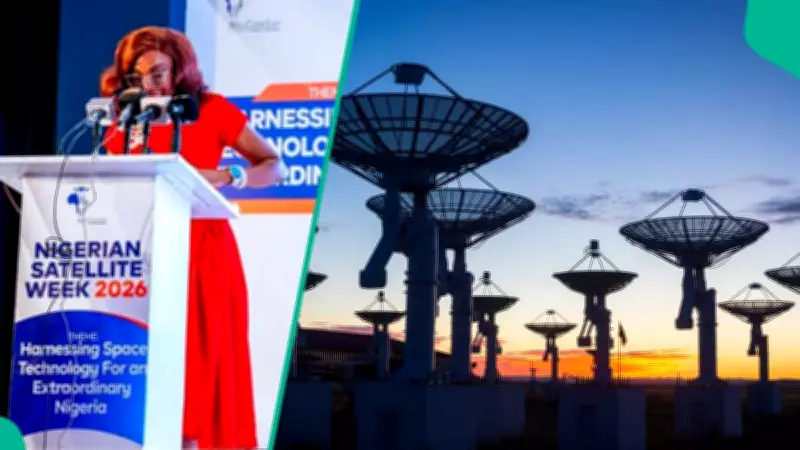
Speaking at the opening ceremony of the 2026 Satellite Week in Abuja on Monday, March 30, the Managing Director of NIGCOMSAT Limited, Mrs. Jane Nkechi Egerton-Idehen, emphasized that this program underscores Nigeria's unwavering commitment to leveraging advanced space technology for comprehensive national development and robust security. She highlighted that the nation's space sector is entering a period of accelerated and transformative expansion.
"The satellites will support real-time communication, sophisticated intelligence gathering, and reliable connectivity in remote and underserved areas. They will enable groundbreaking applications such as precision agriculture and extensive rural broadband expansion," Mrs. Egerton-Idehen stated authoritatively.

She provided further operational details, noting, "We have started the process. You guys know we have closed the tender. Now we are back into the financing and implementation stage. 2A is due to come out in 2028. And 2B for 2029. When they are fully operational, they are expected to provide enhanced security monitoring within our borders and neighbouring countries. They're expected to support our security agencies, because we know that for security agencies, data and intelligence collection is paramount."
Stakeholders Converge to Shape Nigeria's Space Future
The Satellite Week event, themed "Harnessing Space for an Extraordinary Nigeria," successfully brought together a diverse array of key stakeholders, including senior government officials, leading industry experts, innovative researchers, technology pioneers, and strategic international partners. It served as a vital platform for fostering dialogue, encouraging collaboration, and strategically shaping Nigeria's next phase in space exploration and digital infrastructure development.
Minister of Communications, Innovation and Digital Economy, Dr. Bosun Tijani, emphasized that this satellite plan signifies a crucial shift from mere bureaucratic approvals to tangible, on-the-ground delivery. This transition is being supported by substantial concurrent investments in complementary fibre optic networks, telecommunications towers, and comprehensive space infrastructure.
"As we all know, the world is becoming increasingly digital. And the infrastructure that powers this digital economy, that powers communication, data, and connectivity, is also becoming more strategically vital. It's the backbone of any successful economy or society today," Dr. Tijani explained.
He elaborated further, "And many of us don't pay sufficient attention to the fact that satellite technology sits right at the centre of that profound change we're witnessing. It directly affects how a child in a remote rural community gets the opportunity to connect to the internet, how a farmer makes informed decisions about planting and harvesting… So if we take it that seriously, then we understand that this is a transformative technology that we must decisively take advantage of."
Dr. Tijani also noted that beyond the physical infrastructure, the government's focus extends to creating a vibrant, sustainable ecosystem that drives innovation, supports advanced research, and enables practical applications across critical sectors like agriculture, education, logistics, and national security.
NASRDA Showcases Nigeria's Growing Space Capacity
Professor Seidu O. Mohammed, the Director General of the National Space Research and Development Agency (NASRDA), proudly stated that Nigeria has methodically built significant and commendable capacity in space research and development over the years.

"We have advanced our technical knowledge, we have acquired critical specialized skills. At NASRDA, we now have over 300 Ph.D. holders, and our total workforce comprises about 6,000 dedicated staff," Professor Mohammed revealed, highlighting the agency's human capital strength.
Professor Mohammed added that recent high-level governmental approvals for these additional satellites clearly reflect the administration's renewed and vigorous commitment to utilizing space technology as a primary driver of sustainable economic growth and as a strategic pathway towards achieving a one trillion dollar economy vision.
In a related goodwill message delivered at the event, the Chief of Army Staff, represented by Major General K.O. Osemwegie, stressed that closer and more effective collaboration between government entities, the private industry sector, and international partners will be absolutely key to addressing emerging security threats and enhancing national defence capabilities through advanced, space-enabled surveillance and communication systems.