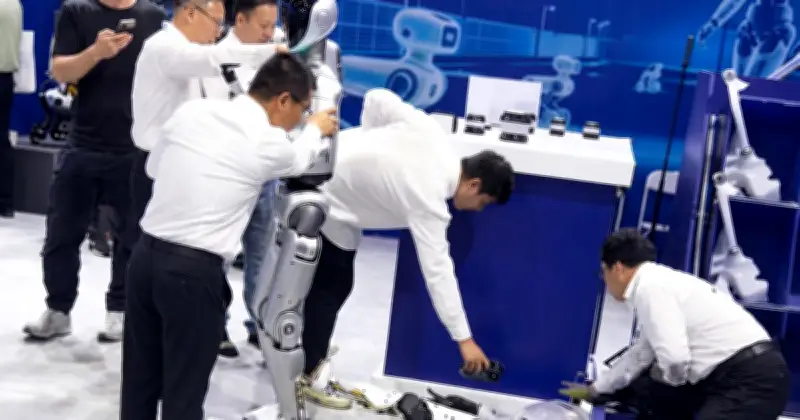
A humanoid robot malfunctioned during the 2026 World Robot Conference in Beijing after reportedly losing its remote connection, forcing operators to intervene as it moved uncontrollably on the exhibition floor. The incident has renewed discussions around robot safety and reliability.
Robot Loses Control During Demonstration
According to reports, the robot experienced a communication failure after losing its remote connection, causing it to behave unpredictably during the demonstration. Operators were seen attempting to manage the situation and shut down or stabilise the machine as attendees watched the unexpected malfunction unfold.
A video circulating online shows the robot lying on the exhibition floor while repeatedly moving its arms and legs in an uncontrolled manner as staff members attempted to intervene. The incident occurred during the robotics showcase, where companies from across the world displayed advances in artificial intelligence and humanoid robot technology.
Social Media Reaction and Technical Context
The incident quickly gained attention online, with many social media users describing the robot as appearing to have “gone wild.” However, the available reports indicate that the behaviour was caused by a technical malfunction rather than the robot acting independently. Vanguard Newspapers reported on the incident via Twitter on August 20, 2026, stating: “A robot reportedly went out of control at the 2026 World Robot Conference in Beijing after losing its remote connection, thrashing on the floor as operators struggled to shut it down. The incident has raised fresh concerns about robot safety and the need for reliable emergency…”
Challenges in Humanoid Robot Development
The malfunction highlights some of the ongoing challenges facing the development of humanoid robots, including reliable control systems, safety mechanisms and the ability to operate smoothly in public environments. The World Robot Conference, one of the major robotics exhibitions globally, features companies showcasing robots designed for sectors including manufacturing, healthcare, logistics and everyday services. As humanoid robots become increasingly advanced and are introduced into more areas of human activity, incidents like this continue to raise questions about how developers can ensure machines remain safe and predictable during real-world use.