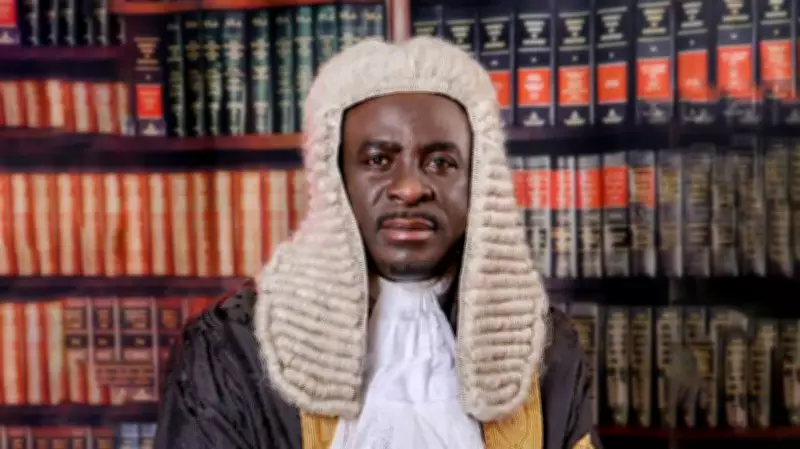
Nigeria's intellectual property (IP) reform milestones require sustained momentum to drive meaningful change, according to Prof Adebambo Adewopo, a Senior Advocate of Nigeria (SAN) and a leading authority on IP law. In an interview with Rotimi Agboluaje, Adewopo argued that recent reforms, including the Copyright Act 2022 and the National Intellectual Property Policy and Strategy (NIPPS) 2025, are insufficient without a comprehensive overhaul of Nigeria's IP legal and institutional framework.
Evolution of IP Scholarship in Nigeria
Adewopo, who pioneered IP teaching and research at Lagos State University and served as Director-General of the Nigerian Copyright Commission (NCC), noted that IP scholarship has evolved significantly. Initially, only a handful of scholars existed, but now a robust pool of specialists contributes to policy and practice across sectors.
IP as a Driver of Economic Growth
He emphasized that IP is foundational to the knowledge economy, fostering creativity, innovation, wealth, and jobs. Countries are optimizing IP infrastructure for economic growth, and Nigeria must harness its creative and innovative potential for development. However, the lack of prioritization has hindered progress.
Structural Bottlenecks in Patent Protection
Adewopo identified poor innovation environments, lack of IP expertise, weak enforcement, and lax industry practices as key bottlenecks. He stressed that IP offices must function as critical national institutions, not mere registries, to support economic growth.
Combating Piracy in Creative Industries
Piracy remains a major challenge, evolving with digital technologies. Adewopo recalled the NCC's Strategic Action Against Piracy (STRAP) campaign, which involved nationwide raids. Today, digital anti-piracy strategies, inter-agency collaboration, and laws like the Cybercrimes Act and Data Protection Act are essential.
Needed Structural Reforms
Adewopo called for new Patents and Trademarks laws, institutional capacity building, streamlining of IP agencies, and integration of IP into national development policies. Inter-agency collaboration is crucial due to IP's cross-cutting nature.
Balancing Enforcement with Creativity
Enforcement is key for public order and private rights. While right holders bear primary responsibility, government enforcement is necessary for large-scale piracy impacting the economy.
Africa's Position in the Global IP System
Nigeria and Africa should adopt a pro-development approach, balancing global norms with local industry protection. Continental developments like the IPRs Protocol highlight IP's growing role in trade and development.
AI and Copyright Ownership
AI redefines creativity and challenges traditional authorship concepts. Adewopo noted that the law must address AI-generated works, as AI transitions from tool to collaborator.
Digital Streaming and Cross-Border Infringement
The Copyright Act 2022 addresses online piracy, intermediary liability, and digital content regulation for the first time, marking a critical test for Nigerian copyright law in the internet economy.
Prioritizing Reforms for the Digital Economy
Nigeria is mid-process in modernizing IP laws. Next steps should focus on completing legal and institutional reforms to build on current momentum.
Significant Reforms at NCC
As NCC Director-General, Adewopo reorganized the commission, creating Regulatory and Prosecution Departments, and established the Copyright Institute (now Copyright Academy). Under STRAP, he enhanced public awareness, regulatory interventions, and enforcement, revising CMO regulations and initiating the Copyright Act review.
Adewopo concluded that public service requires the best manpower to advance national interest, and serving the country is deeply fulfilling.