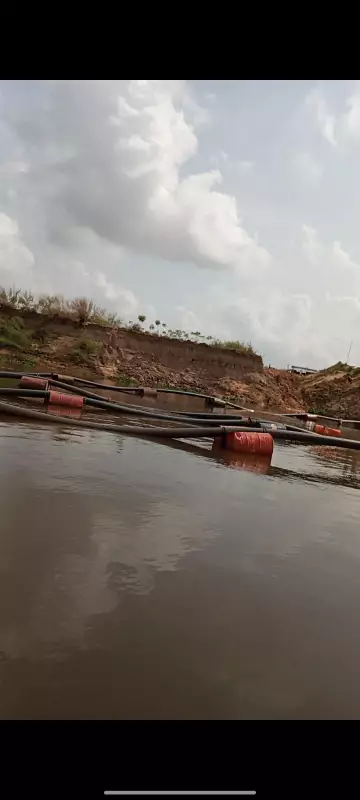
Residents of several riverine communities in Anambra State have raised a loud alarm over the destructive activities of sand dredgers operating near vital waterways and infrastructure. The affected communities include Aguleri Otu, Enugu Otu, Ezi-Agulu Otu, and Mkpunando Otu Aguleri, all situated within the Anambra East Local Government Area.
Monarch Sounds Alarm on Environmental Damage
The traditional ruler of Mkpunando Otu Aguleri, Igwe Johnson Mbanefo, brought the issue to public light following a tour of the affected site. The location is at the banks of the Agbanabo Ezu na Omambala river, along the Odene Aguleri-Enugu Otu road. Igwe Mbanefo, who also serves as the Deputy Chairman of the Anambra North Traditional Rulers Council, expressed deep concern over the unchecked operations.
He specifically lamented the complete absence of an Environmental Impact Assessment (EIA) before the sand miners began their work. This, he stated, is a critical oversight and not a welcome development for the environment or the people.
Roads and Farmlands Under Threat
The monarch detailed the severe consequences of the dredging activities. He observed that the erosion and destructive sand mining at the riverbank are causing the land to shrink, directly encroaching on the nearby road and valuable farmlands. He noted that this threatened road is a crucial artery leading to oil-producing communities, where the oil wells of Orient Petroleum Resources Refinery are located.
"The road side is collapsing, and the edge is shrinking," Igwe Mbanefo stated. He acknowledged that the road was first constructed by former Governor Willie Obiano and that the current administration under Governor Chukwuma Soludo is investing heavily in road infrastructure, making the damage even more concerning.
Failed Guidelines and Continued Violations
Igwe Mbanefo recalled that members of the communities had previously protested against the dredgers, whose activities are destroying soil, farmlands, and public infrastructure. In response to these complaints three years ago, a committee was established to investigate the matter.
This committee issued guidelines intended to regulate the dredging, including a key provision mandating a 100-metre buffer distance between the road and the river bank where dredging occurs. However, the traditional ruler described these guidelines as deceitful to the public, primarily because a proper EIA was supposed to have been conducted first, a step that was skipped.
The dredging is reportedly being carried out by both settlers and indigenes, an act the monarch condemned. He identified the Anambra East Sand Miners Association as the body responsible for these unwholesome activities that continue to pose a significant threat to the local environment and economy.